
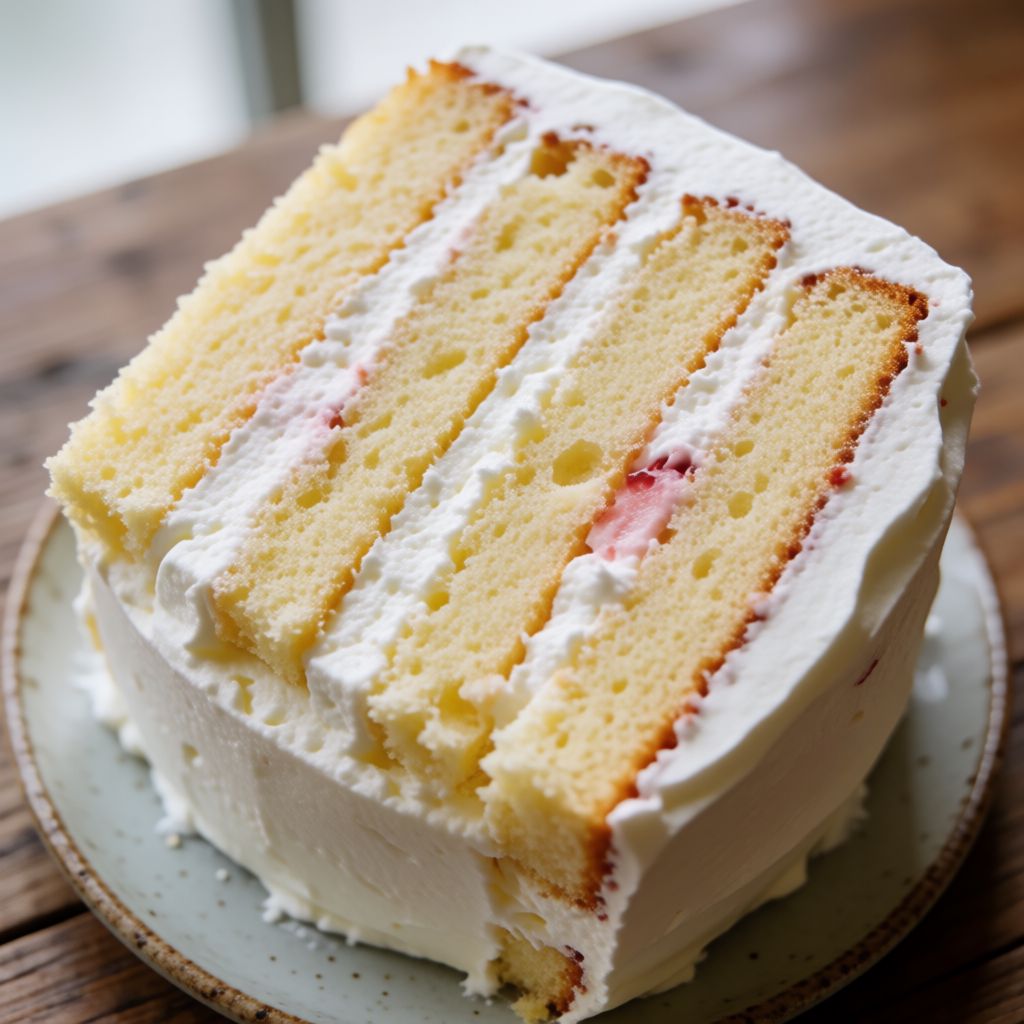
 AI photo
Strawberry Cream Cake
A light sponge cake filled with whipped cream, condensed milk and fresh strawberries.
Labels are worked out automatically from the ingredients and can be wrong. Check the packaging if it matters to you.
Ingredients
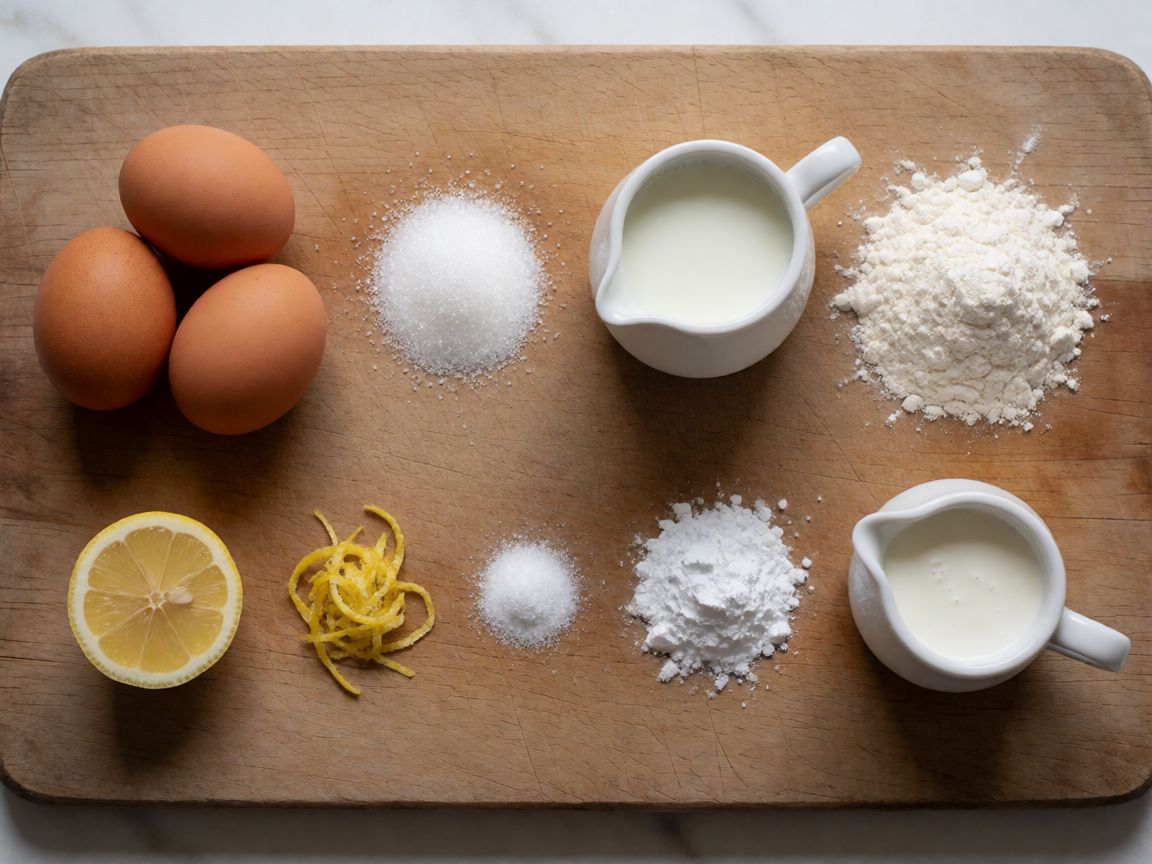
- 3 pcs Eggs
- 100 g Caster sugar
- 40 g Vegetable oil
- 50 ml Milk
- 150 g Plain flour
- 50 g Potato starch
- 16 g Baking powder
- 1/2 pcs Lemon zest
- 400 ml Double cream or whipping cream
- 250 g Condensed milk
- 200 g Strawberries
- Icing sugar to taste









Steps
Whisk the eggs with the caster sugar using an electric mixer until pale, fluffy and creamy.
Pour in the milk and vegetable oil in a thin stream, continuing to whisk.
Flavour the batter with the lemon zest.
Sift in the flour, potato starch and baking powder, and mix well.
Pour the batter into a 30x20 cm tin, level it out and bake in an oven preheated to 180°C.
12 minLet the sponge cool completely.
Whip the double cream to a thick foam, add the condensed milk and fold in gently.
Wash the strawberries, cut them into small pieces and pat dry with paper towel.
Add the strawberries to the cream and mix well.
Cut the cooled sponge in half with a cake knife or a serrated knife.
If you like, brush the surface of the sponge with a little milk for a moister texture.
Spread the cream evenly over the bottom layer.
A thin flat sponge, split in two, holding a cream that is really two things pretending to be one: whipped double cream for body, condensed milk for sweetness and stability. Strawberries go into the cream itself, not just on top, so every slice gets fruit rather than one lucky bite with a berry on it. That's the whole architecture — light base, heavy filling, fresh fruit cutting through both.
What decides whether it works is the sponge's structure, and this is where the potato starch earns its place. Plain flour alone gives you gluten, gluten gives you chew, and chew is exactly what you don't want holding up a slab of cream. Starch dilutes the gluten, so the crumb stays short and a bit sandy rather than elastic — it's the same logic as Victoria sponge recipes that swap in cornflour, just dressed in a different name. Some say this cake is "basically a Victoria sponge with cream instead of jam" — not quite, because the starch changes the bite, and the cream here is stabilised to hold fruit and its juice without weeping.
The other hinge point is drying the strawberries after washing. Skip that and you're not building a cream, you're building a strawberry soup with cream floating in it — the cut faces of the berries leak water into the cream and thin it until it won't hold a slice's shape. Pat them dry, properly, paper towel pressed on, not just a shake over the sink.
Eggs and sugar whisked to pale and fluffy aren't decoration — that's the only rise this cake gets. There's no yeast, no long proof, just air beaten into egg and sugar and trapped by the baking powder when it hits heat. Whisk half-heartedly and the sponge sits flat and dense, a tea biscuit instead of a cake layer. An electric mixer earns its keep here: by hand you can do it, but you'll be at it long past the point of giving up early.
The oil and milk going in "in a thin stream" while still whisking is about keeping the emulsion from splitting — pour it all at once and you get pockets of fat sitting unmixed in the batter, which bake into greasy little craters. Any flavourless oil works — sunflower, rapeseed, whatever's in the cupboard — because its job is moisture and tenderness, not taste. Olive oil would fight the lemon zest, so leave it for the Sunday roast.
Potato starch isn't negotiable if you want this texture, but if you've only got cornflour, it does the same job — both are starches without gluten, both soften the crumb the same way. Baking powder at 16g for this amount of flour is a generous dose; it's doing real lifting work since there's no other leavening in the recipe, so don't eyeball it down thinking "a bit less won't matter" — it will, flat and tough instead of light.
The cream is condensed milk's whole reason for being in a dessert like this: double cream whipped on its own is rich but bland and, worse, soft — it won't hold a cut edge. Condensed milk brings sugar and milk solids that firm the structure as they fold in, the way it stiffens a fudge. This is the same trick behind countless no-churn ice creams and tres leches fillings — sweetened condensed milk doing the stabilising that gelatine or cornflour would otherwise have to do. Don't substitute ordinary evaporated milk here; it has the concentration but none of the sugar, and the texture collapses.
Strawberries: fresh, ripe enough to smell through the punnet, not the pale winter ones with white shoulders that taste of nothing — those will just add watery bulk without flavour, defeating the point of drying them in the first place. Cut small because big chunks make clean slicing through the finished cake nearly impossible — you'll drag berries out of the cream instead of cutting through them. If strawberries are out of season or poor, frozen ones work only if thawed completely and drained hard, otherwise you've reintroduced the exact water problem the patting-dry step was meant to solve.
Lemon zest is there to lift the sponge's flavour, not to make it taste of lemon — half a lemon's zest is a background note, cutting the flatness of plain egg-and-flour sweetness. If you haven't got one, leave it out rather than reaching for lemon extract, which tastes of nothing real.
Cutting the sponge in half and brushing with milk is the fix for a dry edge you'll get on any homemade sponge baked in a flat tin — the surface loses more moisture than the centre, and a cake knife with a gentle sawing motion keeps the two layers even instead of wedge-shaped. Patience applies to the cooling, too: a warm sponge melts the cream straight into it, so let it go properly cold before you spread anything — rushing this step is how a tidy two-layer cake turns into a collapsed, soggy one.