
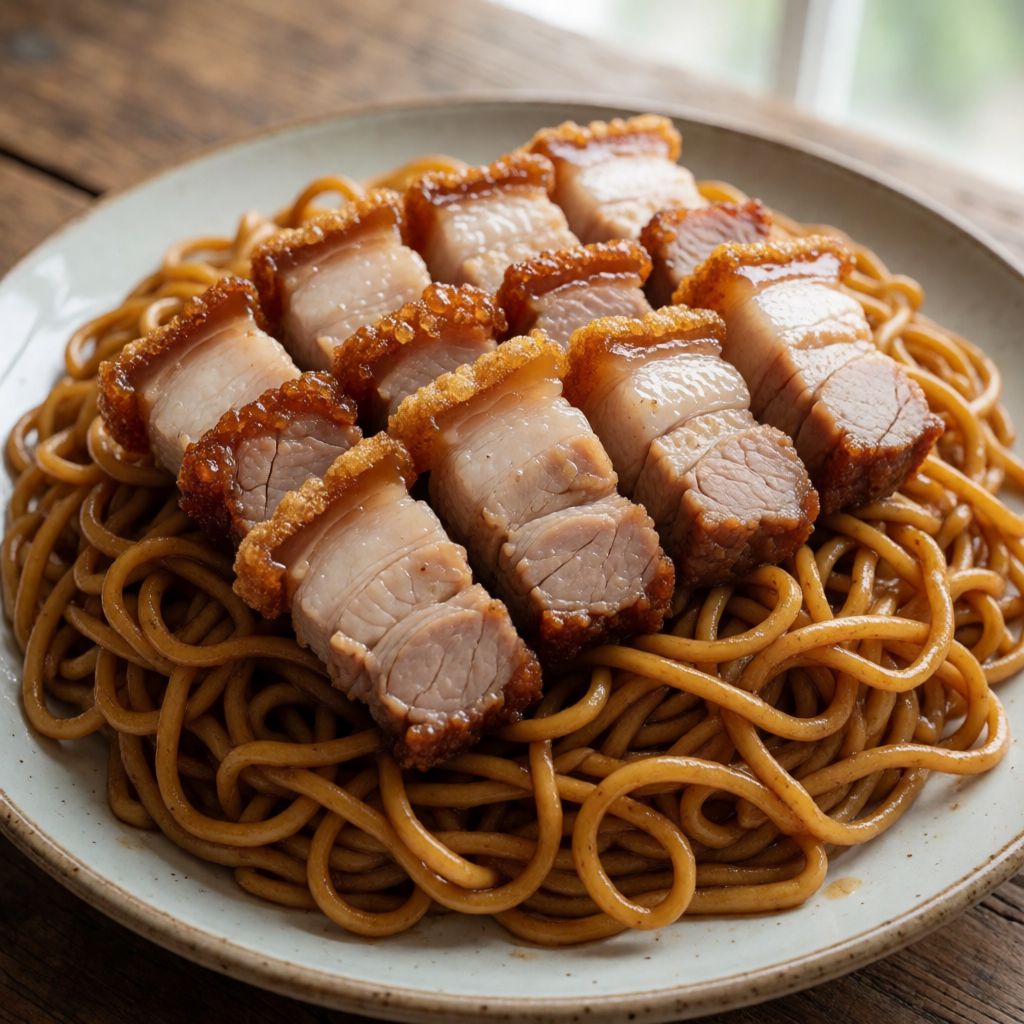
 AI photo
Crispy Pork Belly with Caramelised Onion and Asian-Style Noodles
A one-pan supper of crispy pork belly, sweet caramelised onion and glossy ramen noodles finished with a soft yolk and herbs.
Labels are worked out automatically from the ingredients and can be wrong. Check the packaging if it matters to you.
Ingredients
- 600 g Pork belly with the rind removed
- 6 pcs Onion halved and sliced
- 3 tbsp Sesame oil
- 3 tbsp Soy sauce
- 3 tbsp Fish sauce
- 3 clove Garlic finely grated
- 1 tbsp Ginger finely grated
- 30 g Sugar
- 300 ml Stock
- 250 g Ramen noodles
- 150 g Spinach
- 4 pcs Egg yolks
- 1 tsp Sriracha
- 0.5 tsp Chilli flakes
- 1 tsp Sesame seeds toasted
- 4 tbsp Chives finely chopped
- 1 bunch Coriander roughly chopped, fresh
















Steps
Slice the pork belly (if not already sliced), then cut the slices into thin strips about 6-8 mm thick.
Heat a frying pan over medium heat and add the pork belly. Increase the heat slightly to medium-high and fry the pieces for 10-15 minutes until crisp on one side. Then turn with tongs and fry on the other side.
12 minRemove the pork belly from the rendered fat in the pan and place on a plate lined with paper towel.
Add the onion to the pan in the fat left from the pork belly, reduce the heat to medium and let the onion caramelise over medium heat for 10 minutes without stirring - it should turn golden brown.
10 minStir, then remove the onion from the fat and drain on paper towel. Wipe the fat from the pan and return the crispy pork belly and caramelised onion to it over medium heat.
Mix the marinade. Spoon off a few tablespoons of the marinade and stir them into the stock, then set aside. Pour the rest of the marinade into the pan over the pork belly and onion, reduce the heat slightly and let it simmer.
Cook the noodles in a pan of lightly salted water according to the pack instructions.
4 minAdd the spinach to the pan with the noodles and drain. Toss the noodles and spinach with the reserved stock and marinade, then divide between deep bowls.
Top with the crispy pork belly, caramelised onion, a raw egg yolk, sriracha, chilli flakes and toasted sesame seeds, then sprinkle with chives and coriander.
This is a bowl of three separate jobs done one after another in the same pan, which is the whole trick of it — rendered pork fat, then onion cooked in that fat, then a quick sauce built in what's left, so nothing you use gets wasted and nothing gets washed up until the end. It looks like a composed noodle dish with a lot of garnish, but what decides whether it works is almost entirely about fat and patience, not about the noodles themselves.
The pork belly is doing double duty: it's the protein, and it's also your cooking fat for the next two stages. Cut thin, with no rind to get in the way, it renders out its fat fast and crisps instead of just stewing in its own juice — that's the whole point of the strips being 6–8mm and not thick slabs. Some say pork belly needs the rind on for proper crackling: no, not here, because you're not after cracking skin, you're after a crisp edge on soft meat, and the rind would just sit there chewy and useless in a dish that's wet by the end anyway.
The onion goes in after, into fat that's already got pork flavour sitting in it, and this is where most people rush and ruin it. Caramelising onion is not frying onion harder — it's the slow breakdown of sugars once the water's cooked off, and it only happens once you stop stirring and let the pan do its work. Walk away from the spoon. If you keep moving it, you steam it instead, and you get soft pale onion that tastes of nothing in particular.
Pork belly: buy it without rind, or take the rind off yourself with a sharp knife laid flat against the fat — it comes away easier than you'd think, like peeling a thick label off a jar. If your belly came skin-on, don't panic and don't try to crisp the skin in this recipe; it's built for render-then-crisp meat, not crackling, and skin left on will just chew like rubber bands in a bowl of noodles. No pork belly in the shop that day — streaky bacon, thick-cut, does a passable job; it's saltier and leaner so expect less rendered fat and a sharper flavour, which actually isn't a disaster here.
Sesame oil, soy sauce, fish sauce, garlic, ginger, sugar — that's your marinade, and it's built on a very old balance: salt from two directions (soy and fish sauce), sweet to round it off, aromatics to perfume it, and sesame oil at the end for smell rather than for cooking in, because toasted sesame oil burns bitter if you try to fry with it — use a plain, odourless oil like sunflower or groundnut for any actual high-heat work, and keep the sesame oil for flavouring the sauce once it's off serious heat. No fish sauce in the cupboard — a dash more soy and a pinch of salt gets you most of the savoury depth, though you lose that particular funk fish sauce brings, and there's no real substitute for that, just an honest compromise.
Stock: use what you've got — chicken is the forgiving choice, a light vegetable stock works if that's the house rule. It's doing a small but real job: diluting the strong, salty marinade into something you can actually eat a bowlful of without wincing, rather than a glaze you'd use a teaspoon of.
Ramen noodles are the easiest part of this whole dish and also the part people overthink. Cook them to the time on the pack and nothing more — they finish in the hot broth and sauce once they're tossed together, so slightly underdone off the boil is safer than slightly over. Egg noodles or even a thin wheat noodle from a British supermarket will do if ramen noodles aren't to hand; what you're after is something that holds its shape in broth without turning to paste.
Spinach just wilts in the draining water heat and pan warmth — don't cook it separately, it goes limp in seconds and overcooking it loses the colour that's doing real work on the plate, since there's no other green here.
Egg yolks: separate them carefully, you want the yolk whole with no white clinging, since it's meant to sit intact on the hot noodles and only break when you stir it in at the table — that's the whole performance of it, a kind of built-in sauce finished by the eater, not the cook. If raw yolk worries you, a very soft-boiled yolk, barely set, does the same trick with a little more certainty; it just needs a minute or two in simmering water, lifted out the second the white's barely holding.
Chilli flakes, sriracha, sesame seeds, chives, coriander — none of these change the dish if you drop one, they're seasoning you add at the table in whatever quantity your own tolerance for heat and bitterness wants. Toast the sesame seeds yourself in a dry pan for twenty seconds or so if you can — pre-toasted ones from a jar lose their smell fast, and smell is most of what sesame seeds are for here, not crunch.
This isn't a Sunday-roast kind of cooking — there's no long unattended braise, no basting. It's three short, attentive stages back to back in one pan, which suits a weeknight more than a lazy Sunday: you're standing at the hob the whole time, but not for very long.