
 AI photo
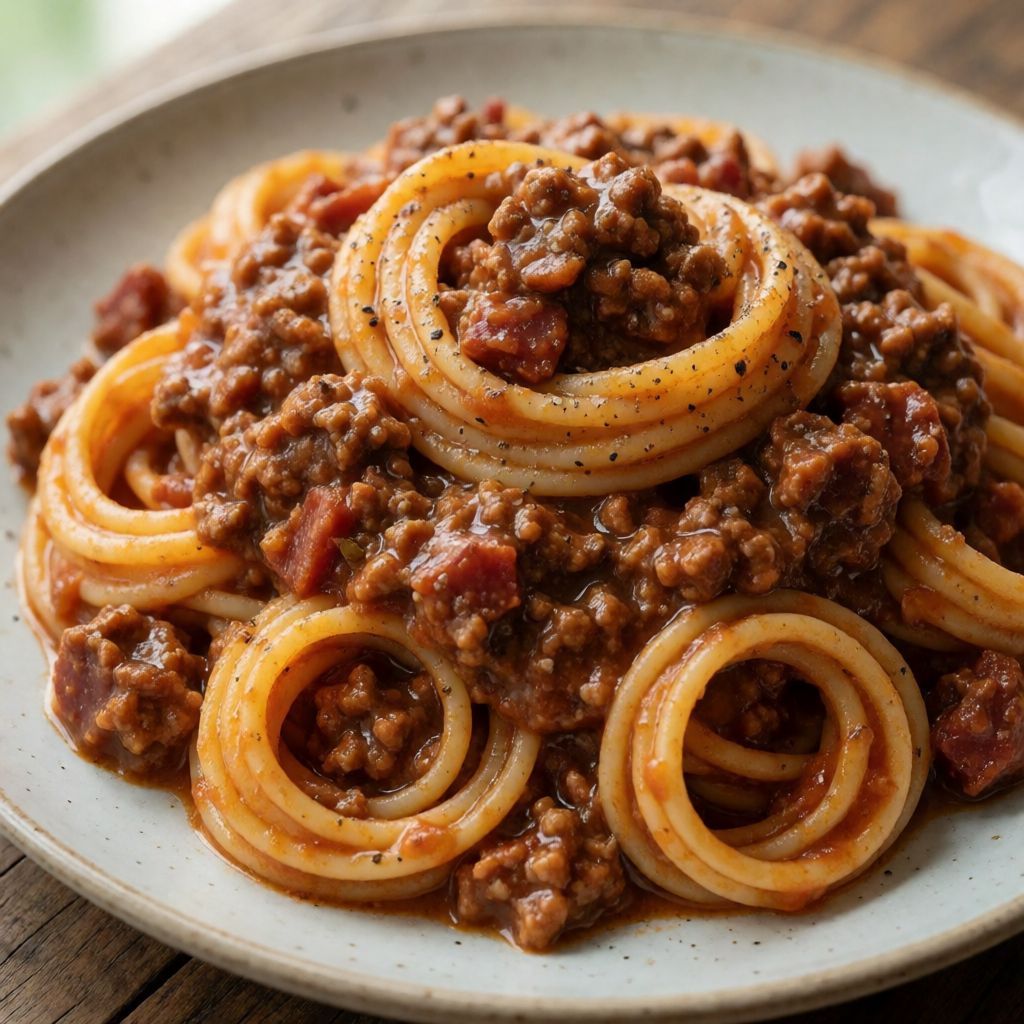
Pork Ragù with Pasta
A hearty pork ragù, simmered with pancetta, red wine and tomato, tossed with filled pasta and a scattering of grana padano.
Labels are worked out automatically from the ingredients and can be wrong. Check the packaging if it matters to you.
Ingredients
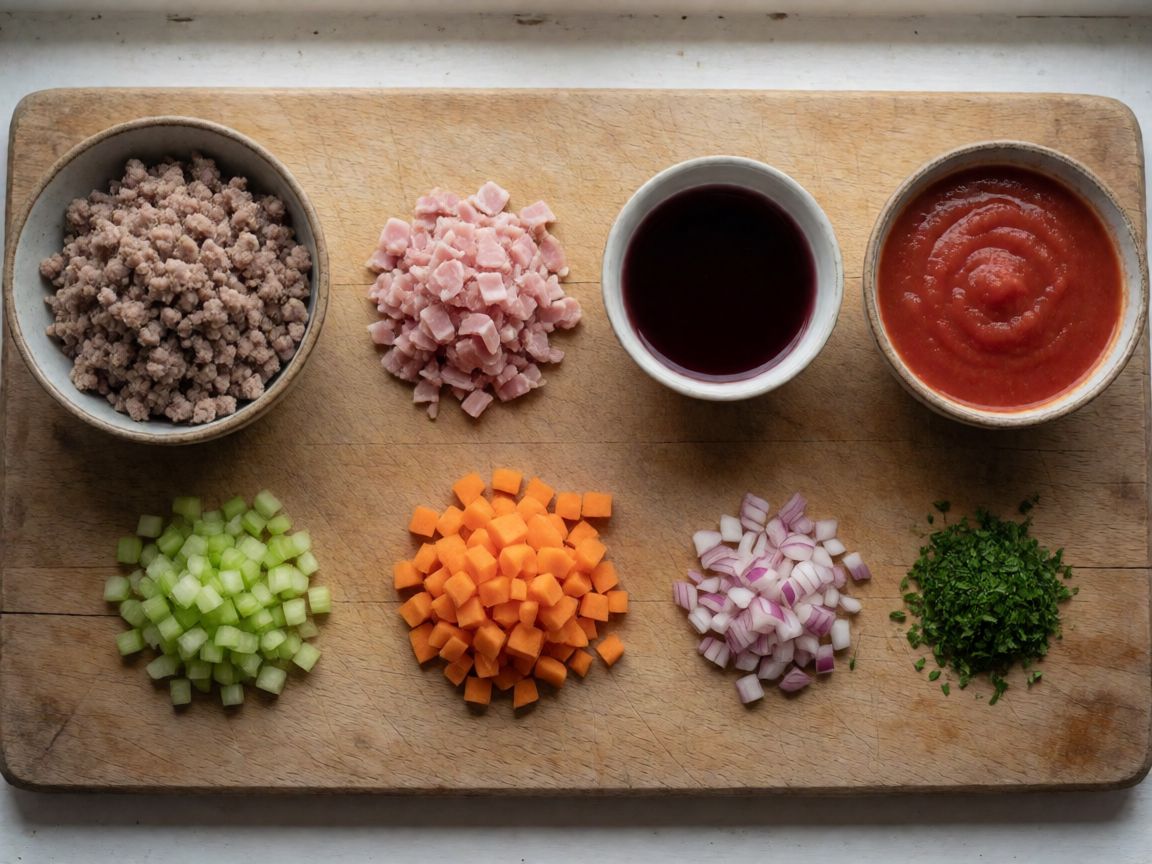
- 500 g Pork mince
- 100 g Pancetta
- Olive oil for frying
- Black pepper to taste
- Salt to taste
- 118 ml Red wine
- 200 g Tomato passata
- Celery chopped, to taste
- Carrot chopped, to taste
- Shallot chopped, to taste
- Parsley chopped, to taste
- 1 clove Garlic
- Grana Padano to taste
- 500 g Pasta agnolotti, ravioli or tortellini








Steps
In a pan, fry the chopped parsley and garlic in olive oil.
Add the chopped celery, carrot and shallot and cook for a few minutes until soft.
Add the pancetta and fry until golden.
Add the pork mince and fry, breaking up any lumps, until evenly browned. Done when the inside reaches 71°C.
Pour in the red wine and let it evaporate completely.
Lower the heat and simmer gently.
20 minAdd the tomato passata and continue cooking.
10 minSeason with salt and black pepper to taste.
Cook the agnolotti, ravioli or tortellini in plenty of salted boiling water.
5 minToss the cooked pasta with the ragù and serve, sprinkled with Grana Padano.
This is a ragù built backwards from what most people expect — it's not a thick tomato sauce with meat thrown in, it's meat cooked slowly with just enough tomato to carry it. Pork mince and pancetta are the base, the soffritto (celery, carrot, shallot) is the aromatic skeleton, and the wine and passata are there to deglaze and loosen, not to dominate. What decides whether it works is restraint at two points: how long you let the wine actually cook off, and how gently the meat simmers afterwards.
Some say ragù is a tomato sauce. No — because if tomato were the point, you'd use twice as much passata and call it a day. Here 200g passata for 600g of meat and pancetta is a coating, not a stew. The dish is meat first, acidity second. If your ragù tastes mostly of tomato, you've made something else — a bolognese cousin, not wrong, just not this.
The wine step is where people rush and lose the dish. "Pour in and let it evaporate completely" isn't decoration — raw wine left in the pan gives you a sharp, boozy edge that no amount of simmering later fixes, because by then it's bound into the fat and meat rather than sitting on top where heat can reach it. You want it gone before the next thing goes in: no liquid pooling, no smell of alcohol when you lean over the pan, just a drier sizzle and the base of the pan starting to look sticky rather than wet.
Pork mince over the more traditional beef is partly economics — mince is one of the cheaper cuts whichever animal it comes from, and pork mince in particular has enough fat in it that you don't need to add much oil for frying. That fat is doing real work: it's what the wine and tomato eventually marry into, giving the sauce body without flour or cream anywhere near it. If you only have beef or a mix, use it — the mechanism (fat rendering, then carrying acid and aromatics) is the same, pork just gets there a little more easily and a little more sweetly.
Pancetta isn't an optional extra, it's the seasoning. Fried until golden before the pork goes in, it renders out salty, smoky fat that coats everything that follows — this is why you go easy on added salt until the end, because pancetta has already salted the dish for you. No pancetta in the fridge? Streaky bacon, cut into small pieces and fried the same way, does the same job, just with less depth and more smoke. Leave it out entirely and you lose that base note — the ragù will taste thinner, not wrong, just quieter.
The soffritto — celery, carrot, shallot — gets fried first in oil with garlic and parsley, and the order matters more than the chopping size. Garlic and parsley go in first because they're delicate and burn fast; the vegetables follow because they need a few minutes of real contact with hot oil to start softening before anything wet or heavy goes on top and steams them instead of frying them. Shallot instead of onion is a milder, sweeter choice — if you only have onion, use it, just chop it fine, since onion holds more water and needs a little longer to lose its bite.
Red wine: any dry red you'd actually drink a glass of works — don't buy a "cooking wine," which usually just means a bad wine with a worse markup. 118ml is roughly half a small glass, enough to deglaze the pan and loosen the browned bits stuck to the bottom (which is most of your flavour, not a mess to wash away) without drowning the meat. No wine in the house, or avoiding alcohol — a splash of stock with a teaspoon of red wine vinegar gets you the acidity and the deglazing effect without the alcohol to cook off.
Grana Padano at the end rather than stirred through the ragù while it cooks: cheese melted into heat for too long goes grainy and loses the thing that makes it good, which is a clean salty sharpness on top of the dish, not inside it. Parmesan works exactly the same way if that's what's in the fridge — they're close enough cousins that the recipe doesn't care which one you reach for.
Fresh filled pasta — agnolotti, ravioli, tortellini — rather than dried spaghetti is the other quiet decision here. These shapes already carry filling, so the ragù is a coating, not a vehicle; you're tossing, not drowning. Five minutes in salted boiling water is a floor, not a clock — fresh filled pasta tells you it's done by floating and looking slightly swollen, not by a timer. If dried pasta is what you've got, any short shape that holds sauce in its folds — penne, rigatoni, orecchiette — will carry this ragù honestly, it just won't be quite the same dish.