
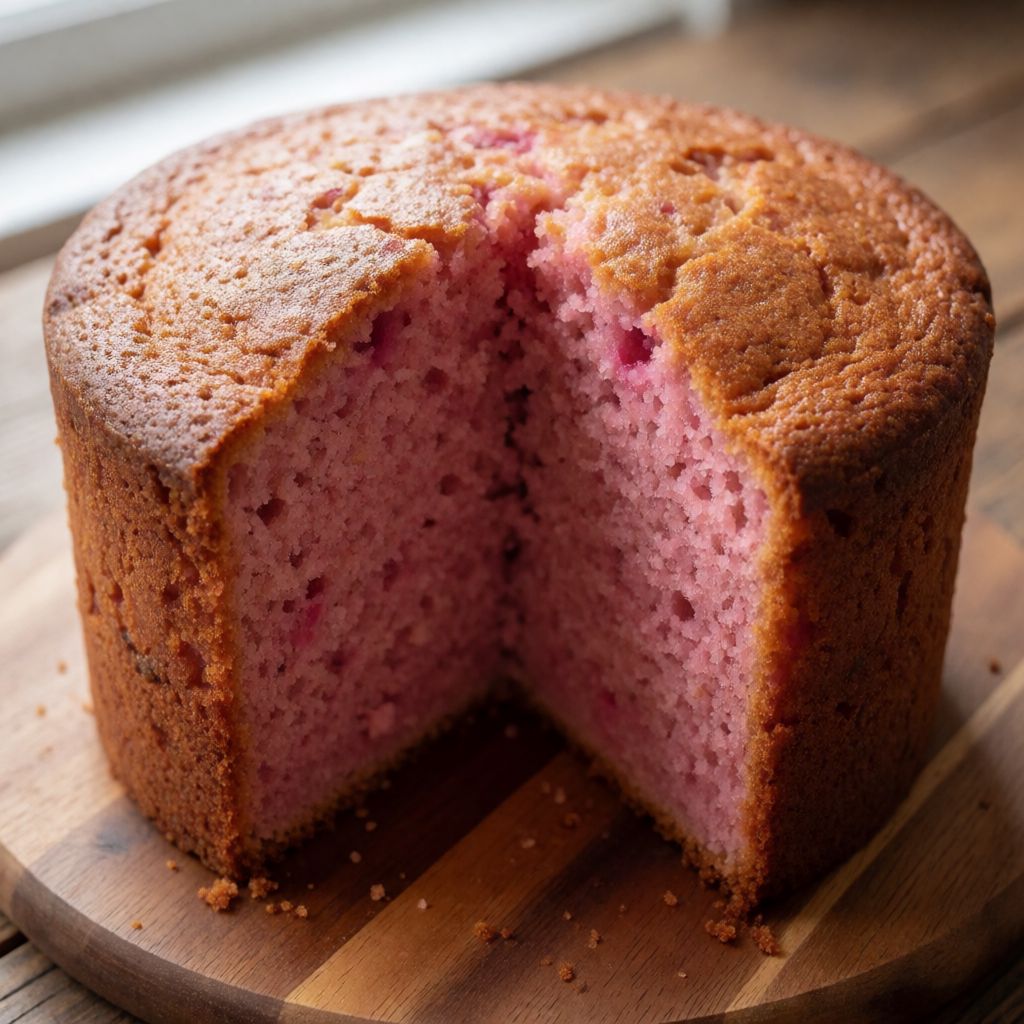
 AI photo
Prickly Pear Cake
A soft yoghurt cake flavoured with fresh prickly pear purée and a scattering of flaked almonds.
Labels are worked out automatically from the ingredients and can be wrong. Check the packaging if it matters to you.
Ingredients
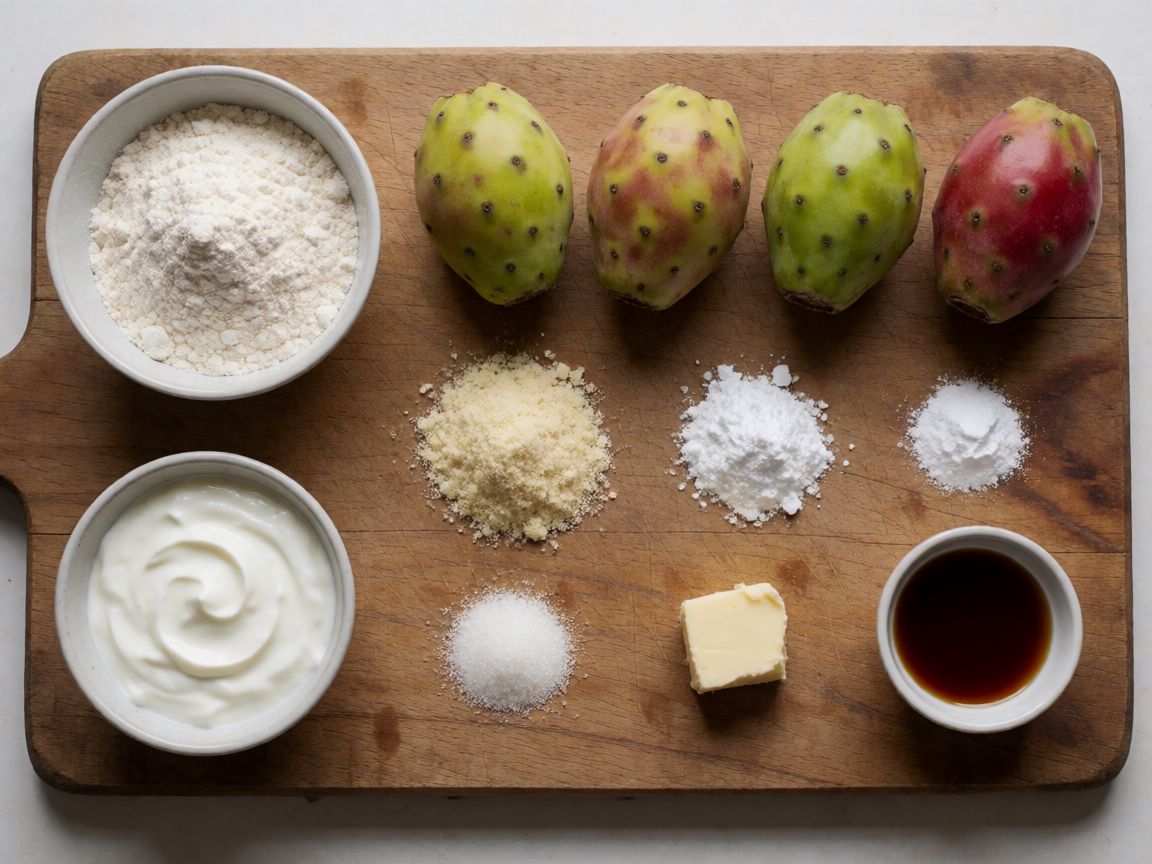
- 4 pcs Prickly pear
- 250 g Plain flour
- 50 g Ground almonds
- 10 g Baking powder
- 1 pinch Salt
- 300 g Yoghurt
- 120 g Sugar
- 100 g Butter
- 15 ml Vanilla extract
- 3 tbsp Flaked almonds
- Icing sugar to taste











Steps
Peel 3 prickly pears, cut into slices and blend until smooth.
Pass the prickly pear purée through a sieve to remove the seeds.
In a bowl mix the plain flour, ground almonds, baking powder and salt.
Combine the yoghurt and sugar, beat with a mixer for 3 minutes.
3 minAdd the butter, vanilla extract and prickly pear purée, and mix.
Fold the flour mixture into the batter, mixing on the lowest speed.
Pour the batter into a greased 22 cm tin, level it and sprinkle with flaked almonds.
Bake in a fan oven at 180°C for 35–40 minutes.
38 minCheck that it is done with a skewer.
Remove the cake from the oven, let it cool, then place on a serving plate.
Decorate with icing sugar and slices of prickly pear, if you like.
A prickly pear cake is really an almond-yoghurt cake wearing a disguise. The fruit purée does one job and one job only: it brings acidity and a bit of pink-magenta colour, and almost no flavour of its own worth chasing. If you've never had prickly pear, don't expect a revelation — it tastes faintly of watermelon and cucumber, mild to the point of shyness. What decides whether this cake works is the same thing that decides every yoghurt cake: how gently you fold the flour in at the end, and whether you trust the skewer over the clock.
The seeds are the first thing people get wrong. Some say you can just blend the fruit and tip it in — no, because prickly pear seeds are genuinely hard, almost stone-like, and they won't soften in the oven. Sieving isn't fussiness, it's the difference between a cake and a cake with gravel in it.
The structure is standard British-teatime logic: butter and sugar creamed with yoghurt for lift and moisture, ground almonds for weight and a slightly gritty, short crumb, flour and baking powder to hold it all up. The purée goes in wet, alongside the butter — treat it as a liquid, not a flavouring, because that's its actual job in the batter.
Doneness is a skewer coming out clean, not a buzzer. 35–40 minutes is where to start checking, not where to stop baking — ovens lie, especially fan ovens near the door seal, so trust the skewer that comes out dry over the number on the dial.
Prickly pear itself — if your greengrocer doesn't stock it (most don't, outside specialist shops), you lose nothing essential by swapping in another low-acid fruit purée with a bit of colour: blended ripe pear, or even a pink-fleshed dragon fruit if you want to keep the look. The cake doesn't depend on prickly pear's taste, because it barely has one strong enough to depend on. What it depends on is having roughly 300g of smooth, seed-free fruit liquid in the mix — get that from wherever you can.
Ground almonds do more than "nutty flavour" — they're fat and protein with very little gluten-forming ability, so they interrupt the flour's structure and keep the crumb from going rubbery. If you're out of them, finely ground any nut you like, or cut back and add a touch more flour, but expect a slightly tighter, less tender crumb. Any oil or fat with no flavour that fights the almonds will do for greasing the tin — a neutral vegetable oil, or butter, same as what's already in the batter.
Yoghurt here isn't a garnish ingredient, it's the acid that reacts with the baking powder and the tenderiser that stops the cake drying into a brick. Full-fat, plain, nothing flavoured — the fat content matters more than the brand. If you've only got a thinner yoghurt or kefir, it'll still work, just don't expect quite the same density.
Butter at room temperature, not melted and not fridge-cold — this one's not superstition. Cold butter won't beat smoothly into the yoghurt-sugar mix and you'll get lumps that never fully disappear in the oven; melted butter collapses the air you're trying to build in step 4. Soft, spreadable, that's the test — press it with a finger, it should give without resistance.
Folding the flour mixture in on the lowest speed, or better, by hand with a spatula — this is where most domestic cakes go wrong, and it's not about the mixer being too strong, it's about gluten. Flour develops structure the more it's worked; overmix at this stage and you trade a tender crumb for something closer to bread. Fold until you can't see dry flour anymore and stop — patience here is the actual ingredient, more than any item on the list.
A 22cm tin in an ordinary kitchen — if yours is a different size, the cake still bakes, just adjust your eye rather than the clock: a wider, shallower tin cooks faster and needs checking sooner, a narrower deeper one later. Flaked almonds on top toast rather than bake — they're there for a contrast of texture, a bit of crunch against the soft crumb, and they'll catch and darken near the end, so glance at them in the last ten minutes rather than trusting the oven to behave.
Icing sugar at the end is cosmetic, nothing more — dust it after the cake has properly cooled, because heat will melt it into a damp patch instead of a dusting. Let the cake rest after baking before you touch it; cutting into a hot cake is how you lose a clean slice and gain a crumbled mess, however good the smell is pulling you toward it.