
 AI photo
Pumpkin Cappuccino Soup
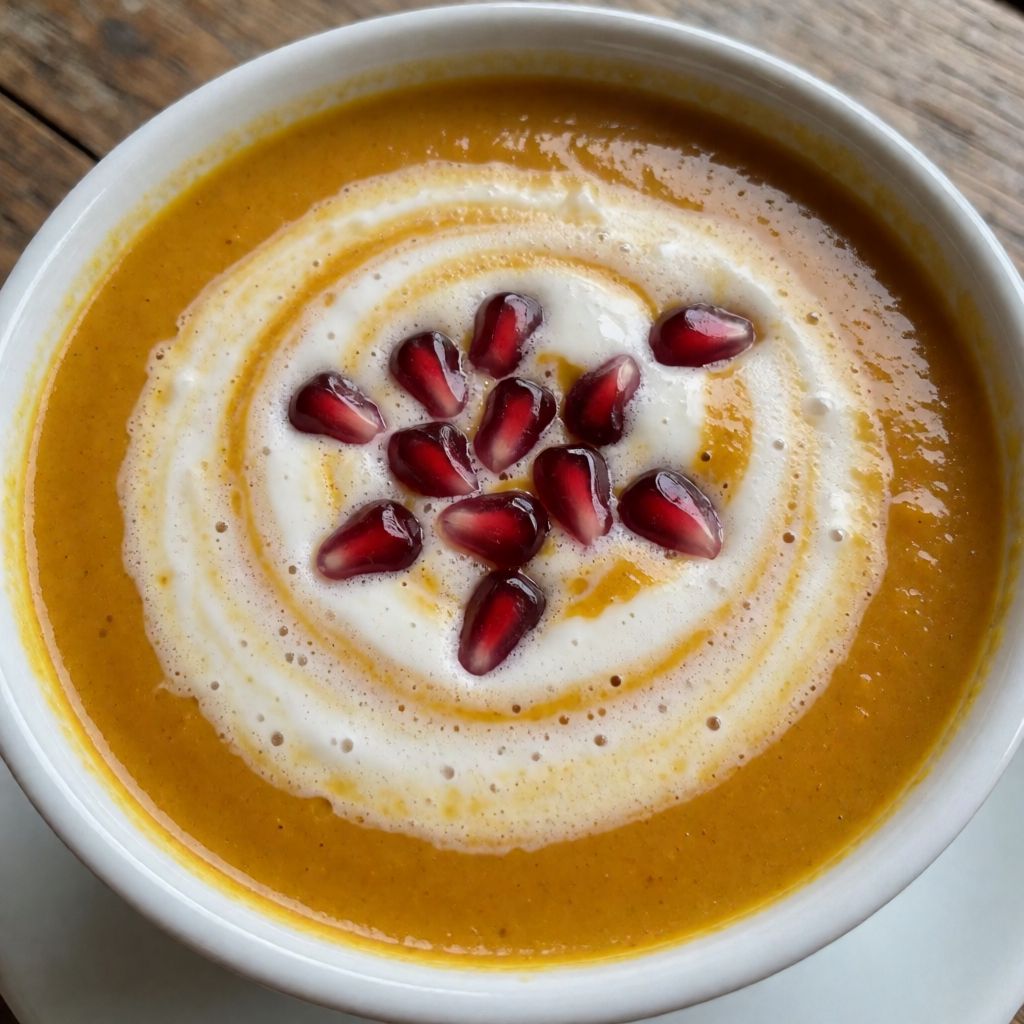
A creamy pumpkin soup topped with a whipped cheese foam and pomegranate seeds, served in cups like a cappuccino.
Labels are worked out automatically from the ingredients and can be wrong. Check the packaging if it matters to you.
Ingredients
- 500 g Pumpkin
- 4 pcs Potato
- 2 pcs Leek
- 200 ml Double cream
- 200 g Cream cheese
- 1 pcs Pomegranate
- Stock to taste
- Rosemary to taste
- Olive oil to taste
- Salt to taste
- Black pepper to taste
- Nutmeg to taste












Steps
Wash and peel the potatoes, cut them into small cubes, and cut the peeled pumpkin the same way.
Finely chop the leek and fry it in olive oil until golden.
Add the pumpkin and potato, fry over high heat, then add the rosemary and vegetable stock.
Cook until the potato and pumpkin are soft, then blend with a stick blender into a thick cream.
Pour the cream soup into cups, filling them to about 3/4 full.
Whip the cream with the cream cheese until light and fluffy.
Spoon the topping over the soup and season with black pepper and nutmeg.
Garnish with pomegranate seeds and serve warm.
What was changed
Cream cheese was swapped in because the original soft cheese is hard to find in UK shops; a similar creamy cheese is used instead.
The name does the trick — it's not coffee at all, it's a pumpkin and potato soup dressed up to look like a cappuccino, with a cloud of whipped cream cheese sitting on top where the froth would be. The pleasure is visual as much as edible, and that matters, because this is a dish built for the cup, not the bowl. Serve it in a mug or a small glass and you've already won half the battle.
What decides whether it works is the texture of the base and the texture of the "foam" against each other. The soup underneath needs to be properly smooth — no stray fibre, no potato lump — because any roughness there reads as a mistake, not rustic charm, once you've put a delicate white cap on it. The cream-cheese topping needs enough air whipped into it to sit proud and hold its shape in a spoon, not slump into the soup like cream going into a cup of actual coffee. Get both right and the pomegranate seeds on top aren't decoration, they're the crema's bubbles — the eye reads them as texture before the tongue tastes anything.
Leek here is doing the job onion usually does — building the savoury base — but gentler, sweeter, without the sharp edge raw onion leaves behind if you rush the frying. Potato is there to thicken: pumpkin alone, once blended, stays a bit thin and watery, and potato starch is what turns "pumpkin water" into something you'd call a soup. Four people, four small cups — this is a starter, not a meal, so don't scale it up expecting it to fill anyone's Sunday roast slot.
Start with the leek: cut it finely and fry it in oil until it goes from white to pale gold, no further. Some people treat leek like onion and walk away from the pan — don't. Leek burns at the edges faster than onion because it's mostly water held in thin layers, and burnt leek turns bitter in a way that no amount of cream will mask later. Gold means sweet; past gold means bitter and there's no fixing it once it's in the pot.
Pumpkin and potato go in next, cut to matched small cubes — matched size matters more than exact size, because if one piece is three times bigger than another, you'll have raw starch grains in your "silky" soup even after blitzing, and that shows up as grit on the tongue, not lumps you can see. Frying them briefly over high heat before the stock goes in isn't about colour, it's about sealing the surface so they don't immediately dump their starch into the liquid and turn it gluey before it's even simmered. Stock, not water — water gives you sweetness with nothing behind it; stock gives the base something to stand on, even a weak vegetable one from a cube, which is honest and fine. Cook until the pumpkin bends apart under a spoon with no resistance and the potato does the same — that's doneness, not a clock. Undercooked potato through a stick blender turns waxy and chalky, not smooth, no matter how long you blend.
The rosemary is a British kitchen regular already — you've got it going into the roast most Sundays — and here its job is to cut through the sweetness of pumpkin and cream, which otherwise tips the whole dish toward dessert territory. Use it sparingly and whole, not chopped, so you can fish it out before blending; blended rosemary needles turn bitter and woody in a way whole sprigs infusing don't.
Double cream and cream cheese whipped together is the whole trick of the "cappuccino" idea. Double cream alone whips to soft peaks but won't hold weight on top of hot soup for long — it's the cream cheese that gives it backbone, the same reason a flat white holds its pattern longer than a thin milk froth. Whip until it holds its own shape off the whisk, not pourable, not stiff like buttercream — somewhere between. If you've only got single cream in the fridge, don't bother; it has nowhere near the fat to hold air once beaten, and you'll get soup with white liquid floating on it, not a cap.
Nutmeg and black pepper go on the cream top, not in the soup — scattered there, they sit visible and aromatic, the way cocoa dust sits on a cappuccino, rather than disappearing into the body of the dish. Pomegranate seeds want to be fresh and whole, picked out by hand from a cut fruit rather than bought pre-packed, because pre-packed seeds often arrive slightly weeping and that bleeds pink into your white cream, which rather defeats the look you're going for.
Patience here isn't about long cooking — thirty minutes is honest and short — it's about not rushing the blend and not rushing the whip. A soup blended for thirty seconds too little still has texture to iron out; cream whipped for thirty seconds too little won't hold its shape on the spoon. Both failures show up at the very last step, in the cup, in front of whoever you're serving — so give the last two minutes of each stage your full attention, not the first ten.