
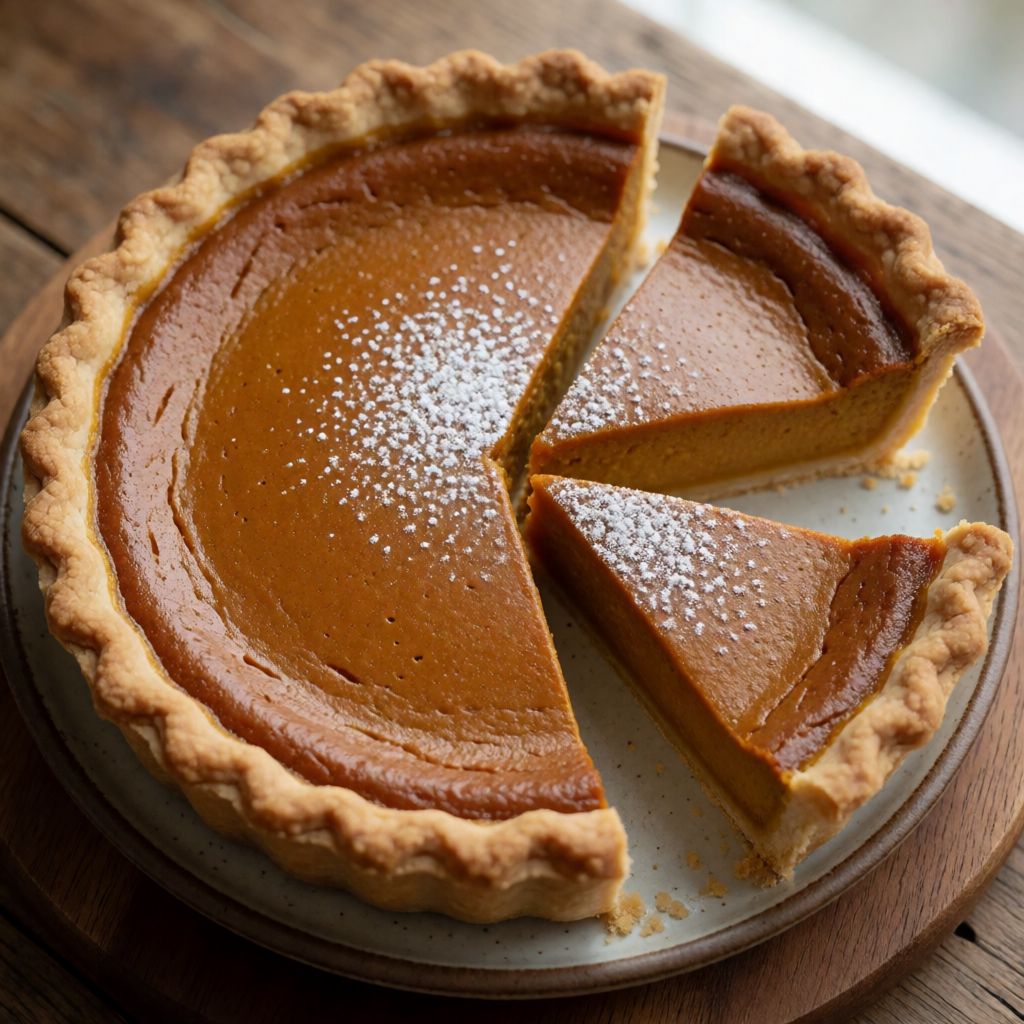
 AI photo
Pumpkin Pie
An American-style pumpkin pie with a buttery pastry crust, warm spices and a whipped cream topping.
Labels are worked out automatically from the ingredients and can be wrong. Check the packaging if it matters to you.
Ingredients
- 1 kg Pumpkin
- 240 g Plain flour
- 50 g Icing sugar
- 120 g Butter
- 1 pinch Salt
- 1 pcs Egg beaten
- 3 pcs Eggs
- 50 g Muscovado sugar
- 400 g Condensed milk
- 1 tsp Cinnamon ground
- 1 tsp Ginger ground
- 0.5 tsp Cardamom ground
- 1 pinch Star anise ground
- 0.5 tsp Nutmeg finely grated
- 1 pinch Allspice
- 1 pinch Cloves ground
- 100 ml Double cream whipped
- 50 ml Maple syrup

















Steps
Cut the pumpkin into quarters and remove the seeds. Place on a baking tray skin-side up and bake in a preheated oven at 175°C (fan) for 45 minutes.
10 minRemove from the oven and let cool slightly. Scoop the flesh from the skin and blend until smooth.
10 minPut the plain flour, icing sugar, salt and butter into a blender and pulse quickly until combined.
2 minTransfer to a bowl and knead into a dough with the beaten egg and, if needed, a little cold water.
3 minRoll the dough out between two sheets of baking paper and chill in the fridge for 30 minutes.
30 minButter a 24 cm pie tin and line it with the dough, pressing gently into the edges and trimming for a neat edge. Keep the trimmings for decoration.
Prick the base with a fork, cover with baking paper, fill with dried beans and blind-bake in a preheated oven at 175°C (fan) for about 15 minutes.
2 minRemove the base, take out the paper and beans, and bake for a further 5 minutes. Let the base cool slightly.
5 minWhisk the eggs and muscovado sugar until light and fluffy.
4 minAdd the condensed milk, pumpkin purée and all the spices together with the salt, and whisk until smooth.
2 minPour the filling into the pie base and bake in the oven at 170°C (fan) for about 50 minutes. Cover the pie with foil if the surface darkens too much before it's done, making sure the foil doesn't touch the surface.
50 minLet the pie cool completely and decorate with dollops of whipped cream, dough shapes and a little finely grated nutmeg and cinnamon.
5 minServe the pie drizzled with maple syrup.
A pumpkin pie is two separate engineering problems wearing one dessert's name: a pastry shell that has to stay crisp under a wet custard, and a custard that has to set without curdling into scrambled eggs with orange bits in them. Everything in this recipe is one of those two problems being solved.
The pumpkin itself isn't really about flavour — raw pumpkin is mostly water and not much taste. Roasting it skin-side up does two jobs: the skin holds the shape so the flesh doesn't collapse into a tray of soup, and the dry oven heat drives off water that a boiled or steamed pumpkin would keep. That water is the enemy of everything downstream — it's what makes a custard split or a base go soggy. Some say pumpkin pie needs a tin of "pumpkin purée" from a specific American aisle — no, because that tin is just roasted, drained squash; what you're doing on your own tray is the same process, you just have an oven instead of a factory.
The filling is a custard, full stop — eggs, sugar, condensed milk and pumpkin, and the condensed milk is doing real work: it's sugar and milk solids already reduced down, so it thickens the custard and adds body without adding the extra liquid that fresh milk or cream would bring. That's the whole reason it's in there instead of a splash of double cream — cream goes on top later, where it can stay cold and loose, not inside the filling where looseness is a liability.
Whether this pie works comes down to two moments: the blind bake, and knowing when to pull the filling out. Everything else is assembly.
Start with the pastry. Butter cut into flour and chilled, worked fast — that's not fussiness, it's physics. Warm butter melts into the flour and you get a biscuit; cold butter stays as little solid pieces that steam and separate the flour layers in the oven, which is what makes pastry shatter rather than just go hard. In your flat you don't have a marble slab to keep things cold, so the fridge becomes your cold surface — 30 minutes chilling the rolled dough isn't a suggestion, it's buying back the warmth your hands and your kitchen put into the butter while you worked it. If your kitchen runs hot, do the pulsing in short bursts and let the bowl sit on a cold counter between them — same end, slower route.
Blind baking with beans or rice on paper is there to stop the single biggest failure of a custard pie: the "soggy bottom" everyone on British telly worries about, and for once the telly's right. An empty pastry shell with nothing weighing it down will puff and the base will bubble up, leaving gaps that a liquid filling pours straight through, under, and around. The beans hold the base flat while the pastry sets its structure; only once that structure exists do you remove them and let the base properly brown and dry, because a pale base under a wet custard for 50 minutes will not be a crisp base by the end — it'll be dough.
For spices: cinnamon, ginger, cardamom, star anise, nutmeg, allspice, clove — this is not one "pumpkin spice," it's seven different aromatic compounds layered so no single one dominates. If you're missing cardamom or star anise, don't go hunting a specialist shop for them — any warm, slightly resinous ground spice you already have for mulled wine or a fruit cake will do the same job; the criterion is "warm and aromatic, not sharp," not the specific name on the jar.
The eggs and muscovado get whisked until "light and fluffy" — that's not decoration either, it's dissolving the sugar fully and beating air in, so the custard sets smoothly instead of grainy, with sugar crystals left half-dissolved inside it. Muscovado specifically brings a mild molasses note that white sugar won't — if you've only got light brown sugar, use it, you'll lose a little depth but not the mechanism.
On temperature: your oven's actual 170–175°C and the dial's 170–175°C are often two different numbers, especially fan ovens, which run hotter at the edges than the middle reads. Watch the filling, not the clock, for the final bake: it should still have a gentle wobble in the centre like a just-set jelly — not liquid, not solid — because custard keeps cooking from retained heat after it leaves the oven, and if you wait for it to look fully firm in the tin, it will be overcooked and cracked by the time it cools. The foil-over-the-top move is there for one specific failure: the surface sugars catch and darken well before the centre has actually set, because the top is thin and the centre is insulated by all that filling underneath it — tenting it buys the centre more time without burning the top.
Patience is the real last ingredient here. Let the pie cool fully before cutting — a custard that's still warm is still structurally a liquid with ambitions, and cutting into it now gives you a wedge that slides instead of holds. This is a pie for after a Sunday roast, cut once everyone's had their tea, not straight off the tray. Eight slices, one 24cm tin — plan the size of your roast around it, not the other way round.