
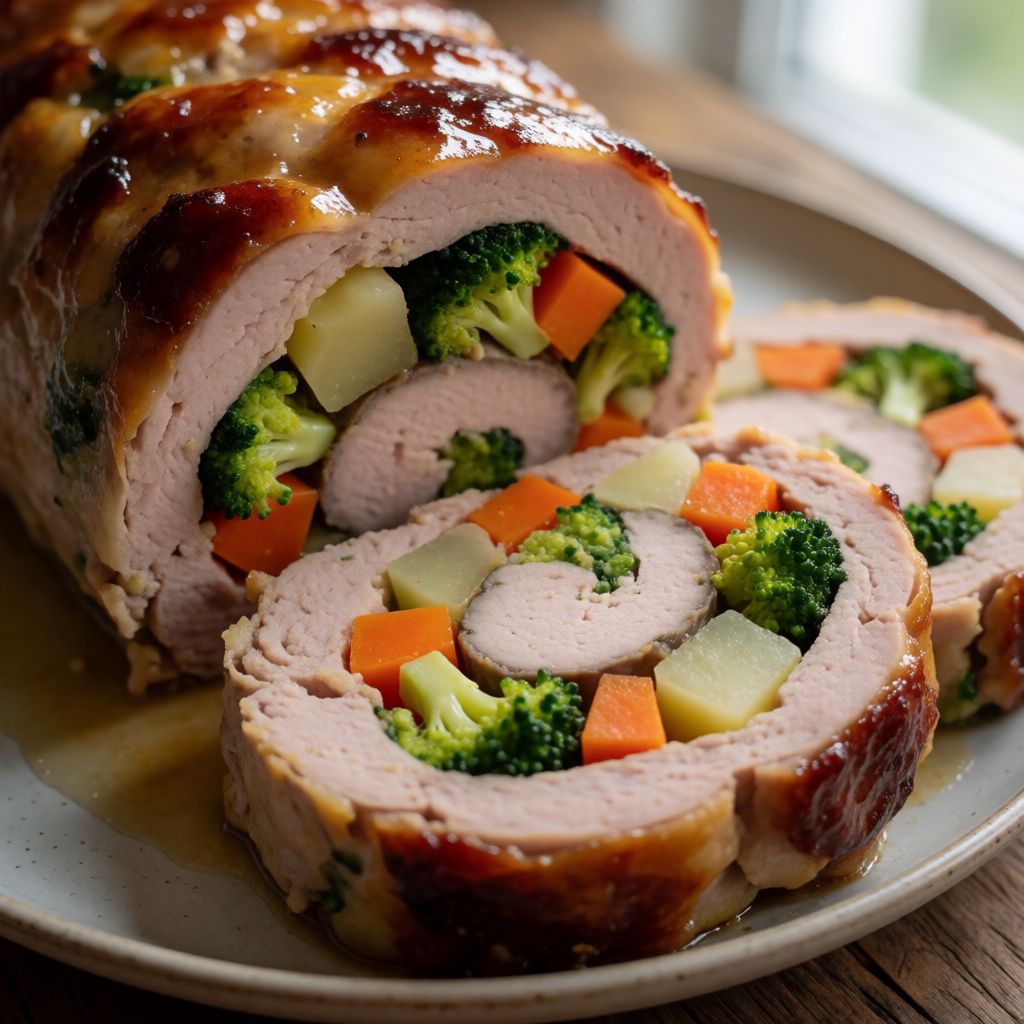
 AI photo
Turkey and Vegetable Roulade in Honey Glaze
A turkey and pork roulade filled with broccoli, carrot and potato, glazed with honey and orange juice.
Labels are worked out automatically from the ingredients and can be wrong. Check the packaging if it matters to you.
Ingredients
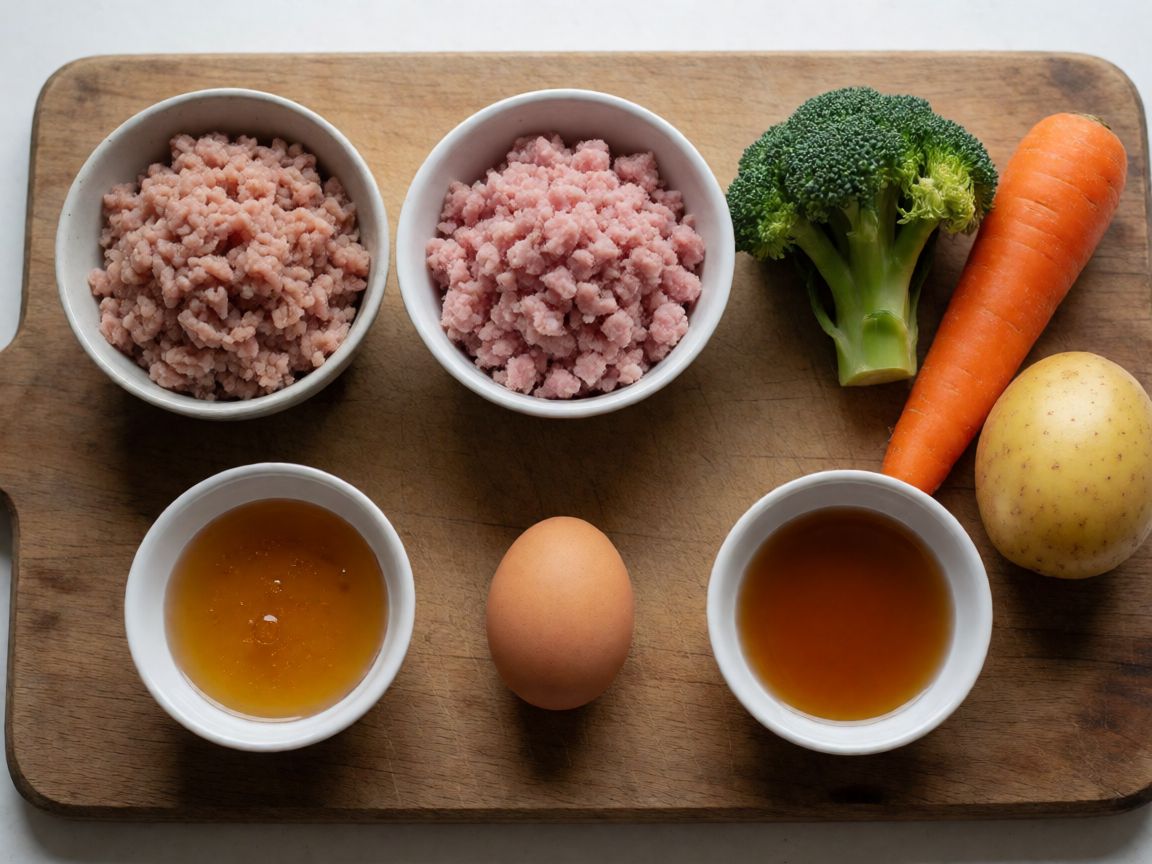
- 500 g Turkey mince
- 200 g Pork mince
- 1 pcs Broccoli
- 1 pcs Carrot
- 1 pcs Potato
- 1 tbsp Honey acacia honey
- 1 pcs Egg
- 250 ml Brandy
- Salt to taste
- White pepper to taste
- Plain flour for dusting
- 2 tbsp Parmesan
- Olive oil to taste
- 1 tbsp Breadcrumbs dried
- 2 pcs Oranges, juiced
- 1 pcs Bay leaf















Steps
Mix the turkey mince and pork mince with the egg, Parmesan, breadcrumbs, a pinch of salt and black pepper until smooth.
10 minSpread the mixture onto a sheet of baking paper and arrange the finely chopped vegetables (broccoli, carrot and potato) over it.
5 minRoll into a roulade shape and coat with flour.
5 minIn a pan with olive oil, quickly sear the roulade on all sides, then pour in the brandy and let it evaporate.
5 minTransfer the roulade to a baking dish, drizzle with the juice of the oranges, add the honey and bay leaf.
2 minBake in an oven preheated to 200°C, turning the roulade and basting with the sauce. Ready when the inside reaches 71°C.
40 minServe the roulade in slices with the sauce, mashed potatoes or grilled vegetables.
What was changed
The step keeps the original oven temperature; 71°C only marks when the meat is done inside.
This is a meatloaf that went to finishing school. Turkey and pork mince, rolled out flat, lined with raw vegetables, rolled up like a Swiss roll, seared, then finished in an oven bath of orange juice and honey. Call it a roulade — it's really a stuffed loaf standing on its side, dressed for a Sunday table.
What decides whether it works has nothing to do with the glaze. It's fat. Turkey breast mince sits around 1–2% fat — press the raw mix with a finger and it feels like wet paper. The 200g of pork does what honey and orange never could: it carries juice through forty minutes in a hot oven. Leave the pork out and you get a dry roll wearing a wet sauce, which is not the same thing as a juicy one.
The second thing that decides it is how fine you chop. The carrot, potato and broccoli go in raw, and they get exactly one oven's worth of heat to catch up — the same stretch of time the meat needs to reach 71°C in the centre. Cut the potato the way you'd cut it for a stir-fry, not for a stew, or it's still chalky when the meat's done.
Some say searing "seals in the juices." No — meat isn't a bag you can zip shut, the surface stays just as porous after browning as before. Searing is there for colour and for the savoury crust the Maillard reaction builds, nothing more. You still need the pork, the thermometer and the basting to keep this one moist — searing is flavour, not insurance.
Start with the meat ratio itself: roughly 2 parts turkey to 1 part pork by weight. That's not an aesthetic choice, it's arithmetic — enough pork fat to lift the whole mix above the point where lean poultry dries out in a hot oven, without drowning the dish in pork flavour. If pork's off the table, don't just leave a gap — replace what it was doing. Turkey thigh mince (darker, fattier than breast) works, or melt a couple of tablespoons of butter into the breast mince before you season it. The criterion is fat, not pork specifically.
Egg, Parmesan and breadcrumbs are the panade — the thing that stops a rolled mince log from falling apart the moment you slice it. Egg protein sets and ties the strands of meat together as it cooks; the dried breadcrumbs swell with the meat's own juices instead of letting them run out, so the texture stays soft rather than rubbery; the Parmesan brings salt and glutamate — savoury depth — along with a little extra fat. Swap the cheese for any hard, aged, low-moisture one with real salt in it — pecorino, grana padano — and the breadcrumbs for anything dry and absorbent, even blitzed crackers or oats, if that's what's in the cupboard.
In a British kitchen there's no sausage casing and no trussing needle for this, so lean on baking paper: shape the filled mince into a roll on the paper, use the paper itself to coax it into a tight cylinder the way you'd roll a Swiss roll, then peel it away before it goes anywhere near heat. The flour dusting afterwards isn't armour, it's glue — it meets the moisture on the surface and turns into a thin paste, and that paste is what actually browns and crisps in the pan. Use any neutral oil with a high smoke point for the sear — regular olive oil handles a quick hot sear perfectly well, it's only extra virgin, with its leftover plant solids, that scorches and turns bitter early. That's a kitchen myth worth dropping.
The brandy isn't there to flavour the meat with alcohol — quite the opposite. Poured onto a hot pan it flares and reduces, and what burns off is the raw ethanol bite; what's left behind are the warmer, fruitier notes, plus whatever caramelised meat residue was stuck to the pan, now scraped loose into the sauce. Let it reduce down properly before you move on — rushed, it leaves a hot, chemical edge in the glaze, and that's patience doing its job as an ingredient, not a delay. Any dark spirit with its own aroma — cognac, a dry sherry — does the same thing; even a dry white wine will deglaze the pan, just without the flame.
Orange juice, honey and bay in the baking dish are an acid-sugar glaze, and honey starts to caramelise and then scorch well before 200°C builds up anywhere near that heat on an exposed surface. That's the real reason for turning the roulade and spooning the sauce back over it rather than leaving it be: it keeps the glaze thin and wet instead of letting all its sugar bake hard onto one spot. The bay leaf's job is to sit in the background and needle the sweetness with something bitter and green — pull it out before serving, it's spent its use. Use any light, mild honey — acacia is chosen because it won't fight the orange; a dark, heather or buckwheat honey would argue with it instead.
71°C in the centre isn't a flavour decision, it's a safety one — mince, unlike a whole joint, has surface bacteria worked all the way through it, so there's no cutting it open to check by eye or texture, you need a probe thermometer. Push past the idea that colour or firmness tells you anything useful here; with a stuffed roll like this they don't. Let it rest a few minutes once it's out — the centre keeps climbing a degree or two on carryover heat, and the juices that were racing toward the surface get a moment to settle back in before the knife goes through.