
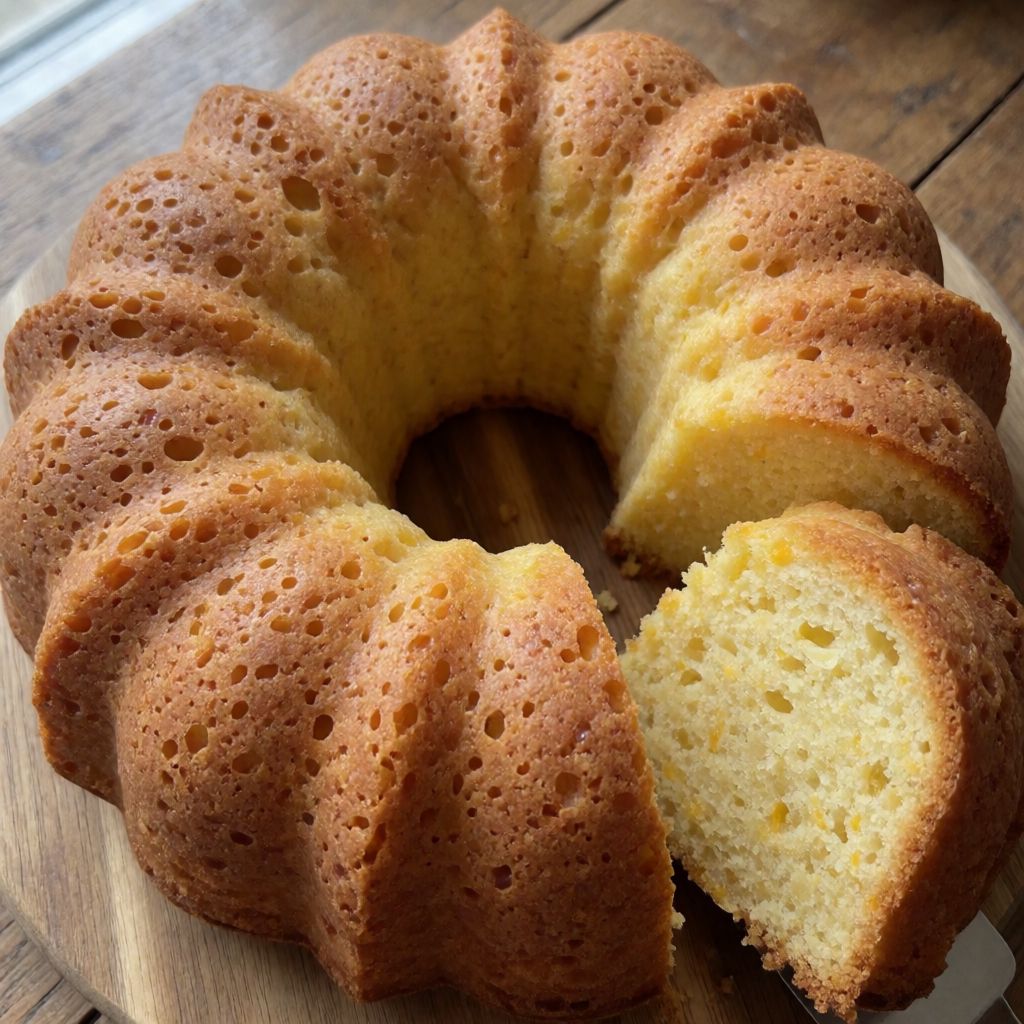
 AI photo
Savoury Bundt Cake
A savoury bundt-style cake studded with olives, bacon, smoked scamorza, cherry tomatoes and almonds.
Labels are worked out automatically from the ingredients and can be wrong. Check the packaging if it matters to you.
Ingredients
- 3 pcs Eggs
- 60 ml Olive oil
- 250 g Ricotta
- 300 g Plain flour
- 125 ml Yogurt
- 50 g Parmesan
- 16 g Baking powder
- 80 g Taggiasca olives
- 100 g Pancetta diced
- 150 g Smoked scamorza diced
- 150 g Cherry tomatoes
- 20 g Almonds roughly chopped
- Salt to taste
- Black pepper to taste













Steps
Mix the eggs with the olive oil, then add the ricotta and whisk thoroughly until smooth.
Add the Parmesan, salt and black pepper to taste, then gradually fold in the flour and baking powder.
Add the yogurt and mix well.
Add the Taggiasca olives, pancetta, smoked scamorza, cherry tomatoes and almonds and mix thoroughly.
Transfer the batter into a 24 cm bundt tin, greased with butter and dusted with flour.
Bake in a preheated fan oven at 170°C.
48 min
What was changed
The olives were corrected to Taggiasca olives, which are easy to find in British shops.
This is cake grammar borrowed for a savoury job: eggs and flour build structure, ricotta and yogurt supply fat and moisture, and everything else — olives, pancetta, scamorza, tomatoes, almonds — is just cargo sitting inside that structure. It's not a quiche, it has no pastry to hold water back, and it's not bread, it has no gluten network built by kneading. The batter has to be loose enough to flow into a ring tin but thick enough to carry diced cheese and pancetta without them all sinking to the bottom.
What decides whether it works is the ricotta. Supermarket ricotta is often wetter than the Italian tub version — more whey, less curd — and a wet ricotta means a wet batter, which means a dense, gummy middle no matter how long you leave it in. Some say you fix a soggy centre by baking longer. No — you fix it before the oven, by making sure the ricotta is properly drained, even tipping it into a sieve for ten minutes while you crack the eggs. Longer baking just dries the crust while the middle stays underdone.
The second thing that decides it is how the fillings are cut. Pancetta and scamorza in big chunks sink; cut small and tossed with a spoonful of the flour before they go in, they stay suspended. This is the same trick as glacé cherries in a fruit cake — not folklore, just physics: a floury coating grips the batter and stops the dense bits dropping.
Eggs here are structure, not enrichment — three of them whisked into the oil and ricotta until smooth is what lets this hold a ring shape with a hole in the middle and not slump. Don't rush this step by dumping everything in together; a properly whisked egg-oil-ricotta base means the flour you fold in later only has to thicken, not also try to emulsify fat that's sitting in lumps.
Olive oil is there for a clean fat with no competing smell — you want the cheese and pancetta to be what you taste, not the oil. Any oil with no flavour of its own works: a light vegetable or sunflower oil is a fair stand-in if that's what's in the cupboard. Just don't reach for something like a peppery extra virgin that fights the ricotta.
Ricotta and yogurt split one job between them: fat for richness, moisture for a batter that pours. Full-fat natural yogurt is what's wanted — low-fat versions carry more water and less fat, and that tips the balance back toward the soggy-middle problem already flagged. If you're out of yogurt, soured cream or crème fraîche does the same moisture-with-fat job, just slightly richer.
Baking powder, 16g to 300g flour, is a generous dose — about double what you'd use in a plain sponge of that size — because this batter is weighed down with pancetta, cheese, olives and tomatoes, all of which want to drag it back down while it's trying to rise. Skimp on the baking powder and you get a cake that's dense in the literal, not the good, sense.
The olives, pancetta, scamorza, tomatoes and almonds are the point of the dish but structurally they're just inclusions — pick them for contrast, not abundance. Taggiasca olives are small and mild; if you can't get them, a pitted black olive chopped smaller gets you closer than a big fat green one, which will taste more aggressive and sit heavier in each slice. Scamorza is a mild smoked cheese that melts without weeping much liquid — a smoked mozzarella or even a mild cheddar will do if scamorza isn't on the shelf, though cheddar brings more bite than this cake is built for. Cherry tomatoes go in whole or halved; pat them reasonably dry first, because a tomato that bleeds into raw batter is adding back the moisture you just worked to control.
Parmesan goes into the batter itself, not on top, giving savoury depth and a little salt throughout rather than just a crust. Grate it fine so it disappears into the mix instead of clumping. The almonds are the odd one — texture, not flavour, a bit of crunch against all that soft cheese and egg. Toast them lightly in a dry pan first if you want them to actually taste of something rather than just snap.
On timing: 48 minutes at 170°C fan is a floor, not a fixed point, because every domestic oven runs slightly differently and a dense batter like this is the kind that looks done on top while still wet at the core — the classic trap. The real test is a skewer through the thickest part of the ring coming out clean, with no streaks of raw batter clinging to it; if it doesn't, give it more time rather than trusting the clock. And let it sit in the tin a few minutes once it's out — demoulding too early is how you lose half the ring to a tin that's still gripping a cake that hasn't firmed up yet.