
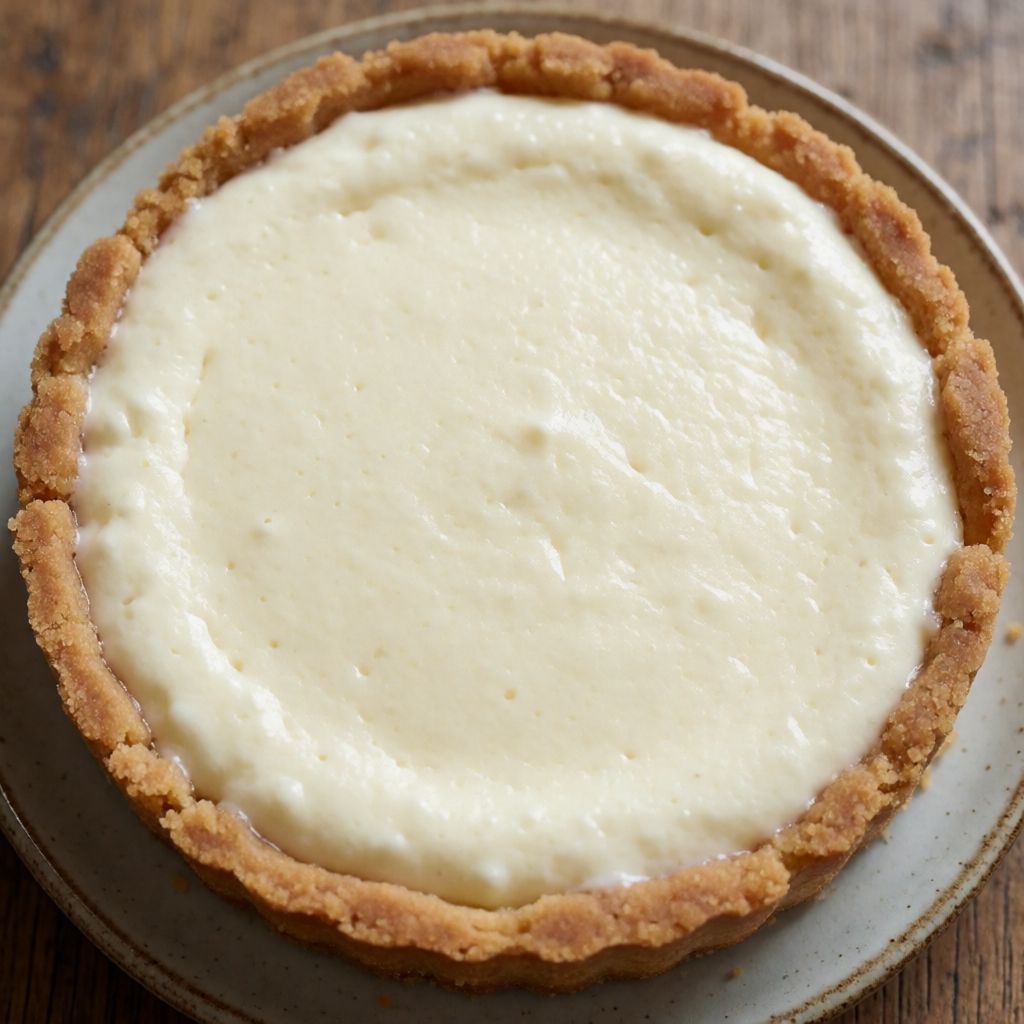
 AI photo
Cream Tart with Shortcrust Pastry
A creamy mascarpone tart on a crumbly almond shortcrust base, finished with forest berries, macarons and mint.
Labels are worked out automatically from the ingredients and can be wrong. Check the packaging if it matters to you.
Ingredients
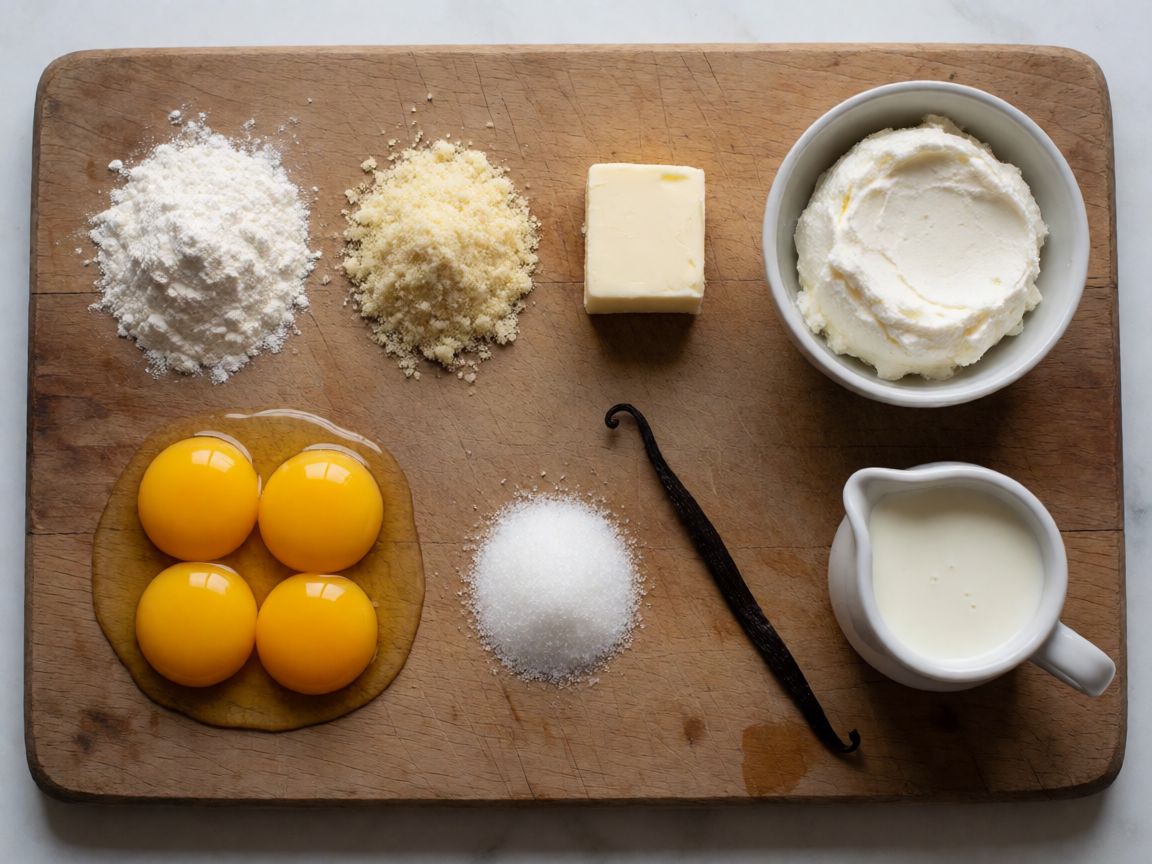
- 250 g Plain flour
- 220 g Almond flour
- 200 g Butter
- 4 pcs Egg yolk
- 150 g Caster sugar
- 350 g Mascarpone
- 600 ml Double cream
- 0.5 pcs Vanilla pod
- Mixed seasonal berries to taste
- Macarons to taste
- Mint for decoration









Steps
On a work surface, pour the flour and add the butter cut into small pieces; rub together by hand until a crumbly sandy texture forms.
Add the almond flour, part of the sugar and the egg yolks, and quickly knead into a smooth, compact ball of dough.
Wrap the dough and let it rest in the fridge.
30 minTake out the dough and divide it in half. Roll out one half to a thickness of 5-6 mm.
Prick the surface with a fork, place a 22x30 cm stencil on top and cut around the outline.
Combine the dough scraps with the rest for the second layer.
Transfer the base onto a baking tray and bake in an oven preheated to 170°C.
Take the remaining dough and repeat the steps for the second layer.
In a bowl, combine the double cream, mascarpone, sugar and the seeds from the vanilla pod.
Whip the mixture with a mixer until thick, then transfer the cream into a piping bag.
Once the bases have cooled, place one layer on a plate and cover it with mounds of cream.
Cover with the second layer of pastry and, if you like, repeat a layer of cream on top.
Decorate with forest berries, macarons and mint leaves.
Keep refrigerated until serving.
This isn't really a tart in the pie-dish sense — it's two flat sheets of shortbread-like pastry with a wall of whipped mascarpone cream between them, more a construction than a bake. What decides whether it works is the dough: it has to be sturdy enough to lift and stack without snapping, but short enough to still shatter under a fork. Two things buy you that — cold butter rubbed in by hand, not melted by a warm kitchen or overworked food processor, and almond flour, which has no gluten to speak of and so breaks the structure up, stopping the pastry turning tough and biscuity instead of sandy.
Some say you must use a rolling pin and nothing else to get it even — no, because what actually ruins this dough is heat from your hands and friction from rolling too long, not the tool. Roll it once, firmly, between two sheets of baking paper if your worktop runs warm (most UK kitchens, no marble slab, do), and stop.
The fridge rest isn't decoration either. Thirty minutes chilling lets the flour fully hydrate and the butter firm back up after handling — skip it and the dough will shrink and slump in the oven, pulling away from your stencil edges instead of holding a clean rectangle.
The cream is the easy half, but it has a ceiling: whip mascarpone and double cream together too far and it splits, grainy and weeping, because mascarpone is already so fat-heavy it has almost no room left to hold air before it collapses. Watch for the point it goes from loose to holding a soft peak on the whisk — stop there, not later.
Plain flour and almond flour aren't interchangeable with each other here — they do different jobs. Plain flour gives the dough something to hold together with (gluten, even if only a little, since this is a short dough and you don't want much). Almond flour is there to break that gluten up, giving the crumbly, sandy bite that stops this being a biscuit. If you're out of almond flour, ground hazelnuts work at a push — any nut flour with a neutral enough flavour that it doesn't fight the vanilla cream will do, but don't swap in more plain flour for it, or you'll get shortbread, not this.
Butter: cold, cut small, worked in by hand until it looks like coarse sand, not a paste. The point of rubbing rather than beating is that you want pockets of fat still distinct inside the flour, not fully blended — those pockets melt in the oven and leave the air gaps that make the baked sheet short rather than dense. Any butter will do as long as it's properly cold from the fridge; don't reach for a spread or a "baking" margarine, the water content in those behaves differently and the dough will be slacker than you want.
Egg yolks bind the dough and add richness without adding the water that whites would — water develops gluten, and you're actively trying to avoid that here. Four yolks for 450g of combined flours is a lot of yolk, which is why the texture stays rich rather than bready.
Mascarpone and double cream together: mascarpone alone is too dense to pipe, double cream alone won't hold its shape once it's up against berries and gravity for a few hours in the fridge. Together they split the job — cream gives lightness and stability when whipped, mascarpone gives richness and a cleaner set. If mascarpone isn't to hand, full-fat cream cheese beaten soft is the nearest stand-in, though it brings a slight tang mascarpone doesn't have.
Vanilla pod seeds rather than extract: extract is fine and nobody will fault you for it, but real pod gives small black flecks through the cream, which matters here because this dessert is otherwise plain white and pale pastry — the flecks are the only visual signal that vanilla is actually in it, not just implied.
On the oven: 170°C is enough to set the butter and dry the dough through without colouring it hard, since this pastry wants to stay pale and sandy rather than deeply browned like a biscuit. There's no useful "how many minutes" here beyond a lower bound — judge it by looking: the edges should be just turning from raw-pale to a faint gold, and the sheet should lift cleanly off the tray without flexing. If it still bends like card, it's not done; if it's gone properly golden-brown, you've overshot and it'll taste more biscuit than base.
Patience matters twice in this one — once in the fridge, letting the dough firm back up, and once at the end, letting the cream firm in the fridge before you cut into it. Cut it warm or unset and the cream slides rather than holds, and you'll have a mess on the plate instead of a clean slice.