
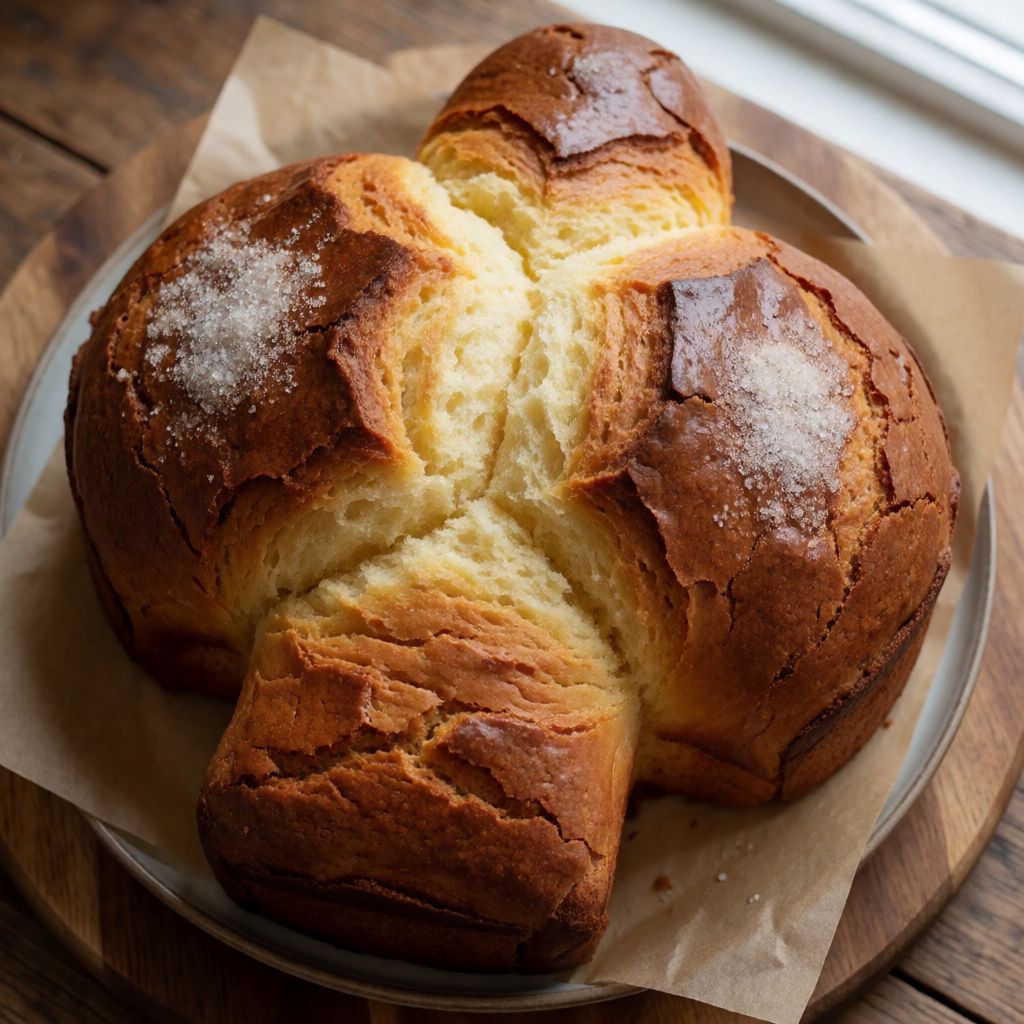
 AI photo
Quick Easter Chocolate Colomba
A quick Easter colomba cake topped with chocolate glaze.
Labels are worked out automatically from the ingredients and can be wrong. Check the packaging if it matters to you.
Ingredients
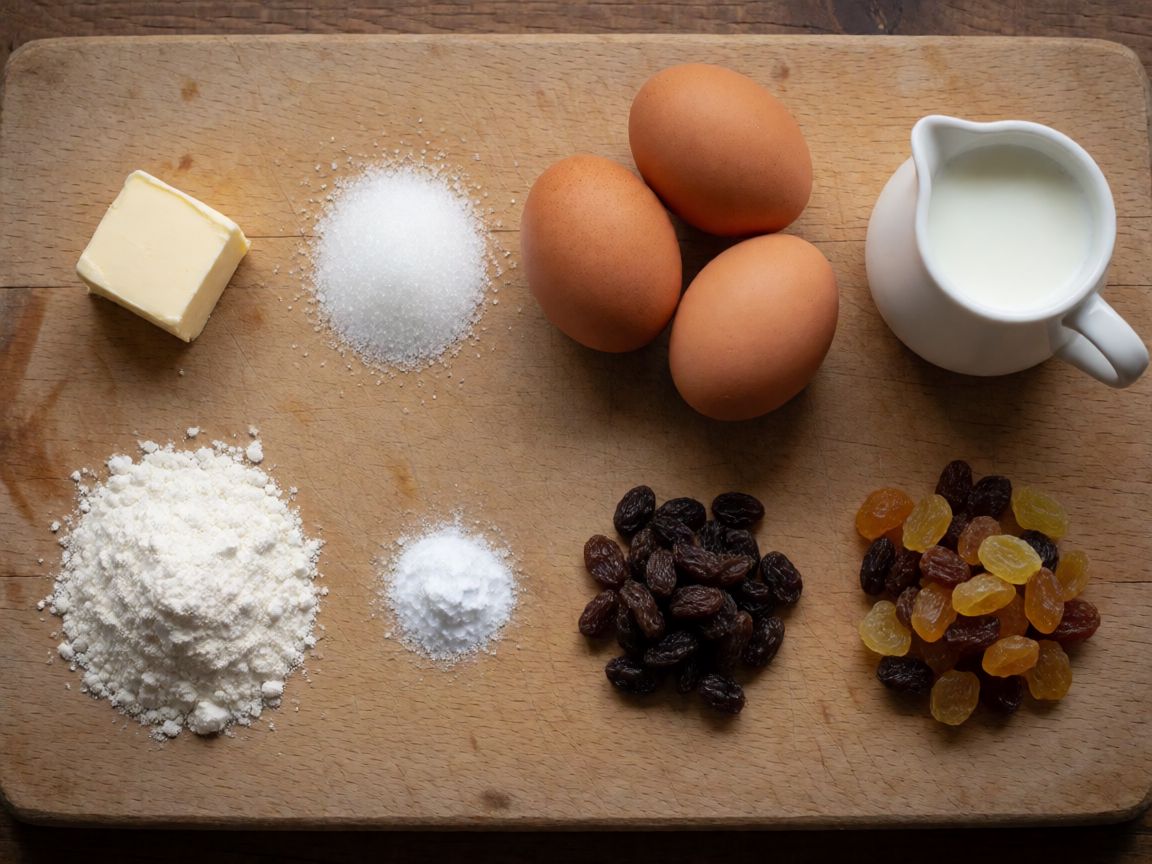
- 100 g Butter
- 150 g Caster sugar
- 3 pcs Eggs
- 200 ml Milk
- 350 g Plain flour
- 16 g Baking powder
- 50 g Raisins
- 50 g Candied fruit mix
- 1 tsp Almond extract
- 1 pcs Lemon zest
- 1 pinch Salt
- 200 g Dark chocolate
- 100 g Double cream
- 25 ml Water
- Pearl sugar to taste















Steps
Separate the eggs into yolks and whites. Beat the yolks with the sugar using an electric mixer until smooth and creamy.
Add the softened butter and continue beating.
Pour in the milk, then gradually fold in the sifted flour together with the baking powder.
Flavour the batter with the almond extract.
In a separate bowl, whisk the egg whites with a pinch of salt until stiff, then gently fold them into the batter in batches.
Add the lemon zest.
Fold in the candied fruit and raisins, previously soaked in water for about 10 minutes.
Pour the batter into a colomba mould and bake in a fan oven preheated to 160°C for 60–65 minutes.
65 minIn a small saucepan, heat the double cream almost to boiling point.
Add the chopped chocolate and water, wait a few minutes, then remove from the heat and stir until smooth.
Cover the cooled colomba with the chocolate glaze and, if liked, decorate with pearl sugar.
A colomba is a dove-shaped cousin of panettone, born in Milan in the 1930s as an Easter marketing idea by the same bakery (Motta) that made panettone famous at Christmas — so don't let anyone tell you it's some ancient Lombard ritual. It's a brioche-leavened sweet bread, and what it owes to that heritage is patience over days. This version is not that. It swaps yeast for baking powder, which means no proving, no folding, no three-day wait — and that is the whole point of calling it "quick". What you get is closer to a soft sponge cake studded with candied fruit, shaped like a dove if you own the tin, round if you don't, and then masked in dark chocolate ganache so nobody quibbles about authenticity.
What decides whether this works is two separate things behaving at two separate speeds: the egg-foam structure holding the crumb up, and the oven committing to it before it collapses.
Whisking the whites to stiff peaks is not decoration — it's your only raising agent working alongside the baking powder, since there's no yeast to build a gluten-and-gas scaffold slowly. Fold them in gently, in batches, because a stiff foam is just air trapped in protein film, and a heavy hand pops that film and lets the air straight back out. You'll see it: the batter stays pale and full of bubbles if you've folded properly, goes slack and wet-looking if you've beaten the life out of it.
Butter and sugar beaten with the yolks first are there to trap air and dissolve sugar crystals into the fat before anything else joins — do this half-hearted and the crumb stays dense no matter how well you whip the whites later. Milk loosens the mixture so the flour, once sifted in with the baking powder, hydrates evenly rather than clumping; sift it or you'll bite into a pocket of raw baking powder, bitter and metallic — that's the actual reason recipes insist on sifting, not some talisman against lumps in general.
Flour: plain is right here, not strong bread flour — you want tenderness, not chew, since there's no long yeast ferment to justify extra gluten. If you only have self-raising, drop the baking powder to about half, since self-raising already carries its own.
Almond extract and lemon zest are doing the job marzipan and candied citron peel do in the traditional version, cheaply and fast — a few drops go a long way, so taste rather than trust the teaspoon blindly if your extract is a strong one.
Soaking the raisins and candied fruit in water for ten minutes isn't about plumping them for texture alone — dry fruit dropped straight into batter pulls moisture out of the crumb around it as it bakes, leaving a dry halo round every raisin. A short soak evens that out. If you've no candied fruit mix, dried apricot or mixed peel chopped small does the same structural job; just keep the total weight similar so you don't throw off the batter's balance.
For the glaze, double cream heated almost to boiling and poured over chopped chocolate is a basic ganache — the residual heat in the cream is what melts the chocolate, so don't actually boil it or you risk splitting the fat. The splash of water loosens it to a pourable, glossy consistency rather than a stiff set one; skip it if you want a thicker coating that sets more like a shell. Use chocolate with no added vegetable fat if you can — cheap compound chocolate (the kind sold as "cake covering") sets greasy and dull rather than glossy.
In a UK kitchen, the honest limit is the tin: proper dove-shaped colomba moulds are rare here, so a round deep cake tin or even a loaf tin works fine — it changes the shape, not the mechanism. Bake in a normal (non-fan) oven and you'd want it a touch hotter, since fan ovens run efficient; this one's written for fan, so trust that as given. Let it cool properly before glazing — pour warm ganache over a warm cake and it slides off instead of coating, which is less a disaster and more a reason to make tea while you wait, patience being the one ingredient with no substitute.