
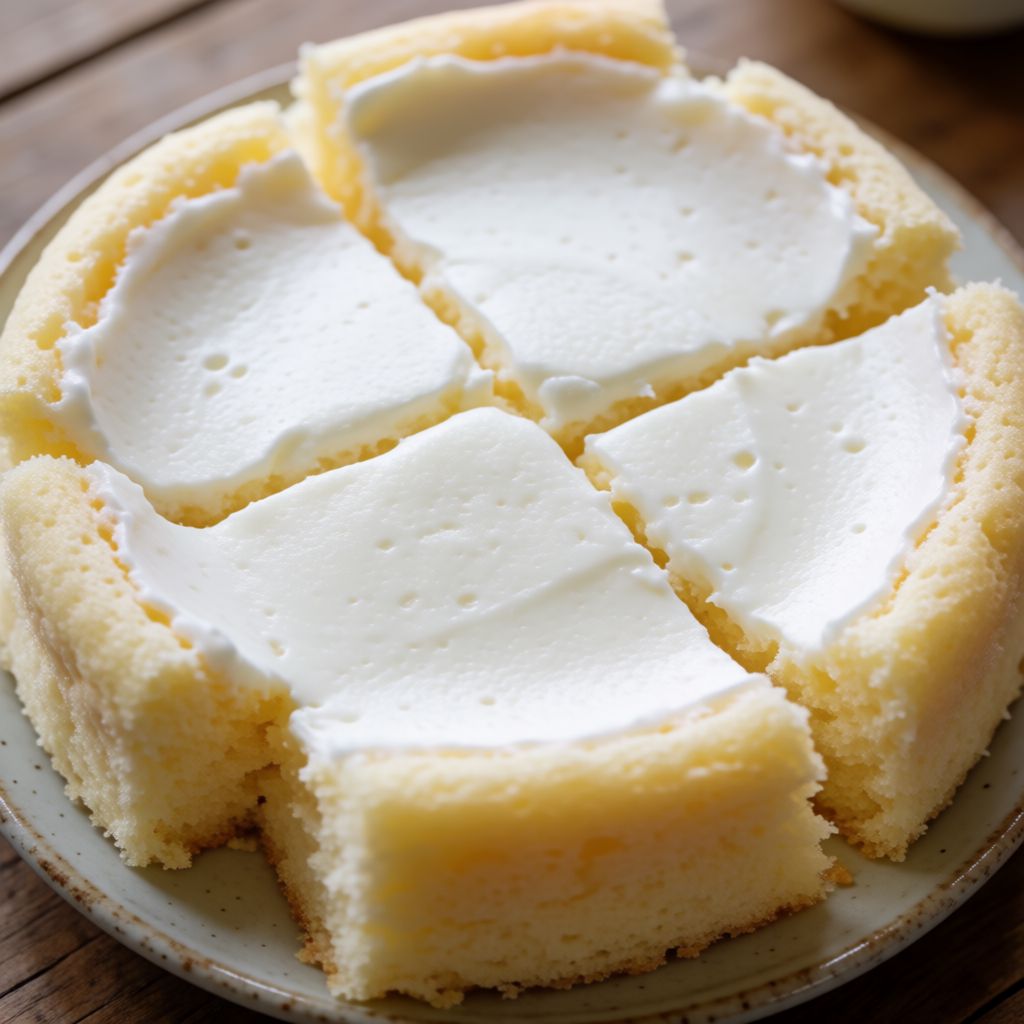
 AI photo
Soft Cake with Yoghurt Cream
A soft chocolate sponge cake topped with light whipped cream and yoghurt frosting, finished with fresh berries and mint.
Labels are worked out automatically from the ingredients and can be wrong. Check the packaging if it matters to you.
Ingredients
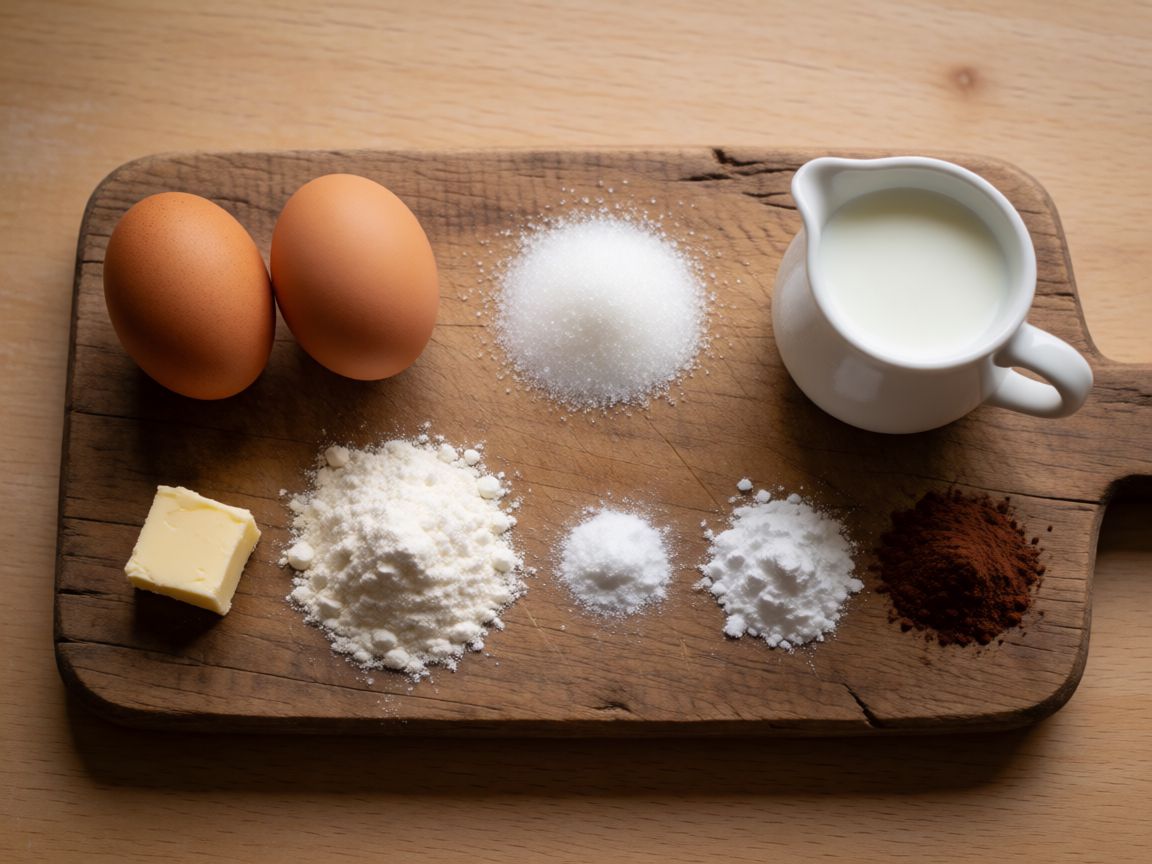
- 2 pcs Eggs
- 120 g Sugar
- 100 g Milk
- 80 g Butter
- 150 g Plain flour
- 16 g Baking powder
- 50 g Potato starch
- 20 g Cocoa powder
- 200 ml Double cream
- 100 g Icing sugar
- 200 g Greek yoghurt
- 250 g Mixed berries
- 1 bunch Mint to taste













Steps
In a large bowl, whisk the eggs and sugar together with a mixer until light and fluffy.
Add the melted and slightly cooled butter, then the milk, and mix again.
Sift the flour, potato starch and baking powder straight into the batter, mixing thoroughly with the mixer.
Add the cocoa powder and mix until smooth.
Pour the batter into a 26-28 cm tin, greased with butter and dusted with flour.
Bake in the oven at 180°C for about 20 minutes.
20 minRemove the cake, let it cool, turn it out onto a serving plate and leave to cool completely.
Whip the double cream with the icing sugar until thick and fluffy.
Combine the whipped cream with the Greek yoghurt and mix until smooth.
Spread the cream over the cooled cake, and decorate with mixed berries and mint leaves.
This is a one-layer sponge, split open by nothing more than cream — a cake built for people who don't want to deal with syrup soaks or three tiers wobbling on a stand. Egg and sugar do the lifting here, not just the baking powder: whisk them until the mixture holds a ribbon, pale and thick enough to write your initial in, and you've trapped the air that makes "soft" actually true. Skip that whisking, treat it as "mix eggs and sugar," and you get a flat, dense disc that needs the cream to disguise it rather than complement it.
The starch is doing a quiet but specific job. Potato starch has no gluten, so swapping in a third of the flour for it softens the crumb — this is the same logic behind Victoria sponge recipes that use cornflour, just with potato starch instead, which is more at home in a Caucasian kitchen but behaves the same way in yours. Leave it out and use all flour, and the cake turns chewier, more bread-like, because gluten's job is to be elastic and strong, and that's precisely what you don't want in a cake.
What decides success is temperature discipline in two places most people skip. First: the melted butter must be "slightly cooled," not hot — pour it in hot and you half-cook the eggs, curdling flecks of scrambled egg straight into your batter. Second: the cake must be properly cold before the cream goes on. Warm cake plus whipped cream means the cream slackens and slides, puddling at the base instead of sitting proud on top. There's no rescuing that once it's happened — you just wait longer next time.
The cream itself is two creams doing different jobs. Double cream whipped with icing sugar gives structure — fat and air holding a shape, which is what lets you spread it without it running off the edge. Greek yoghurt, folded in after, gives tang and cuts the sweetness, because a cake topped with pure sweetened cream and berries gets cloying fast. If you've only got single cream, skip whipping it at all — it won't hold air the way double does, and you'll end up with a sauce, not a frosting. Use crème fraîche instead of yoghurt if that's what's in the fridge; it's slightly richer but the same acid-balance logic applies.
Cocoa powder here is for flavour and colour, not for making this a "chocolate cake" in the rich, dense sense — it's folded in at the end, after the starch and flour, so test for lumps before you call the batter done. Any unsweetened cocoa works; don't reach for drinking chocolate powder, which carries its own sugar and milk solids and will throw off both sweetness and texture.
Butter is there for flavour and for a tender crumb — fat coats flour proteins and limits how much gluten can develop, same principle as the starch, working from a different angle. Any neutral butter will do; if you're using a strongly salted one, no need to add extra salt elsewhere, there isn't any in this recipe anyway.
Baking powder at 16g for 150g flour is a fairly generous ratio — this cake leans on chemical lift as well as the whisked eggs, because potato starch and cocoa both dilute the gluten structure and the batter needs help rising evenly rather than just at the edges. Don't double it thinking "more rise is better" — too much and you get a soapy, bitter aftertaste and a crumb that's coarse rather than soft, because the gas bubbles get too big too fast and collapse on themselves.
On "20 minutes at 180°C" — that's your lower bound, not a deadline. Ovens vary, especially domestic ones where the thermostat can drift by 10–15 degrees either way without you knowing. The real test: press the centre gently, it should spring back rather than leave a dent, and a skewer should come out clean, not wet with batter. Pull it a touch early and the centre sinks as it cools — that's steam collapsing with nothing set to hold it up.
Berries and mint at the end aren't decoration in the throwaway sense — the acid in the berries does the same cutting work as the yoghurt, keeping the whole thing from tasting like one long sweet note. Use whatever's in season rather than a fixed list; frozen mixed berries work too, but thaw and drain them first, or you'll bleed juice into the cream and get streaks rather than a clean white layer.
This feeds eight reasonably, cut into modest wedges — it's rich from the cream, so bigger slices aren't automatically better. Patience matters twice here: once while the sponge cools fully before you touch it with cream, and once while you resist cutting it the moment it's assembled. Let the cream sit on the cake for a short while and it settles into the crumb slightly at the edges, which is a better bite than a cream layer that's still sitting on top like a hat.