
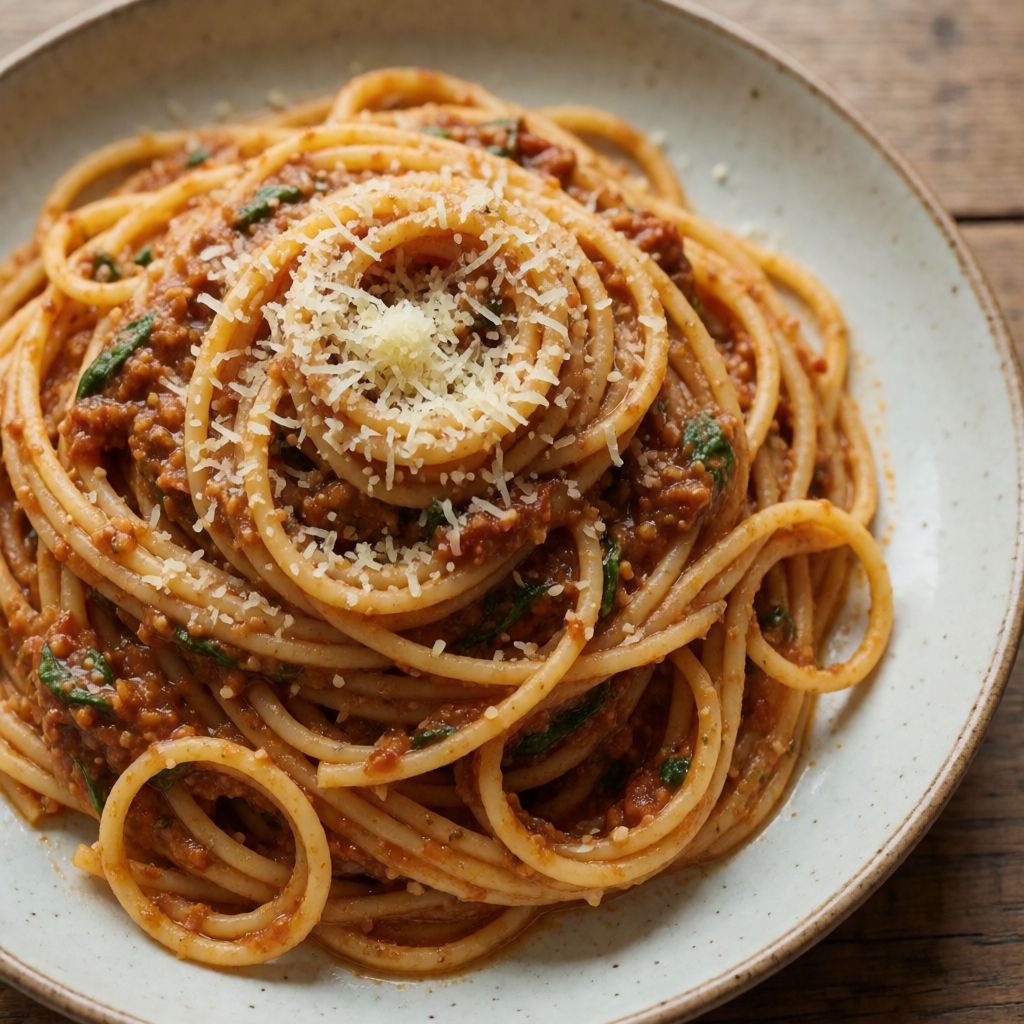
 AI photo
Spaghetti with Sun-Dried Tomato, Mint and Almond Pesto
A quick pasta dish tossed with a vibrant pesto of sun-dried tomatoes, mint and almonds.
Labels are worked out automatically from the ingredients and can be wrong. Check the packaging if it matters to you.
Ingredients
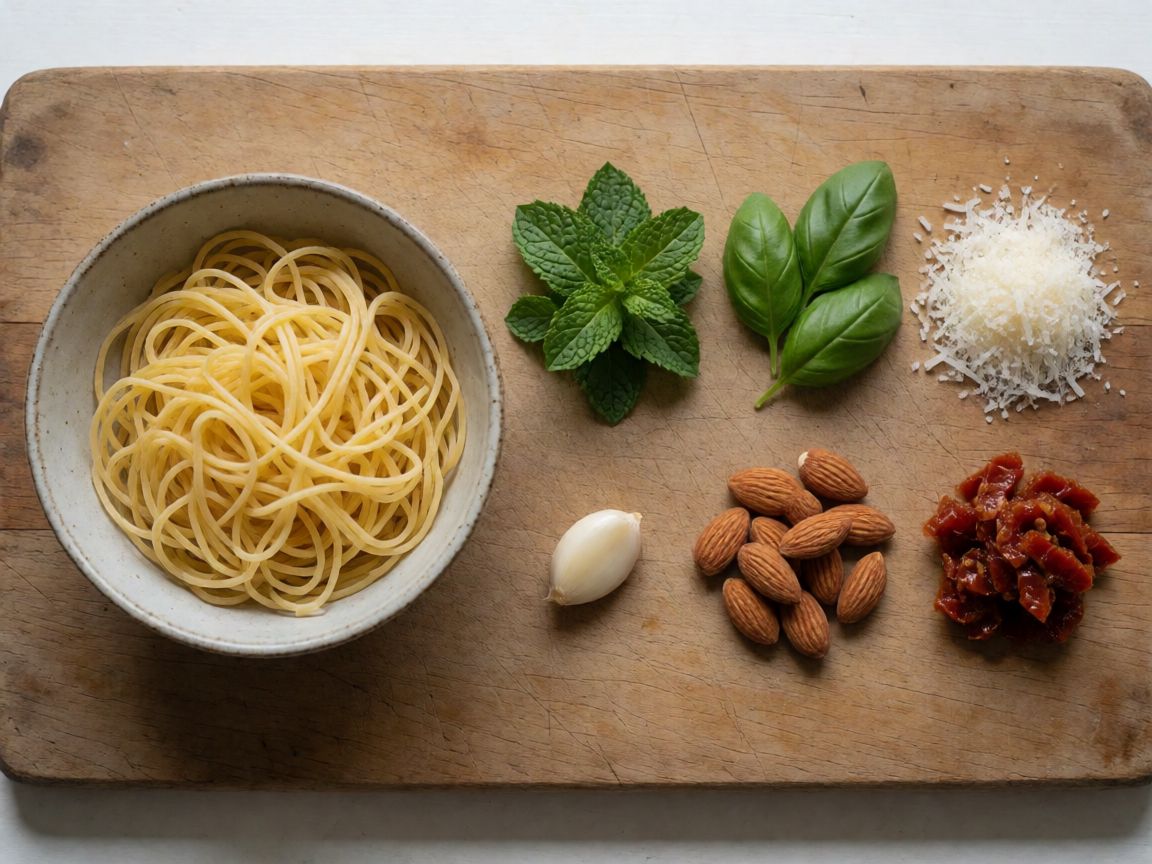
- 400 g Spaghetti
- 1 bunch Mint
- 15 pcs Basil leaves
- 1 tbsp Parmesan grated
- 1 clove Garlic
- Salt to taste
- Olive oil to taste
- 40 g Almonds
- 200 g Sun-dried tomatoes dried, drained









Steps
Cook the spaghetti in salted water until al dente.
Put the basil leaves, mint and a pinch of salt into a blender and blitz quickly.
Add the well-drained sun-dried tomatoes, garlic, Parmesan and almonds.
Pour in enough olive oil to blend everything into a smooth, creamy paste.
Drain the spaghetti, toss with the pesto and, if needed, a spoonful of the pasta cooking water.
Serve sprinkled with grated Parmesan.
Forget the Genovese rules for a second. This pesto works the other way round — concentrate first, green second. Sun-dried tomato is the base, almonds give it body, basil and mint sit on top as scent rather than bulk. What comes out is not a sauce that coats the bowl, it's a paste that clings — thick enough to sit on the strand rather than pool underneath it. Four people eat well off 400g of spaghetti here; stretch it to six as a starter before something plainer, and don't bother pairing it with Sunday-roast leftovers — it's its own dish, better served with nothing but bread alongside.
Whether it works turns on three mechanical points, not on taste alone. First: how dry your sun-dried tomatoes really are — "drained" in that ingredient list is doing real work, because leftover jar oil will loosen the paste before the oil you add on purpose gets a say in the matter. Second: how long the basil and mint sit under the blade — "blitz quickly" isn't a style note, it's a warning. A spinning blade heats up fast in a small domestic jug, and a hot blade cooks the chlorophyll in a leaf much the way a pan would, turning bright green toward tired khaki and bright flavour toward flat and bitter. If your blender's jug is small, do the greens in two short pulses rather than one long run — same end, less heat. Third: the pasta water at the end — raw oil and plain water don't want to mix, and a spoonful of starchy, salted cooking water is what talks them into it.
Sun-dried tomatoes aren't on this list for their intensity alone — that intensity exists because of economics, not magic. Sun-drying was what southern households did with a tomato glut at the end of summer, before anyone had a fridge to argue with: lay the surplus out, let the sun do free work pulling the water out, salt helps the rest along, and what's left is tomato with almost nothing in it but flavour and a little concentrated sugar. Buy them dry-packed if the shop has them — the oil-jar kind are convenient but arrive carrying their own oil, which is exactly the oil you need to let drip off before any of it reaches your blender, or you lose control of how thick your paste ends up.
Almonds aren't here for crunch, they're here to thicken without dairy. Whole or blanched barely matters, since they're ground to paste either way — blanched just saves you chewing flecks of brown skin later. The criterion for swapping them is simple: any nut that's mild, fatty, and doesn't shout its own flavour over everything else. Cashews work. Pine nuts if you want to lean back toward tradition. Even sunflower seeds in a pinch, though they'll pull the whole thing further toward grassy and away from nutty.
Basil and mint look lopsided on the page — fifteen leaves against a whole bunch — but that's deliberate, not a typo in anyone's instinct. Mint carries further per leaf than basil does, so the quantities are balancing strength, not volume. Ordinary garden mint, the kind that takes over a flowerbed whether you've invited it or not, is exactly right; no need to go hunting for anything more delicate.
One clove of garlic, and resist doubling it on instinct. This paste never meets heat, and heat is precisely what tames garlic's sharpness into something sweet and round. Raw, a single clove already travels further than a whole head would in a slow-cooked sauce. Taste once everything else is blended, and only add more if the whole thing still feels flat — don't add it up front out of habit.
Parmesan gives salt and a savoury backbone; any aged hard cheese behaves the same way, so Grana Padano or even a mature Cheddar from the fridge will do, though Cheddar pulls the paste sharper and less sweet. The oil, by contrast, is one spot where you don't want something neutral — olive oil here is meant to be tasted, not hidden, so go for a mild one rather than a peppery extra virgin that will argue with the mint instead of carrying it.
Last point, and it's the one with no gram weight attached to it: patience. Salt the pasta water properly — it should taste like a mild sea, because that's the pasta's only chance to pick up seasoning from the inside rather than the outside. Al dente is a bite, not a number on the packet; pull a strand and test it, when it resists for a beat before giving way, it's done, and the minutes on the box are a floor, not a verdict. Hold back a cup of that water before draining — warm, salted, starchy, it's what turns a stiff raw paste into something that actually coats the spaghetti instead of sitting on top in clumps. Don't rush draining the tomatoes, don't rush the blitz, don't rush tossing the pasta while it's still hot enough to melt the paste through it. None of that patience shows up as an ingredient on the list, but skip it and you'll taste exactly where you cut the corner.