
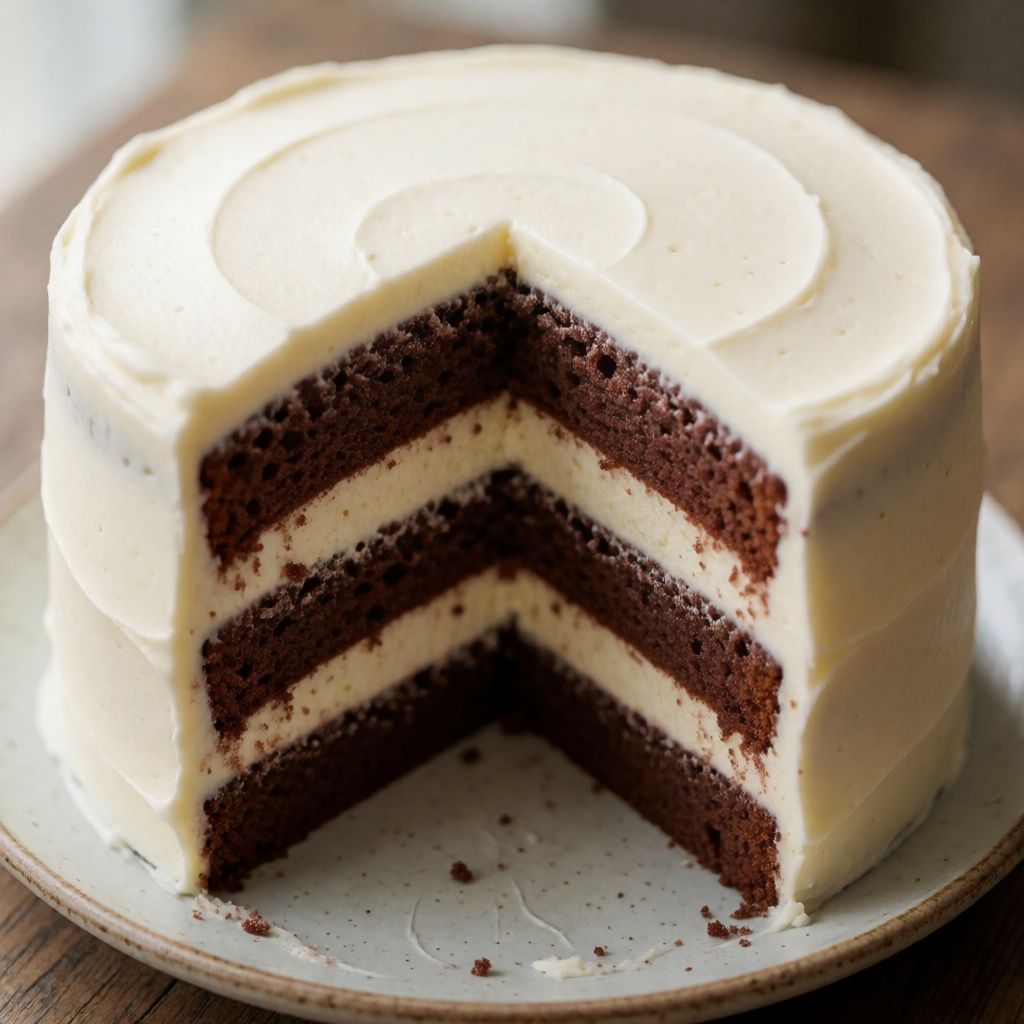
 AI photo
Birthday Cake with Sponge and Mascarpone Cream
A birthday sponge cake layered with mascarpone cream and berries.
Labels are worked out automatically from the ingredients and can be wrong. Check the packaging if it matters to you.
Ingredients
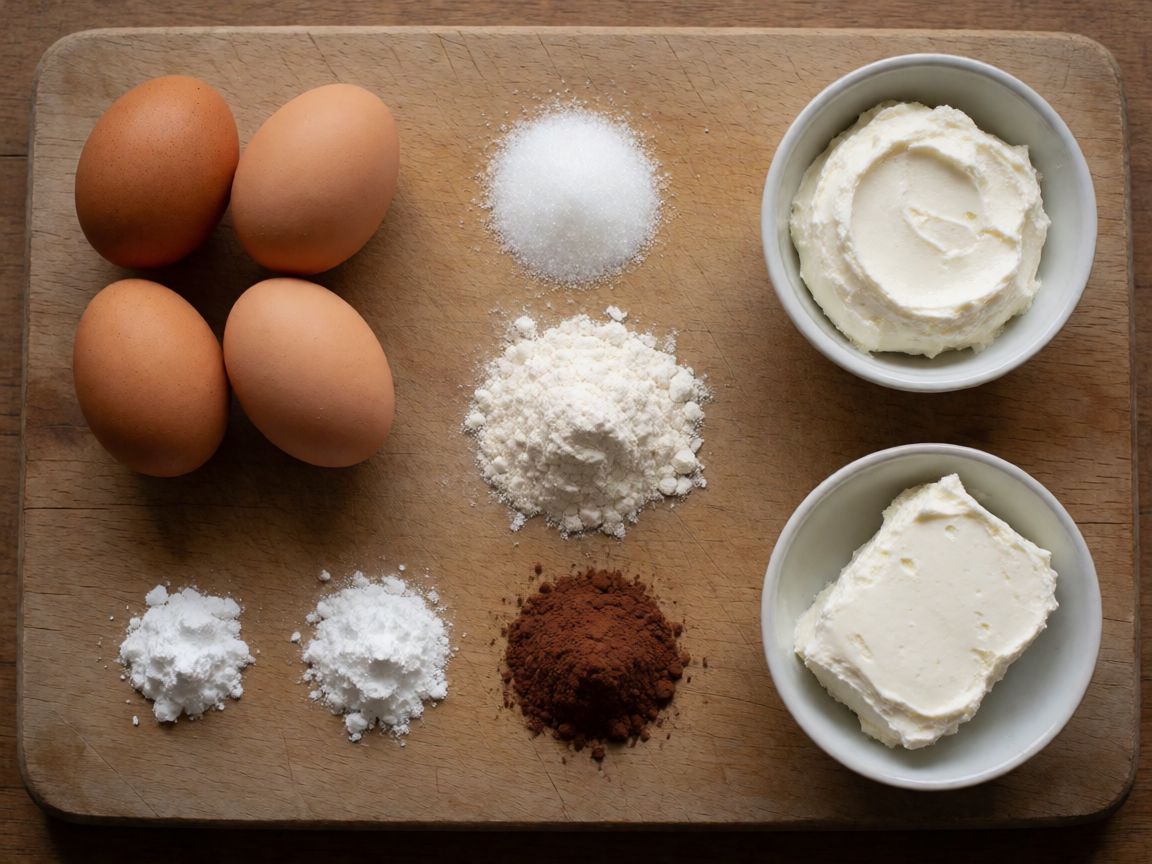
- 4 pcs Eggs at room temperature
- 100 g Caster sugar
- 100 g Plain flour
- 30 g Potato starch
- 20 g Cocoa powder
- 10 g Gelatine soaked in water
- 300 g Mascarpone
- 150 g Cream cheese
- 100 g Caster sugar
- 400 ml Double cream
- Milk to taste
- 400 ml Double cream
- 50 g Caster sugar
- Mixed berries to taste
- Cake sprinkles to taste







Steps
In a bowl, combine the room-temperature eggs with the sugar and whisk with an electric mixer until smooth and fluffy
15 minSeparately mix the flour, potato starch and cocoa powder
Sift the dry mixture into the bowl in small batches, gently folding from the bottom up with a spatula
Pour the batter into a 22 cm tin, greased with butter
Bake in a fan oven preheated to 180°C
20 minLet the sponge cool completely
In a saucepan, combine the mascarpone, cream cheese and sugar
Add the soaked gelatine and melt over heat until smooth
Cool the mascarpone mixture
Whip the cream in a bowl and gently fold in the cooled mascarpone mixture
Cut the cooled sponge into 3 layers
Place the first layer on a plate, brush with milk and cover with a layer of cream
Add the second and third layers, repeating the steps with milk, cream and berries
Use the last layer of cream to smooth the cake on top and sides with a spatula
Whip the remaining cream with sugar and decorate the cake using a piping bag
Decorate the cake with cake sprinkles and candles
This is a chocolate sponge, split into three thin discs, holding up a mascarpone cream that's been given backbone with gelatine and cream cheese. What decides whether it stands up at a party and doesn't collapse into a trifle is two things: how much air you beat into those eggs at the start, and whether you let that cream set before you ask it to hold three layers of cake upright.
The sponge gets no raising agent — no baking powder, nothing chemical. All its lift comes from the eggs themselves. Fifteen minutes of whisking eggs and sugar isn't a suggestion, it's the engine of the whole cake: you're beating in thousands of tiny air bubbles and the sugar is stabilising their walls. Some say you can rush this with a stand mixer on high and cut the time — no, because the ribbon stage (batter falling off the whisk in a slow, fat ribbon that sits on the surface for a few seconds before sinking in) is what tells you the structure is actually there, not the clock. Fold in the flour too roughly after that and you knock the air straight back out, and the sponge comes out flat and dense — a biscuit, not a cake.
The potato starch in the dry mix isn't decoration. Flour alone, with its gluten, would give you a chewier, tougher crumb once baked and cut into three thin layers — it would tear instead of slice clean. Starch has no gluten, so it dilutes the flour's toughening power and gives you a crumb that's soft enough to cut with a long knife without crumbling apart.
Eggs at room temperature aren't fussiness for its own sake — cold eggs straight from the fridge are more viscous, they resist the whisk, and you'll be beating longer for less air. Fifteen minutes with the fridge-cold ones can become twenty five with still-patchy results. Twenty minutes out on the counter solves it for free.
Caster sugar over granulated is about grain size, not sweetness. Fine crystals dissolve into the egg foam as you whisk rather than sitting there as grit, which matters doubly here since this sponge gets no liquid fat creamed in to help things along — eggs and sugar are doing all the work. If all you've got is granulated, give it a blitz in a blender first; it'll behave.
Cocoa powder — use the plain unsweetened kind, not drinking chocolate, which carries its own sugar and milk powder and will throw off both the taste and the dry-mix ratio. Dutch-processed (the darker, less acidic cocoa) gives a smoother colour and flavour than natural cocoa, but either works; this isn't a recipe where the leavening depends on cocoa's acidity, since there's no bicarbonate of soda here reacting against it.
Gelatine soaked in water means powdered or leaf gelatine bloomed in cold water first, so it swells and dissolves evenly rather than clumping into rubbery lumps when it hits the warm cheese mixture — melt it straight in without soaking and you get streaks of unset gel running through your cream. If you're avoiding gelatine, agar agar is the vegetarian substitute, but it sets firmer and faster, so you'd add it at the very end and work quickly, not casually.
Mascarpone and cream cheese together is doing something specific: mascarpone alone is rich and sweet-tasting but soft and slightly loose; cream cheese is firmer and tangier. Together with the gelatine you get a cream that holds a clean edge when you run a spatula round the side of the cake, rather than mascarpone's natural tendency to slump. If cream cheese isn't in the fridge, full-fat Greek yoghurt, well-drained, borrows some of that firmness and tang, though it won't be quite as stable without extra gelatine.
Double cream is the right cream for Britain here — nothing less than 36% fat whips to stiff peaks reliably; anything lighter, like single cream, simply won't hold air no matter how long you go at it. Whip it cold, straight from the fridge, in a cold bowl if you can manage it — warmth is the enemy of whipped cream the same way it's the friend of the melted gelatine mixture, so let that mixture cool properly before folding the two together, or you'll deflate the cream on contact.
"Milk to taste," brushed onto each sponge layer, is doing the job that sugar syrup does in French patisserie — it's there to stop a dry sponge turning each slice into a chore. An eggless sponge with no added butter dries out faster than you'd think once cut into three thin discs and left exposed in a British centrally-heated kitchen. A splash of milk, or milk with a spoon of sugar dissolved in, buys you back the moisture the baking took out — don't drown the layer, just enough that the surface stops looking matte and starts looking damp.
Three thin layers from one 22cm sponge means a long serrated knife and patience, not force — saw gently with the blade level, turning the cake rather than the knife, or you'll end up with wedges instead of discs. There's no shortcut here worth taking; a torn layer shows through the cream on the outside later, however carefully you smooth it over.
Mixed berries between the layers aren't only for colour — their acidity cuts against the richness of two cheeses and a litre of cream, which otherwise sits heavy after the second slice. Any berry that isn't watery works; very ripe, juicy ones will bleed into the cream and streak it pink, which some people like the look of and some don't — that's a choice, not a fault.