
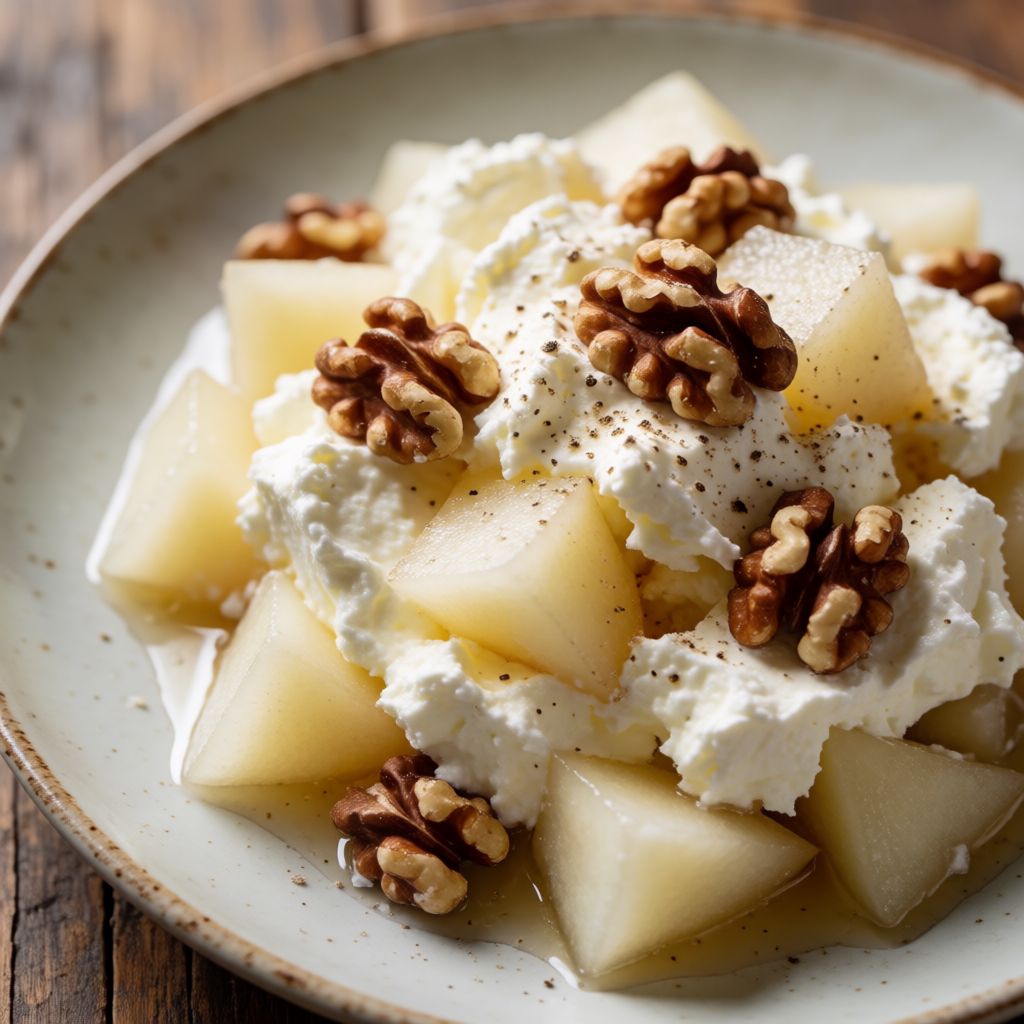
 AI photo
Stuffed Pears
A simple appetiser of pears filled with a creamy, nutty mixture.
Labels are worked out automatically from the ingredients and can be wrong. Check the packaging if it matters to you.
Ingredients
- 4 pcs Pear
- 100 g Cream cheese
- 30 g Walnuts
- Salt to taste
- Black pepper to taste

Steps
Cut the tops off the pears and carefully scoop out the core along with some of the flesh.
Blend half of the scooped-out flesh with the cream cheese, add a pinch of salt and a little ground black pepper.
Add the chopped walnuts and mix until smooth.
Fill the pears with the mixture.
Cover the pears with their tops and chill in the fridge until ready to serve.
What was changed
Cream cheese was used in place of the original cheese, as it is easier to find in UK shops.
This is a raw antipasto, and the only cooking here is restraint — you're not making anything happen with heat, you're making a pear taste like more of itself. The pear is both the dish and the dish's container, which is the whole point: no plate, no bowl, no washing up beyond a bowl and a spoon. What decides whether it works is the pear's own stage of ripeness, nothing you do with the knife.
A pear that's rock-hard will give you a filling sitting in a cup that still tastes of nothing, because an unripe pear has starch, not sugar — the sweetness hasn't converted yet. A pear that's gone soft and grainy will collapse when you try to scoop it, and the walls won't hold the cheese. You want the stage between: skin gives slightly under a thumb near the stem, flesh is fragrant when you cut the top off. That's not a rule someone invented for aesthetics — it's the only window where the fruit is both sweet and structurally a cup.
Some say stuffed fruit is a dessert wearing a disguise. No — because there's no sugar added anywhere in this, and the salt and pepper are doing real work, pulling the dish toward savoury the way they do with melon and prosciutto. It sits at a table before the main course, not after it, for the same reason a Sunday roast starts with something sharp and small rather than something sweet: you want the appetite woken up, not finished off.
Pear: go for something with actual perfume when you smell the stem end — Comice or Conference, the kind you'd see in a British greengrocer's, work fine. Avoid the ones sold rock-hard for keeping; they're bred for a long shelf life, not for eating raw today. If all you've got is firm pears, leave them out on the counter a day or two — ripening is just starch turning to sugar as the fruit breathes, and a warm kitchen does that for you faster than a cold one. You can't force it with heat; cooking a pear changes it into something else entirely, which is a different dish, not a shortcut to this one.
Cream cheese: its job is to carry the walnut and the pear flesh without arguing with either, which is why you want something closer to no flavour of its own than something assertive. Full-fat and plain is what gives you that clean backdrop — a goat's cheese or anything tangy will fight the fruit instead of framing it. If cream cheese isn't to hand, a thick strained yoghurt or mascarpone does the same structural job, though mascarpone will push the dish further toward dessert, so season it harder with the pepper to pull it back.
Walnuts: raw, chopped by hand rather than ground to dust, because you want to still feel them between your teeth — that's the contrast the dish is built on, soft cheese and fruit against something that bites back. A walnut that's gone soft or bitter has turned rancid from its own oil; smell it before you chop, and if there's any sharpness at the back of the nose, bin it rather than mask it with more pepper. Pecans or toasted hazelnuts substitute on the same logic — something with fat and crunch, not sweetness.
Salt and pepper: this is where the dish declares itself. A tiny pinch of salt in a sweet filling isn't there to make it salty, it's there to stop the sweetness tasting flat — salt sharpens sugar's edges, the same reason you'd salt a caramel. The pepper does the opposite job, cutting through the fat of the cheese so the whole mouthful doesn't sit heavy. Skip either and the filling tastes merely sweet, like something gone wrong rather than something intended.
On the scooping itself: carrying over half the scooped pear flesh into the filling, rather than all of it, is deliberate — all of it and the mixture turns watery and won't hold its shape in the pear's cup; none of it and you lose the thread connecting filling back to fruit. Keep what pear flesh you don't use for a fruit salad or your tea's accompaniment rather than wasting it.
This feeds four as a starter, one half-pear if you cut them down the middle and serve two halves per person on a plate, or one whole pear each if people are using their hands. No cooking, no hob, no kazan versus pan question here at all — just a knife, a spoon, a fridge, and the patience to let the cheese firm back up before anyone eats it.
·