
 AI photo
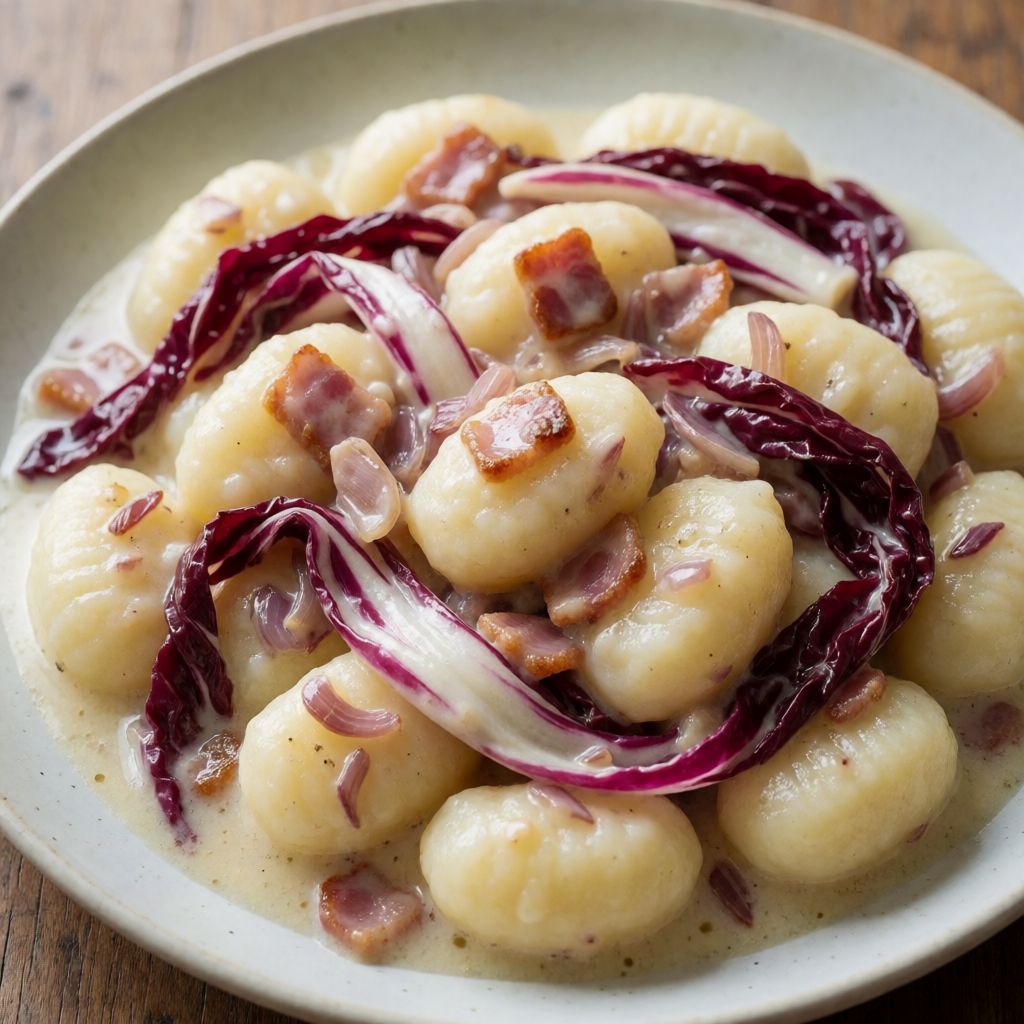
Potato Gnocchi with Bacon and Radicchio
A hearty dish of gnocchi with crispy bacon, shallot and radicchio in a light cream sauce.
Labels are worked out automatically from the ingredients and can be wrong. Check the packaging if it matters to you.
Ingredients
- 500 g Gnocchi ready-made, packaged
- 1 pcs Shallot
- 150 g Bacon
- 1 pcs Radicchio Chioggia variety, whole head
- 200 ml Double Cream
- Salt to taste
- Black Pepper to taste
- 3 tbsp Olive Oil
- Parmesan to taste, grated






Steps
In a pan, fry the shallot in olive oil until soft.
3 minAdd the bacon and fry until golden and crisp, reaching an internal temperature of about 70°C.
5 minAdd the radicchio and braise it, stirring in a little hot water.
5 minPour in the double cream, season with a pinch of salt and sprinkle with black pepper.
2 minBring salted water to the boil, add the gnocchi and scoop them out with a slotted spoon as soon as they float to the surface.
4 minTransfer the gnocchi to the pan with the sauce, toss well and serve sprinkled with parmesan.
1 min
What was changed
The packaged Tyrolean gnocchetti were swapped for Gnocchi, which are easy to find in UK shops, and the plant-based cream was replaced with Double Cream, the dairy cream UK cooks use for this sauce.
This is a store-cupboard rescue dish dressed up as something more — ready-made gnocchi, a tin's worth of bacon, one bitter head of radicchio and the cream already in your fridge door. Nothing here is made from scratch, and that's the whole economics of it: a Tuesday-night plate that tastes deliberate without the hour of potato-ricing. What decides whether it works is not timing but three small judgements: getting the shallot sweet before anything else hits the pan, rendering the bacon fat instead of stewing it, and pulling the gnocchi out the instant they surface.
Radicchio raw is a jab of bitterness — some people only ever meet it shredded cold into a salad and decide it's not for them. No, because heat changes what bitterness is for. Braised with a splash of hot water rather than just fried, the leaf softens and the bitter compounds mellow into a note instead of a slap, and the cream coming in after does the rest of the rounding off. Skip the braise and fry it dry instead, and you get wilted leaves with the raw edge still in them — sharp in a dish that's meant to be comfortable.
The bacon fat is the actual sauce base here, more than the cream is. Fry it hard and fast because you're impatient, and the fat scorches before it renders, and a scorched fat is bitter in a different, uglier way than the radicchio — stack the two bitternesses and the dish goes ashy rather than rounded. You want the fat rendering slowly enough that the edges curl and crisp rather than blacken, and only then does the cream go in, to emulsify with what's already melted rather than fight a dry pan.
Gnocchi, ready-made: check the ingredient list before the price, because what decides whether they survive boiling is the ratio of potato to flour, and cheaper packs pad it out with more flour to save on potato. More flour means a tougher, more forgiving dumpling that can take overcooking — but also means it tastes more like bread than potato. Buy the one where potato is listed first. If you've genuinely none in the house, small ridged pasta like orecchiette will carry this sauce well enough, though it stops being gnocchi and starts being something else, and that's fine too.
Shallot rather than onion: a shallot has less of the sulphurous bite a cooking onion carries raw, so it dissolves sweet into the base rather than sitting there as visible chunks. It's soft and starting to go translucent at the edges — see-through, not browned — at around three minutes, and that's the cue, not a clock. No shallot, use a quarter of a white onion, same criterion: mild enough raw that it doesn't make your eyes sting.
Bacon: British streaky, smoked or not, has enough fat in it to render and more or less self-fry, which is useful because a domestic hob ring rarely gets hot enough fast enough to crisp bacon the way a flat-top does — give it the time, don't crank the heat to compensate. Lay the pieces with a little space between them rather than piled on each other; crowd the pan and they steam in their own moisture instead of crisping, which is the actual cause of limp, grey bacon, not the cut of meat. Back bacon is leaner and needs the olive oil underneath it more; either works, the test is the same — fat gone from soft and white to crisped at the edge, the lean part curling slightly.
Radicchio, Chioggia: pick a head that's tight, heavy for its size, with no slack or bruised outer leaves — a loose head has already started drying out and loses texture before it even hits the pan. No radicchio, use Treviso or a bitter chicory, any leaf from that same family that holds its shape under heat rather than collapsing to nothing; the criterion is bitterness plus structure, not colour.
Double cream carries this because its fat content is high enough that it won't split under a gentle simmer — it thickens by coating the gnocchi, not by reducing hard, so don't let the pan boil fiercely once it's in. No double cream, crème fraîche loosened with a splash of milk does the same job, or single cream reduced a minute or two longer to make up for the lower fat. Use an oil with no smell of its own for the frying — a light olive oil or sunflower oil — and save any good peppery extra virgin for drizzling at the very end if you want it, because fried hot it just adds a second bitterness the radicchio didn't need company for. Parmesan at the finish is salt and savour rather than decoration; Grana Padano does the same work, Pecorino will too but it's saltier, so go easier on the salt elsewhere if that's what's in the fridge.