
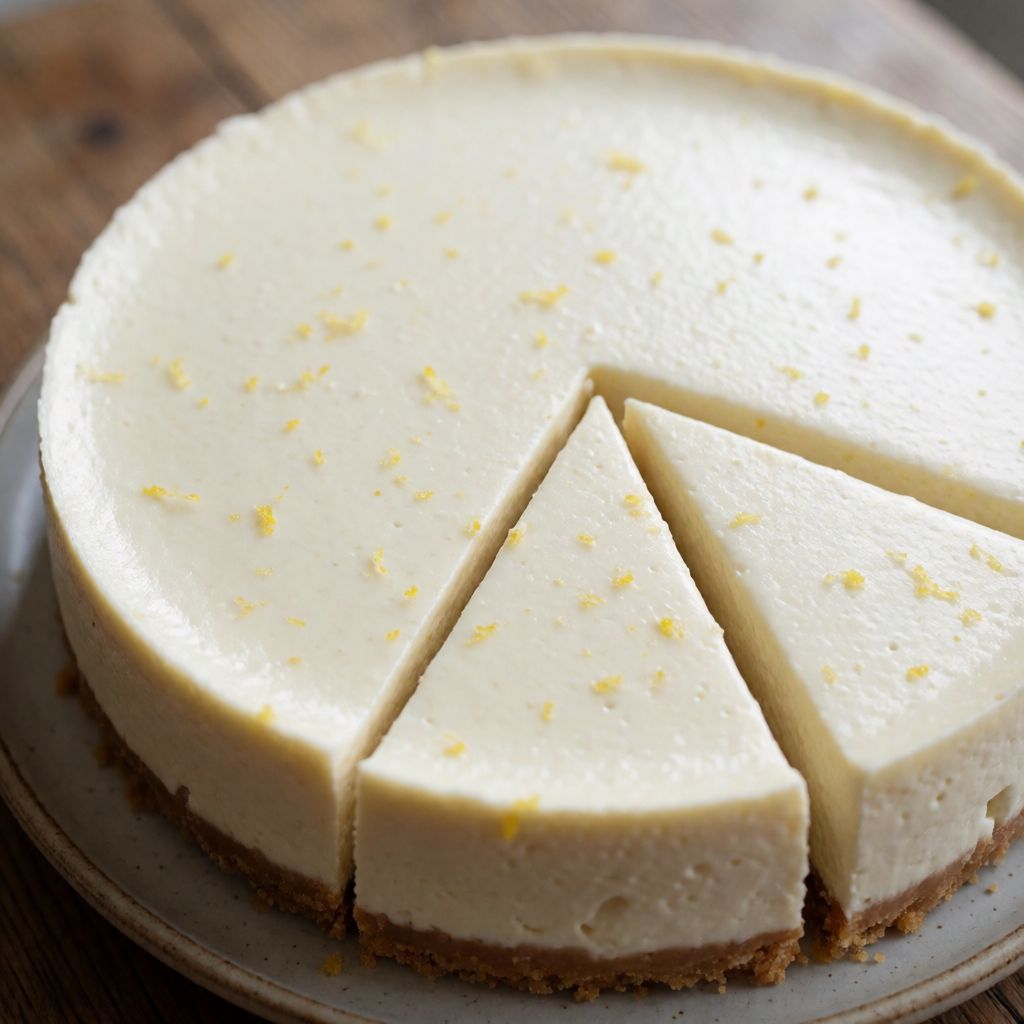
 AI photo
Vegan Cheesecake
A no-bake vegan cheesecake with a biscuit base, creamy lemon filling and a strawberry jam topping.
Labels are worked out automatically from the ingredients and can be wrong. Check the packaging if it matters to you.
Ingredients
- 300 g vegan biscuits
- 150 g margarine
- 500 g plant-based cream cheese
- 400 ml plant-based double cream
- 200 g sugar
- 1 pcs lemon zest
- 250 g strawberry jam







Steps
Crush the biscuits in a blender into fine crumbs.
Melt the margarine over low heat, pour it in a thin stream into the crushed biscuits and mix well.
Spread the mixture into the bottom of a springform tin lined with parchment paper and level it with a spatula.
Put the tin in the fridge so the base binds and firms up.
20 minThoroughly beat the plant-based cream cheese with the sugar until smooth and even.
Add the lemon zest to the cheese mixture.
Whip the plant-based double cream until light and airy.
Gradually fold the whipped cream into the cheese mixture, stirring gently.
Pour the cream over the biscuit base and spread evenly.
Put the cheesecake in the fridge to chill for at least 5-6 hours.
360 minRemove the cheesecake from the tin and decorate with strawberry jam.
This is a no-bake cheesecake, which tells you straight away what decides whether it works: there's no oven to fix a mistake. A baked cheesecake forgives a slightly loose filling because heat sets the eggs and that's that. Here there's no egg, no heat, nothing but cold and time doing the setting. So the two things that make or break it are the biscuit base holding its shape and the cream genuinely whipping to stiff peaks before it meets the cheese.
Some say any plant cream will whip like dairy cream if you just beat it long enough — no, because it's the fat percentage that whips, not your patience with the whisk. Dairy double cream is round 48% fat; most plant creams sit lower, and under about 30% fat there simply isn't enough fat to trap air into a stable foam, no matter how long you go at it. Check the tub: you want one marketed specifically as "whipping" or "double," chilled hard in the fridge beforehand, because cold fat holds air, warm fat collapses it.
The crumb base is the other hinge point. Margarine binds biscuit crumbs the same way butter does in a classic base — it's fat coating starch and sugar particles so they stick to each other instead of to your fork. Pour it in a thin stream and mix as you go, not all at once, or you get wet clumps next to dry crumb and a base that cracks in patches when you cut it. The fridge rest before filling isn't decoration — it's the only "cooking" step this cake gets, letting that fat re-solidify into a biscuit that holds a slice rather than crumbling under the cream's weight.
Vegan biscuits, for the base, just need to be plain and dry — digestive-style, no filling, nothing with chocolate chips that will melt into the margarine and go gluey. If you've only got shortbread-type biscuits they'll work but they're sweeter and softer, so cut the sugar in the cheese layer slightly or the whole thing tips sickly. Crush them fine and even in the blender; a few stray large chunks become weak points where the base snaps when you lift a slice.
Margarine stands in for butter here for one reason only — it has no dairy in it, which is the entire point of a vegan version. Choose a block margarine, not a soft spreadable tub one meant for toast, because spreadable margarines carry more water and less fat, and that water works against the crumb-binding job described above. If you can't get margarine, any solid fat with no strong smell of its own and roughly 80% fat will do the same binding work — coconut oil in solid form is the common stand-in, though it brings its own flavour, so you're trading one compromise for another.
Plant-based cream cheese is doing the job dairy cream cheese does in the classic version — body, tang, and enough fat that the filling sets rather than weeps. These products vary a lot batch to batch, far more than dairy cream cheese does, so beat it smooth before anything else joins it; any lumps now are lumps forever, since there's no heat later to melt them out.
The lemon zest isn't flavour alone — it cuts through the flatness that plant creams and cheeses tend to have compared with dairy, which carries more natural acidity and depth on its own. Use the zest only, not the juice; juice adds liquid you don't want when the whole structure depends on staying thick enough to hold peaks.
Strawberry jam on top is the honest, economical finish — glossy, no extra cooking, no need for fresh strawberries that may not be in season when you want this. If you want a cleaner-looking top, warm the jam very gently first so it spreads without tearing the surface, rather than pressing a cold set jam into a soft filling. Any smooth jam with no big seeds or chunks will do the same job — raspberry or apricot both sit well against the lemon.
On a UK hob and in a UK fridge, there's nothing exotic needed here — no kazan, no special tin beyond a standard springform, which exists precisely so you can release a cake that was never going to come out of a solid tin cleanly once it's set rather than baked. The one thing to respect is your fridge's actual coldness: a fridge that's frequently opened, or set warm, will stretch that six-hour minimum out further, and checking is simple — press the centre gently; it should resist, not wobble like a loose jelly.