
 AI photo
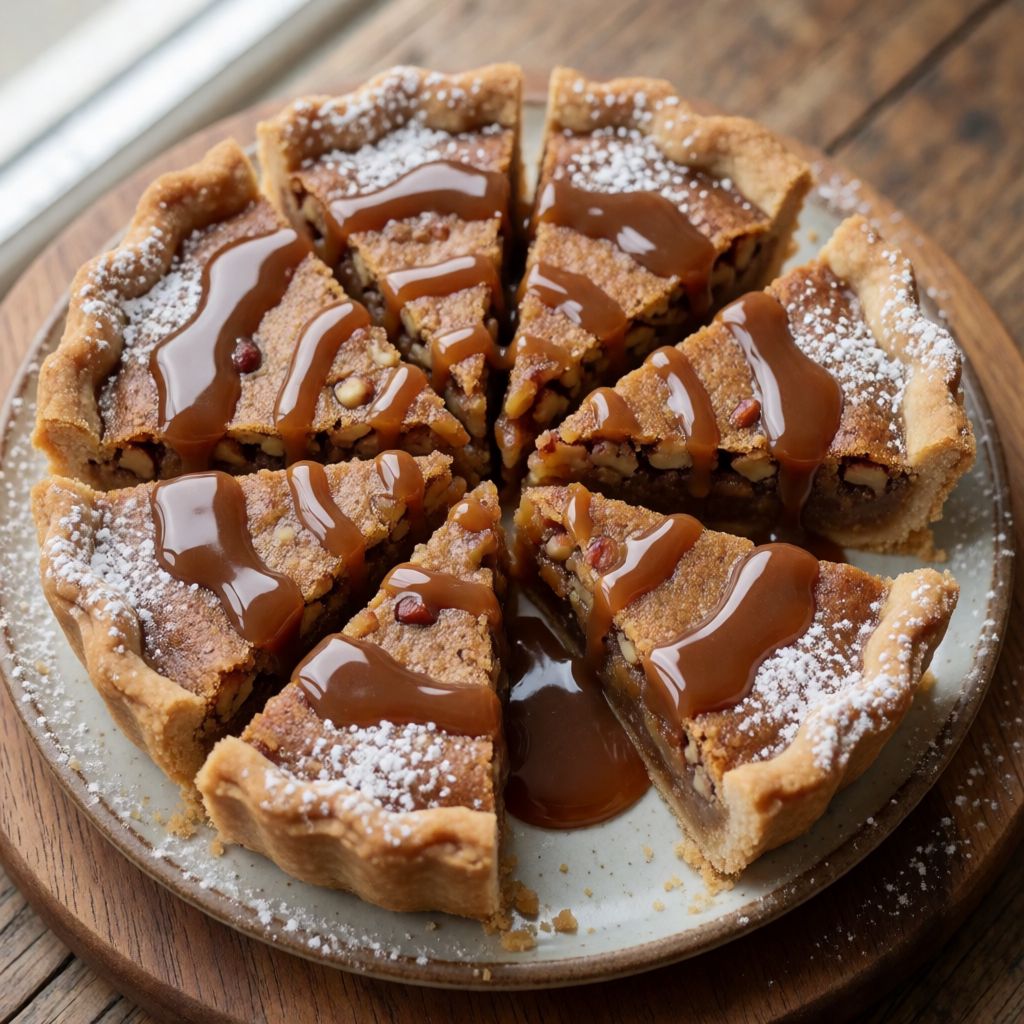
Nut Pie with Salted Caramel
A buttery shortcrust pie filled with nougat, mixed nuts and a rich salted caramel.
Labels are worked out automatically from the ingredients and can be wrong. Check the packaging if it matters to you.
Ingredients
- 240 g Plain flour
- 50 g Icing sugar
- 1 pinch Salt
- 120 g Butter cold
- 1 pcs Egg
- Water as needed
- 300 ml Double cream
- 250 g Caster sugar
- 50 g Butter
- 0.5 tsp Salt
- 50 g Nougat
- 100 g Hazelnuts
- 100 g Almonds
- 75 g Pecans
- 50 g Pistachios unsalted









Steps
Pastry: blend plain flour, icing sugar, salt and butter in a food processor until crumbly. Bring the dough together in a bowl with the beaten egg and, if needed, a little cold water.
3 minRoll out the dough between two sheets of baking paper and chill in the fridge for 30 minutes.
5 minLine a greased 24cm pie tin with the dough, press into the edges and trim off the excess. Prick the base with a fork and cover with a sheet of baking paper.
Fill the base with dried beans and blind-bake in an oven preheated to 175°C (fan) for about 15 minutes.
15 minRemove the base, take out the paper and beans, and bake for a further 5 minutes.
5 minArrange sliced nougat over the pastry base and let the pie cool.
1 minSalted caramel: heat the double cream to just boiling in a small saucepan and turn off the heat. Tip the sugar into a pan and set over medium-high heat. Reduce to medium heat once half the sugar has melted.
Add the butter, mix well, then gradually pour in the hot cream. Bring the caramel to the boil and turn off the heat.
2 minMix well and put the pan of caramel in the fridge.
Assemble the pie: stir ½ tsp flaky salt into the chilled caramel and spread half the caramel over the cooled pastry base.
2 minScatter all the nuts (hazelnuts, almonds, pecans, pistachios) over the caramel and pour over the rest of the caramel. Chill the pie for at least 2 hours before serving.
3 min
This is a tart, not a cake — a thin shell of sweet shortcrust holding a wafer of nougat, a pool of salted caramel, and a heap of four nuts, set hard by cold rather than by baking. Nothing in the filling goes back in the oven. What decides whether it works is the caramel: whether you let the sugar actually melt and colour before you panic and add liquid, and whether the cream goes in hot. Miss either, and you get grainy sugar crystals suspended in butterfat instead of caramel — a split sauce dressed up with nuts.
The base is just pâte sucrée: flour, icing sugar, cold butter, egg. Blind-baking it isn't fussy ritual — it's insurance against a soggy bottom, because a raw pastry disc under a wet caramel filling will never cook through once the caramel's in. The beans (or any dry pulse — chickpeas, rice, old lentils you keep in a jar just for this) weight the base so it doesn't puff and balloon away from the tin while the butter melts and the structure hasn't set yet.
The nougat layer is the quiet trick here. It sits directly on the warm-from-the-oven base and half-melts into it, so when you pour the caramel over, there's a soft, chewy seam between crisp pastry and set caramel instead of the caramel sliding straight onto crust and pooling at the edges. Some say you can skip it — no, because without it the caramel layer and the pastry layer never properly meet; they just stack.
Flour is just flour — plain, nothing clever needed, since there's no rise to chase here, only a crumb that holds together under a weight of filling. Icing sugar rather than caster in the pastry is about texture, not sweetness: it dissolves into the fat without leaving grit, giving you a shortbread-like snap rather than a sandy crunch. Butter must be cold, cut in rather than softened — warm butter smears into the flour and seals it, and a sealed dough bakes tough instead of short. If your kitchen's warm (post—Sunday-roast oven still ticking over, say), chill the bowl too.
For the caramel, caster sugar is the only sensible choice — it melts evenly because the grains are small and uniform; icing sugar clumps and burns in patches, and granulated sugar's coarse crystals can survive the melt altogether and turn your sauce gritty. The double cream must be hot when it meets the melted sugar — pour it in cold and the sugar seizes instantly into a solid lump, because the temperature shock drops the sugar below its melting point before it can re-dissolve. That's the single most common way this recipe fails, and it has nothing to do with your pan or your patience — it's just cream straight from the fridge.
Butter in the caramel isn't decoration, it's what gives the set caramel its slight give instead of a tooth-cracking hardness — cream alone, cooked to the same colour, sets harder. Flaky salt stirred in after cooking, not before, matters too: salt added to boiling sugar can promote crystallisation, and besides, heat dulls its crunch. You want to still find the grains of salt between your teeth against the sweetness — that contrast is the whole point of "salted caramel," not an afterthought.
Nougat is there for chew and a faint honey-almond note under the caramel; if you can't get any, a layer of soft nougatine or even crushed amaretti pressed into the warm base gives a similar textural break, though you lose the honey flavour. The four nuts — hazelnut, almond, pecan, pistachio — aren't arbitrary: they're chosen for contrast in oil content and bite, from the dense crunch of almond to the softer, more buttery pecan, with pistachio for colour and a cleaner, greener flavour against all that caramel sweetness. Toast them lightly first if you've the patience for one more small step — raw nuts under caramel stay a bit flat; a few minutes in a dry pan until you can smell them wakes the oil up. Use what you have in the cupboard before buying a fourth bag of nuts you'll never finish — walnuts work, cashews work, the mechanism (contrast, crunch, fat against sugar) matters more than the exact list.
Serve it cold, straight from the fridge, cut thin — a slice this rich doesn't need to be generous to be satisfying. Eight people from one 24cm tin is about right if it's dessert after a proper meal; stretch to ten with tea, since a strong cup of tea with milk cuts through the sweetness better than coffee does, and that's not folklore, just the tannin doing its job against all that sugar and butterfat.