
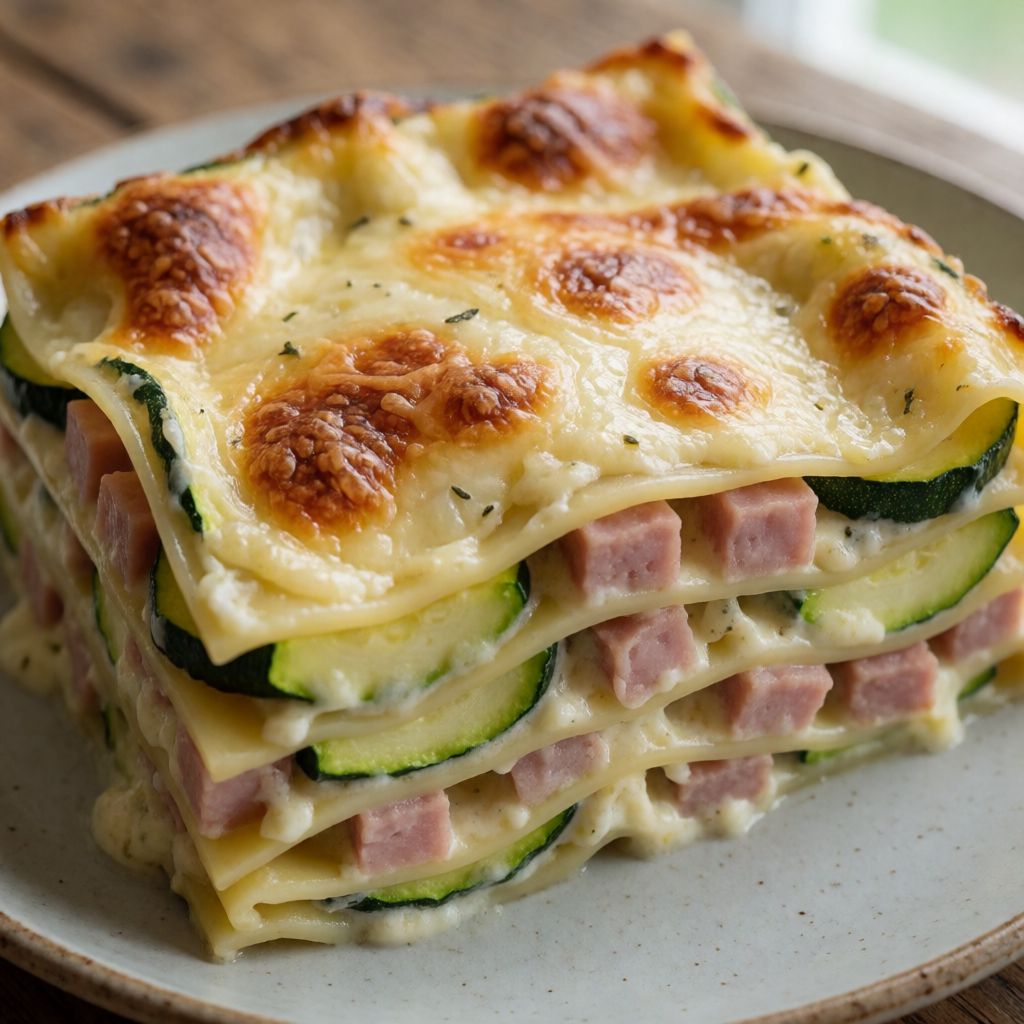
 AI photo
Courgette and Ham Lasagne
A comforting layered lasagne with courgette, ham and a creamy béchamel sauce.
Labels are worked out automatically from the ingredients and can be wrong. Check the packaging if it matters to you.
Ingredients
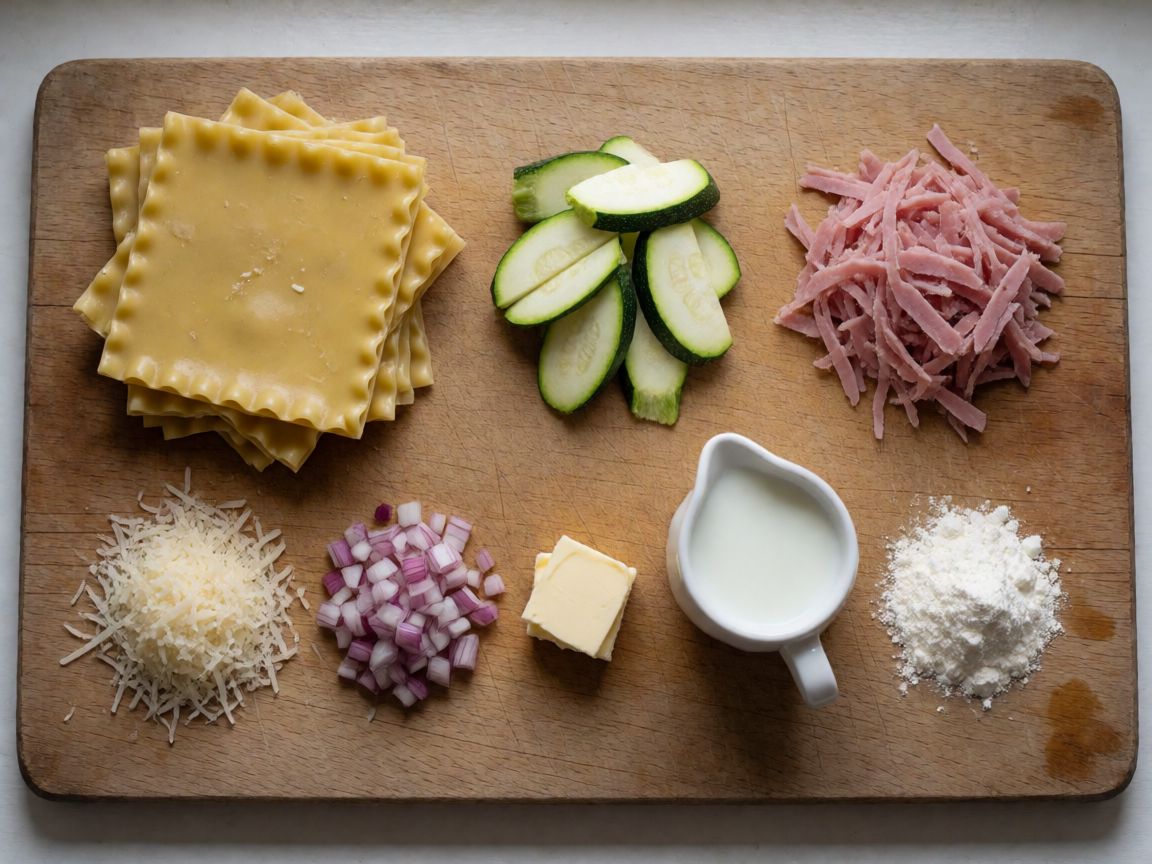
- 300 g Lasagne sheets
- 500 g Courgette
- 200 g Ham
- 100 g Parmesan grated
- 2 tbsp Olive oil
- 1 pcs Shallot finely chopped
- Salt to taste
- Black pepper to taste
- 700 ml Milk
- 70 g Butter
- 70 g Plain flour
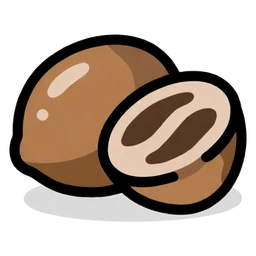
- Nutmeg to taste









Steps
Wash the courgettes, trim the ends and slice each one lengthways into thin strips. Dice the ham.
Heat the olive oil in a pan, add the finely chopped shallot and sauté until translucent.
Add the diced ham and fry for 3-4 minutes.
3 minAdd the courgettes and cook everything together for about 10 minutes. Season with salt and pepper.
10 minIn a saucepan bring the milk to the boil. Separately, melt the butter in another small pan.
Add the flour and cook for 1-2 minutes, stirring.
2 minPour the mixture into the milk and cook until the desired thickness. Add the nutmeg.
In a baking dish, layer 2 tbsp of béchamel, a lasagne sheet, béchamel, the courgette and ham mixture, and parmesan.
Repeat the layers with the remaining ingredients.
Finish the top layer with béchamel and sprinkle with parmesan.
Bake in an oven preheated to 180°C for 40 minutes.
40 minLet the lasagne rest and cool for 10 minutes before serving.
10 min
This is lasagne stripped of its red sauce and its beef — courgette and ham instead, held together by béchamel. What decides whether it works isn't the oven, it's the water sitting inside the courgette. Slice it, salt it with the pepper at step 4, and as it cooks that water comes out. If you rush this stage, you don't get a lasagne, you get a pasta bake sitting in a puddle, because the courgette will keep leaking long after it's under the oven's heat, and with nowhere to go that water pools under the sheets and turns them to wet cardboard.
So the ten minutes with the ham in the pan isn't really about cooking the courgette — courgette cooks in under five. It's about watching the strips go from bright, squeaky green to a duller, floppy green, glistening with their own moisture, which has now left the vegetable and is sitting in the pan where you can boil it off or drain it off, instead of inside the finished dish. That's the whole job of that step. Judge it by the look of the strip, not the clock.
The béchamel is the backbone, and it's thinner work than people expect — 70g butter, 70g flour, 700ml milk is a fairly loose ratio, built to coat sheets and vegetable rather than stand up like a custard. Some say white sauce is just "melted butter and flour" — no, because if you don't cook the flour in the butter for that minute or two before the milk goes in, you're left with the raw-flour taste sitting under everything, and no amount of nutmeg hides it. That minute of stirring over the heat is cooking out the starch's rawness, not just "combining" it.
Courgette is doing two jobs — bulk and moisture control — so buy it firm, glossy-skinned, heavy for its size. A soft, dull one has already started breaking down and will dump water faster than you can cook it off. If courgette isn't around, swap in something with the same low-moisture-when-fresh, high-moisture-when-cooked character — aubergine, sliced and salted first, or leeks, which release less liquid and need less patience.
Ham here is flavour and salt, not substance — 200g diced small enough that you get a piece in most forkfuls rather than a slab. Cooked ham off the bone, the kind in your fridge for sandwiches, is fine; a smoked bacon lardon works too, just fry it a shade longer so the fat renders, and go easier on the salt elsewhere because smoked bacon brings its own.
Parmesan is for two things people conflate: flavour inside the layers, and the crust on top. For the crust you want the real aged thing, or a hard grana — it browns by drying and concentrating, not melting into a puddle like mozzarella would. Inside the layers you can be looser — a cheaper hard cheese, even a mature cheddar at a pinch, though you lose the nutty edge.
Butter and flour in equal weight is the classic roux ratio, and it's there because flour needs fat to coat it evenly — stir flour straight into cold milk and you get lumps, because the starch granules clump together the instant they touch liquid instead of separating out across a fat film first. Olive oil won't do this job as well as butter; use any flavourless neutral oil only if you're avoiding dairy, and expect a thinner, less rounded sauce.
Milk brought to a near-boil before it meets the roux is what lets the sauce thicken in the few minutes you've got, rather than sitting on the heat endlessly waiting for cold milk to catch up — cold milk into a hot roux can also split if you're not stirring, because the fat and liquid haven't had a chance to marry gradually.
Nutmeg is traditional in béchamel not for magic but because it's one of the few spices that doesn't fight milk and butter — a background warmth, not a flavour you'd name blind. A pinch is plenty; it's a seasoning, not an ingredient.
On resting: ten minutes isn't an afterthought, it's the béchamel finishing its set. Cut it straight from the oven and the layers slide, because the sauce is still loose from heat and hasn't firmed back up — the same reason you don't carve a Sunday roast the second it's out. Patience here costs you nothing but gets you a slice that holds its shape on the plate instead of collapsing into a stew.