
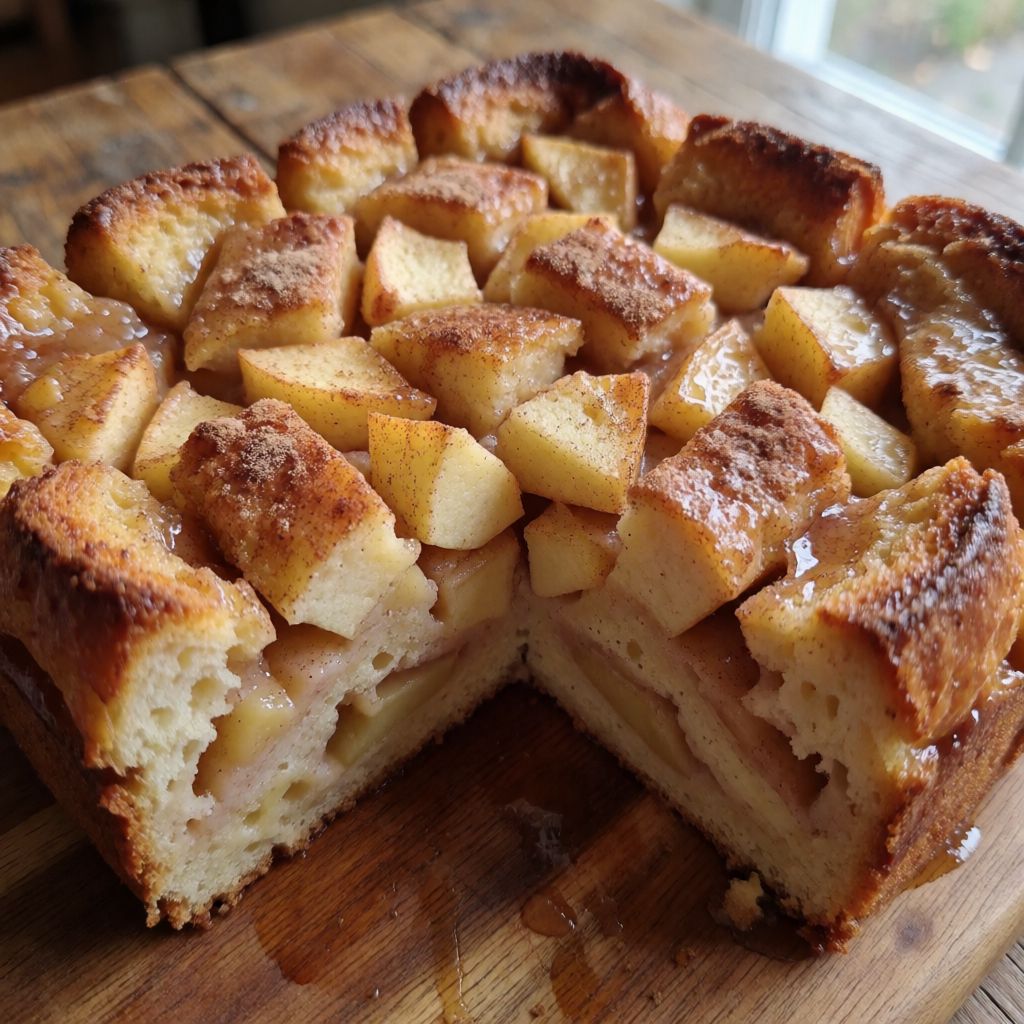
 AI photo
Apple Charlotte Bread Pudding
A homely bread-and-apple bake, soaked in milk and sweetened with honey, baked until golden.
Labels are worked out automatically from the ingredients and can be wrong. Check the packaging if it matters to you.
Ingredients
- 10 pcs Bread stale slices; sliced white or toast bread works well
- 3 pcs Eggs
- 500 ml Milk
- 50 g Caster sugar
- 75 ml Honey
- pinch Cinnamon to taste
- pinch Lemon zest to taste
- 5 pcs Apple
- 1 tsp Baking powder
- 1 tsp Vanilla extract
- 1 pcs Walnuts chopped, to taste
- 1 pcs Almonds chopped, to taste
- 1 pcs Hazelnuts chopped, to taste
- 25 g Butter to taste, for greasing the tin
- 1 tsp Vanilla sugar to taste
- 1 pinch Salt to taste











Steps
Soak the torn stale bread slices in warm milk for a few hours until soft.
Peel the apples, slice them, and leave to macerate with a pinch of cinnamon, sugar, lemon juice and zest.
Whisk the remaining sugar with the egg yolks, then stir in the milk and honey.
Whisk the egg whites with a pinch of salt until stiff.
Combine the batter ingredients, add the baking powder and vanilla extract along with the whisked egg whites, folding gently from the bottom up.
Grease the tin with the butter, pour in the batter, arrange the apples on top and bake in a preheated oven at 220°C.
40 minSprinkle with chopped walnuts, almonds, hazelnuts and vanilla sugar before serving.
What was changed
Lard was replaced with Butter as local shoppers use butter rather than lard for this kind of baking. The vanilla baking powder sachet, not sold locally, was replaced with Baking powder, with Vanilla extract added for the vanilla flavour.
Forget the fancy French charlotte with its ladyfingers and buttered mould walls — this is the other charlotte, the kitchen one, the one born because bread goes stale on a Tuesday and nobody wants to throw it out. It's bread pudding wearing a better coat: stale bread dissolved in milk until it has no structure left, bound with egg and honey into something closer to a custard than a cake, then crowned with apples that bake into soft, caramelised wedges on top. What decides whether it works is not the oven — it's the bread.
Stale bread is not a compromise here, it's the whole mechanism. Fresh bread is still full of air and surface tension; it resists milk, goes gluey in patches, slimy in others. Bread that's a day or three old has already lost moisture, so when it meets warm milk it drinks evenly, right through the crumb, collapsing into a soft mass with no lumps. Some say you can use fresh bread if you're in a hurry — no, because you'll get wet pockets next to dry ones, and no amount of baking fixes that afterwards.
The egg whites are doing a second, separate job: lift. The yolks go into the custard base for richness and colour; the whites get beaten alone and folded in at the end so their trapped air survives into the oven. Whisk them with the yolks together and you get a flat, dense pudding — stir instead of fold, and you knock that air straight back out. Folding "from the bottom up" isn't fussiness, it's the only motion that moves batter without popping bubbles.
Ten slices of stale white or toast bread sound like a lot until you remember they're being dissolved, not kept whole. Toast bread works especially well because it's already slightly dried and sliced to an even thickness — consistency in the slice means consistency in how fast it drinks milk. If your bread is still soft, don't skip the staling: dry it out in a low oven for ten minutes rather than soak it fresh and hope.
The 500ml milk is the solvent, and it needs to be warm, not hot and not cold. Warm milk gets absorbed; cold milk sits on the surface and takes far longer, which tempts people to rush the soak and leave a dry core. Any milk with enough fat to carry flavour will do — whole milk is the standard British choice, and it's the right one here; skimmed leaves the custard thin and the texture closer to wet bread than pudding.
Three eggs are split by job, not divided evenly. Yolks carry fat and colour into the custard; whites carry air. If you only have two eggs, use both whole and accept a denser, more honestly "bread pudding" result rather than a risen one — don't try to stretch three yolks' worth of lift from two.
Honey and caster sugar aren't interchangeable, they're doing different things. The sugar dissolves into the custard for sweetness without flavour of its own; the honey brings its own character and a faint stickiness that helps the top caramelise under heat — swap all the honey for sugar and the top will be paler and less glossy. If you're out of honey, golden syrup is the closer substitute in texture, though it won't taste the same.
The five apples want to be a variety that holds shape under heat rather than collapsing into sauce — a firm eating apple, not a Bramble/Bramley-style cooker that's built to fall apart. Macerating them first in sugar, cinnamon and lemon isn't decoration: it draws a little juice out by osmosis so they don't dump a flood of liquid into the batter once baked, and the lemon slows the browning of the cut flesh while you work.
The nuts and vanilla sugar at the end are there for contrast, not nutrition — a crunchy, fragrant finish over something that's otherwise entirely soft, so use what you have and chop it small; whole almonds scattered on top just roll off. And the patience this dish actually asks for isn't in the oven, it's in the "few hours" of soaking — rush that and you're eating bread with milk poured over it, not charlotte.