
 AI photo
Bacon Roulades with Potato and Vegetable Bake
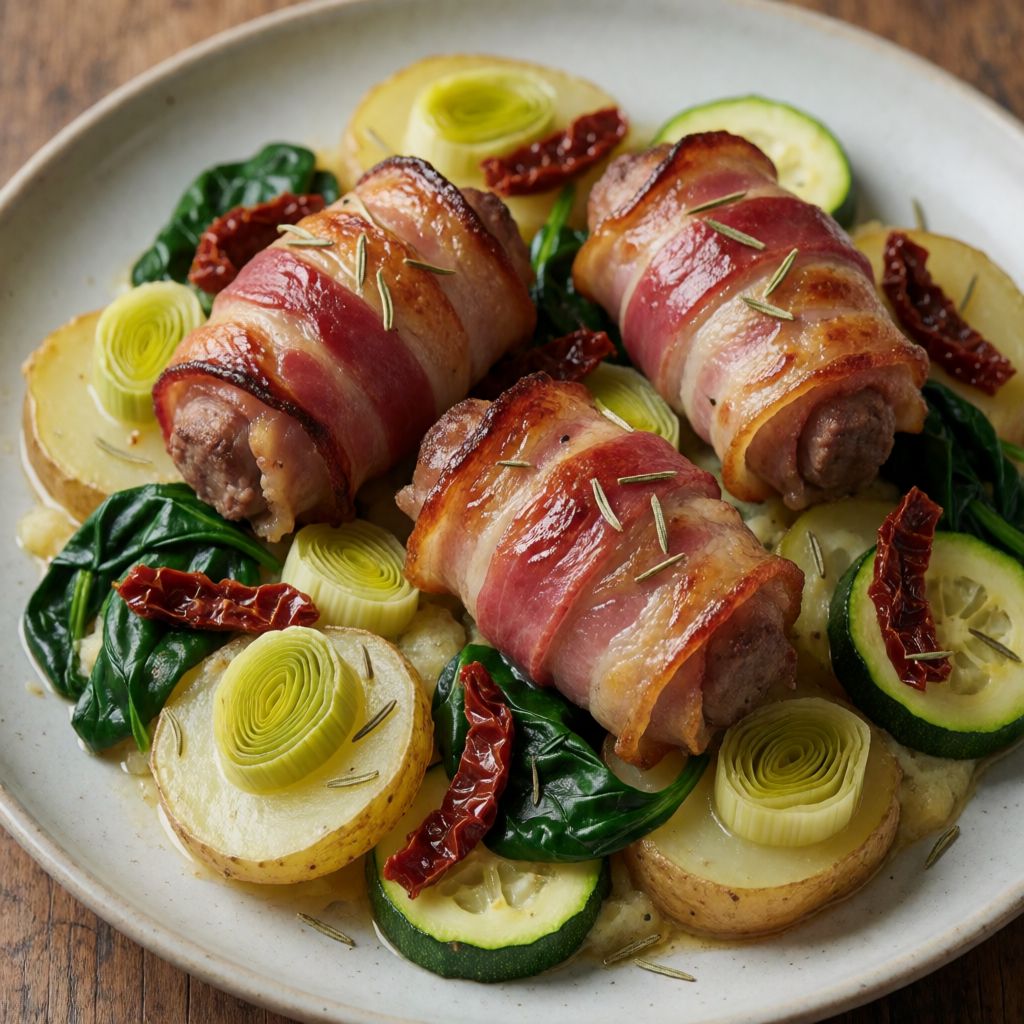
A layered potato and vegetable bake topped with small pork bacon roulades, finished together in the oven.
Labels are worked out automatically from the ingredients and can be wrong. Check the packaging if it matters to you.
Ingredients
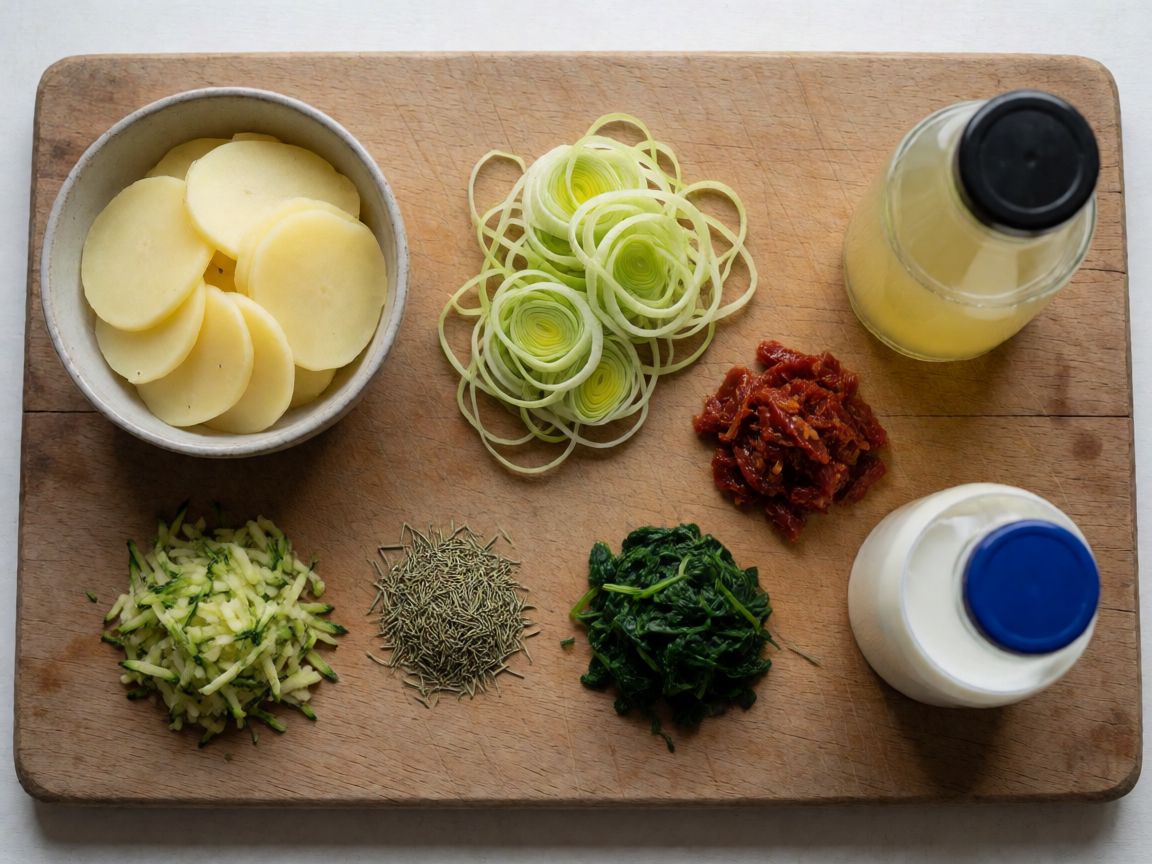
- 1 kg Potato thinly sliced
- 2 pcs Leek thinly sliced
- 30 g Sun-dried tomatoes finely chopped
- 200 g Courgette coarsely grated
- 1 tsp Dried rosemary
- 80 g Spinach
- 100 ml Vegetable stock
- 100 ml Double cream
- Salt
- Black pepper freshly ground
- 1 tbsp Olive oil for greasing the dish
- ½ bunch Oregano or flat-leaf parsley, fresh











For the bacon roulades
- 400 g Pork mince
- 1 pcs Onion finely chopped
- 20 g Sun-dried tomatoes finely chopped
- 1 tsp Dried thyme
- 50 ml Double cream
- 1 pcs Egg
- 25 g Plain flour
- 70 g Bacon sliced
- Salt
- Black pepper freshly ground






Steps
Fry the leek in a pan with oil until just softened, without colouring.
Add the sun-dried tomatoes, courgette, rosemary, spinach, vegetable stock and double cream, and mix well.
Let it simmer for 5 minutes and season with salt and black pepper.
Layer the potato and a thin layer of the vegetable-cream mixture in a greased ovenproof dish.
Bake in a preheated fan oven at 180°C for about 25 minutes.
For the bacon roulades: in a bowl mix the pork mince, onion, sun-dried tomatoes, thyme, double cream, egg, flour, salt and pepper.
Divide the mince into smaller portions and shape into small oblong patties — 2 roulades per person.
Cut the bacon in half and lay two halves side by side.
Place a mince patty on the bacon and roll up into small bacon roulades.
Take the ovenproof dish out of the oven and place the bacon roulades on top.
Bake the dish for a further 30–45 minutes, until the potato is tender and the bacon roulades are cooked through.
This is a Sunday-roast dish wearing a different coat — a potato gratin that's been told to hold up a row of meatballs instead of hiding under a joint of beef. The potato bakes low and slow in a cream-and-vegetable sauce until it's soft right through, and the bacon-wrapped mince sits on top for the second, shorter stretch, so the bacon crisps while the inside stays juicy. Two different cooking speeds, one dish, one oven — that's the whole engineering problem here.
What decides whether it works is thickness and patience, not the ingredient list. Slice the potato thin — properly thin, almost see-through — because a gratin doesn't cook by heat alone, it cooks by heat getting all the way through a stack of starch. A thick-cut potato looks rustic and stays raw in the middle while the top is already freckled brown. Some say a gratin just needs "longer in the oven" to fix that — no, because by the time the centre of a fat slice softens, the surface has gone past golden into bitter. Thin slices are the fix, not more time.
The cream-vegetable layer isn't a sauce you pour and forget — it's simmered first so the courgette gives up its water and the spinach collapses before either touches the potato. Skip that step and you're baking a watery dish, and watery means the potato steams instead of roasting, which means pale, slippery slices instead of ones with any bite at the edge.
Potato: use a floury-leaning, all-purpose type — a Maris Piper or King Edward, the ones already in your veg rack for a roast — because they soften evenly and don't fight the knife when sliced thin. A waxy salad potato holds its shape too stubbornly here; it stays crunchy at the time the rest of the dish is done, and you end up extending the bake just for the potato, drying out everything else.
Leek, cooked gently and without colour: the point is sweetness, not caramelisation. Let it brown and it turns bitter and chewy, which fights the cream instead of folding into it. If leek isn't to hand, a mild onion works, sliced thin and given the same patience — low heat, no rush, no noise in the pan.
Courgette is grated coarse rather than sliced because grated courgette releases its water fast when it hits heat, and that's exactly what you want it to do before it reaches the potato layer — better it sweats out in the pan than inside the bake where it has nowhere to go. Sun-dried tomato brings concentrated acidity and a bit of chew without adding more liquid — a fresh tomato here would just add more water to a dish that's already managing moisture carefully.
Double cream and vegetable stock together give you a sauce loose enough to coat the potato thinly but not so thin it turns watery once it mingles with the courgette's and spinach's own juices. If cream feels heavy, a single cream or even full-fat crème fraîche will do the same clinging job — anything with enough fat to coat rather than soak.
For the roulades, pork mince needs some fat in it to stay moist through the second, longer bake — lean mince dries out and goes grainy, so don't reach for the "extra lean" pack thinking you're doing yourself a favour. The egg and flour are there to bind, not to flavour: without them the patty falls apart inside the bacon the moment it's turned or sliced. Bacon itself should be ordinary sliced streaky, thin enough to wrap and overlap — thick-cut back bacon won't curl round a patty without cracking, and it won't render its fat properly in the time given.
Oregano or parsley at the end is seasoning for the eye as much as the tongue — a plate of cream-coloured potato and pale bacon needs that green to look like something you'd want to eat, not just something that's cooked. If you haven't got either, any soft fresh herb — chives, even the tops of spring onion — does the same job: colour and a bright, grassy note cutting through all that cream.