
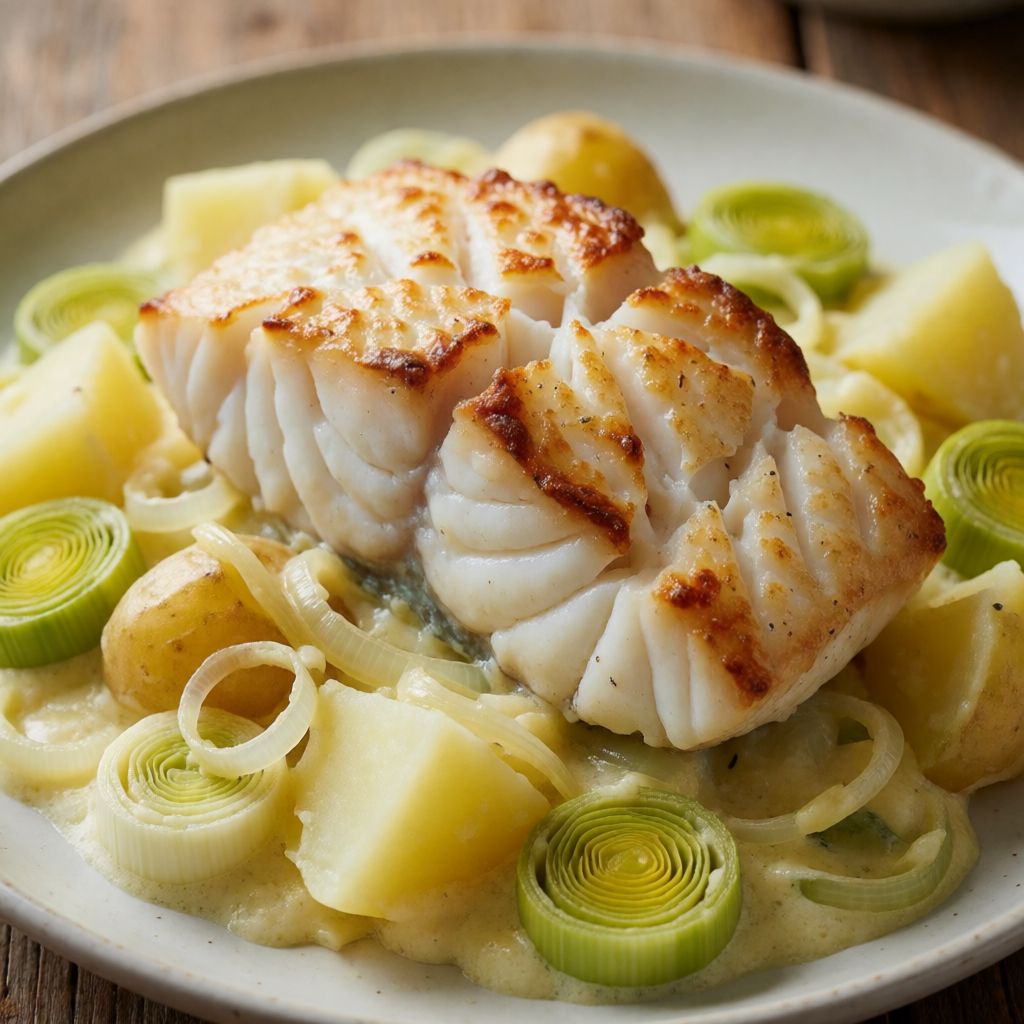
 AI photo
Baked Cod with Vegetables
A simple baked cod dish with potatoes, leeks and tomatoes, finished with a fresh herb dressing.
Labels are worked out automatically from the ingredients and can be wrong. Check the packaging if it matters to you.
Ingredients
- 1 kg Potatoes thinly sliced
- 2 pcs Leeks sliced
- 1 pcs Onion thinly sliced
- 150 ml Stock
- 100 ml Double cream
- 3 tbsp Olive oil
- 1 tsp Dried rosemary dried
- 500 g Cod
- 80 g Prosciutto
- 150 g Tomatoes halved
- 80 g Rocket
- Salt
- Black pepper freshly ground












Herb Sauce
- 250 ml Crème fraîche
- 2 tbsp Mayonnaise
- ½ bunch Chives
- ½ bunch Parsley
- ½ bunch Dill fresh
- ½ pcs Lemon unwaxed






Steps
Arrange the sliced potatoes, leeks and onion in a greased baking dish. Mix the stock, double cream, dried rosemary, olive oil, salt and pepper, and pour the mixture over. Bake in a preheated oven at 200°C (fan/convection) for 45 minutes.
45 minRemove the dish from the oven, scatter the tomatoes over the top and bake for a further 10 minutes.
10 minCut the cod into portions, season with freshly ground black pepper and wrap each piece in prosciutto. Remove the dish from the oven, arrange the fish parcels on top. Bake for a further 12 minutes, until the fish is almost cooked through.
12 minLet the dish stand for 2 minutes. Scatter the rocket over the top and serve with the herb dressing.
2 minHerb dressing: mix the crème fraîche and mayonnaise well in a bowl, add the herbs (chives, parsley, dill). Season with finely grated lemon zest, a little lemon juice, salt and pepper.
This is a gratin with a fish course bolted onto the end of it — potatoes bake in cream and stock until they've gone soft and a little sticky at the edges, and only in the last stretch does the cod arrive, wrapped in prosciutto, to ride the residual heat of a dish that's already most of the way cooked. The order matters more than any single step: potatoes need forty-odd minutes to go from raw to yielding, cod needs about twelve to go from raw to just-set, and if you tried to cook them together from the start you'd get bullet-hard potato bottoms and cod with the texture of an eraser.
What decides whether it works is restraint with the fish. Cod breaks down fast — the flesh is loose-grained, low in connective tissue, and it goes from translucent to chalky-dry in the time it takes to answer the phone. The prosciutto wrap isn't decoration: it's a jacket that bastes the fish in its own rendered fat and salt while shielding the surface from the oven's dry heat, so the inside stays moist a little longer than it would naked on the tray. "Almost cooked through" when you pull it is not caution, it's arithmetic — the fish keeps climbing in temperature for the two minutes it rests, and that's exactly the gap between "almost" and "done."
Start with the potatoes, because they set the clock for everything else. Thin, even slices matter here — not fashion, physics: a knife or mandoline cut keeps every piece the same thickness so they all hit "bends, doesn't snap" at the same moment, instead of some pieces turning to mash while others stay raw in the middle. Any waxy or all-purpose potato works; a floury baker will slump and go grainy in all that cream rather than holding its layers.
Leeks and onion are there for sweetness, not crunch — they soften under the liquid and more or less dissolve into the sauce, so don't fuss over uniform slicing the way you did with the potato. If you're out of leeks, more onion covers the gap; you lose a little of the leek's milder, grassier edge but the dish still stands up.
Stock and cream together are doing a job neither can do alone: stock carries salt and savour deep into the potato layers where pure cream would just sit on top and separate under heat; cream gives body and the fat that stops the whole thing tasting like boiled vegetables. Use whatever stock you'd use for a Sunday gravy — chicken, veg, doesn't need to be anything precious, it's a background note, not a soloist. A smaller splash of milk with a knob of butter melted in will substitute for the cream in a pinch, though you'll lose some richness and need to watch the dish doesn't dry out at the edges.
Rosemary here wants to be bruised or rubbed between your fingers before it goes in dried — dried rosemary is spiky and slow to release oil, and sitting in liquid for forty-five minutes is exactly what gives it the time to do that properly. Fresh rosemary, finely chopped, is the better substitute if you have it, use less — maybe a third of the amount — because fresh carries more oil per gram.
The cod itself: buy it in one piece if you can and cut your own portions, because a loin cut from the thick end holds together under the prosciutto wrap far better than thin tail pieces, which tear and curl. Prosciutto is salty and thin for a reason — it's cured to lose moisture, so it clings to the fish and crisps slightly rather than stewing it; bacon is thicker and wetter and will shed grease into the dish rather than sealing the fish, so if you substitute, go for a dry-cured ham, thinly sliced, not streaky bacon.
Tomatoes should be ripe enough to soften on their own steam in ten minutes — rock-hard supermarket tomatoes in February won't break down in time and will sit there raw and squeaking on top. Halving them exposes the cut flesh to the heat directly, which is where the juice actually comes from.
Last is the dressing, and it's the one place where "fresh" isn't negotiable — chives, parsley and dill lose their sharpness fast once chopped, so do this close to serving, not at the start when you're prepping everything else. Crème fraîche brings the tang that mayonnaise alone can't; mayonnaise brings the body crème fraîche alone can't — together you get something that coats a spoon without tasting flat. An unwaxed lemon matters specifically for the zest: wax-coated lemons carry a bitter, slightly chemical note into fine zest that a squeeze of juice alone won't give you, so if all you've got is a waxed one, scrub it hard under hot water first or skip the zest and lean on juice alone.