
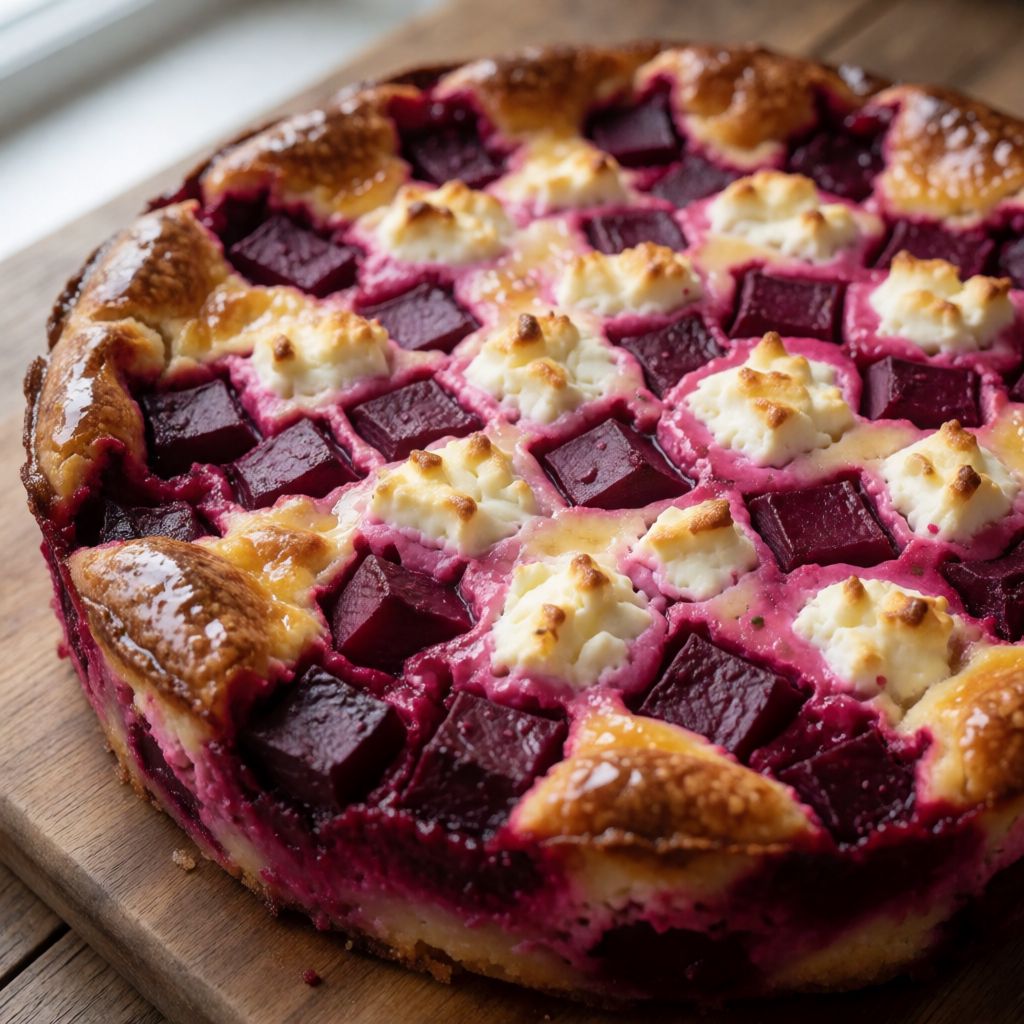
 AI photo
Beetroot and Feta Pie
A beetroot and feta pie: a shortcrust base topped with thinly sliced beetroot, feta, yoghurt and Parmesan.
Labels are worked out automatically from the ingredients and can be wrong. Check the packaging if it matters to you.
Ingredients
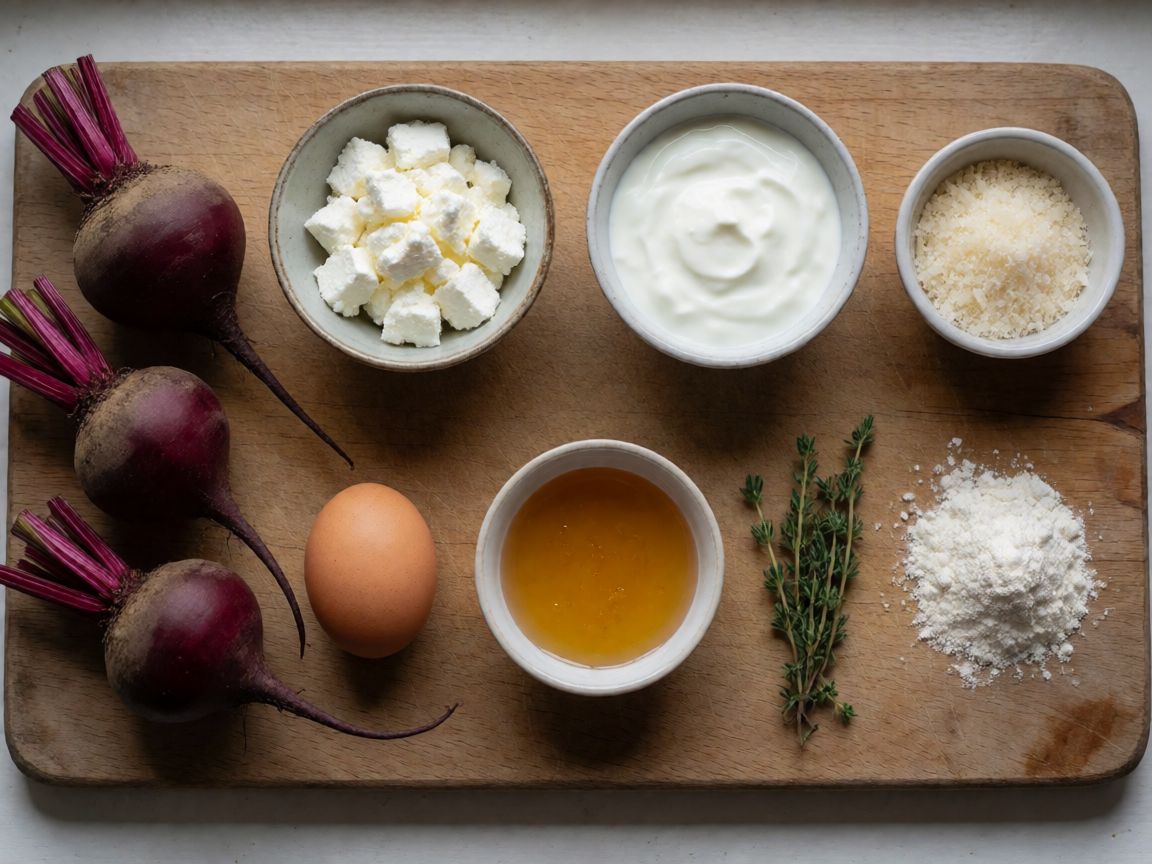












Steps
Make the pastry: tip in the flour, add the cold butter in cubes and the water, work until smooth, shape into a ball, wrap in cling film and chill in the fridge.
30 minWash the beetroot and boil it in its skin in salted water.
30 minRoll out the pastry, transfer it into a greased 24 cm tin, prick the base and blind bake with baking weights.
10 minMix the yoghurt, egg, thyme, black pepper and honey, then add the crumbled feta.
Arrange the thinly sliced beetroot in a fan shape, spread over the feta mixture and sprinkle with Parmesan.
Bake at 180°C until golden brown.
27 min
This is a savoury tart built on a contradiction: beetroot is wet and sweet, feta is dry and salty, and the whole pie works only because the pastry case and the egg-yoghurt custard between them manage that contradiction instead of ignoring it. What decides success isn't the beetroot's colour or the feta's tang — it's whether the base stays crisp under a vegetable that's 90% water, and whether the custard sets into something you can slice rather than something that oozes.
The pastry is a short-crust, not a puff or a shortbread, so butter goes in cold and in cubes, cut into the flour rather than warmed into it. Some say rub it in with your fingers until "it looks like breadcrumbs" — no, because the point isn't texture by eye, it's temperature: butter that stays solid until the oven melts it leaves little pockets of steam, and that's what makes short-crust short instead of tough. Work it too long, or let your kitchen run warm, and the butter smears into the flour, the gluten develops, and you get a biscuit base instead of one that shatters under a fork.
Blind baking with weights isn't tradition for tradition's sake — it's physics. An empty pastry case, heated from below on a domestic oven's single bottom element, will puff and slide down the sides before it has time to set, because steam has nowhere to escape except by lifting the dough. Weights hold it flat while the structure fixes itself; the baking paper under them stops the pastry sticking to anything metal. Skip this and you get a case with a soggy, collapsed floor exactly where the beetroot juice will later pool.
Beetroot: four medium ones, boiled in their jackets until a skewer goes in without resistance and the skin loosens under your thumb — not minutes on a clock, because beets vary wildly in density and a timer lies to you. Buy them with the skin still tight and unscarred; a beet that's gone soft or wrinkled on the shelf has already lost moisture you wanted inside the pie, not evaporated in your kitchen. No fresh beetroot? Vacuum-packed cooked beetroot (the kind sold next to the salad bags in every UK supermarket) is a legitimate shortcut — it's already done the boiling-in-skin job for you, just don't reach for the vinegar-pickled jars, their acidity will fight the custard.
Feta: 200g, and it must be a brined, crumbly sheep's-or-mixed-milk cheese, not a hard yellow block sold as "feta-style" — the crumble is what lets it distribute through the custard instead of sitting in one slab. If you can't get real feta, a similarly salty, crumbly cheese — a mature Lancashire, or a Greek-style block labelled for cooking — does the job on the same criterion: salt first, melt second.
Yoghurt and egg together are your custard, the thing that actually binds this pie rather than the beetroot or cheese doing it. Yoghurt brings acidity and moisture control — use a plain, unsweetened one, full-fat if you want it to set rather than run, because the fat content is what stops the custard weeping when it bakes. The egg is the setting agent: without it you have warm cheesy yoghurt, not a sliceable filling. One egg is enough for this amount of liquid; more would make it rubbery rather than creamy.
Honey, half a tablespoon, isn't there to make the pie sweet — it's there to flatter the beetroot's own sugar, which boiling in water has slightly diluted. Thyme does the opposite job: it's the earthy, slightly medicinal note that stops the whole thing tasting like a sugar-beet dessert. Dried thyme is fine here; its flavour is more concentrated than fresh and this isn't a dish where you'll miss the fresh leaf's brightness.
Parmesan on top isn't decoration, it's a crust-maker — its low moisture and high protein mean it browns rather than melts flat, giving you the golden, slightly crisp top that tells you the pie is actually ready. "Golden brown" at 180°C is the real cue here, more reliable than the stated 27 minutes, because every domestic oven runs a little hot or cool against its dial, and fan ovens especially will get there faster. Watch the top, not the clock.
The water in the pastry — 65-70ml — is a range for a reason: flour absorbs differently depending on the day's humidity sitting in your kitchen cupboard, so add it gradually and stop the moment the dough holds together without being sticky. Chilling it afterwards isn't optional patience for its own sake, though patience is exactly what this step is asking of you — a rested, cold dough shrinks less in the tin and rolls without tearing. Skip the chill and you'll fight the dough at every stage after.
A 24cm tin is assumed; a standard UK flan tin with a removable base will do exactly what's needed and makes unmoulding painless, which matters more here than with a rustic galette — this pie is meant to be lifted out clean and sliced into six wedges, not scooped from the dish.