
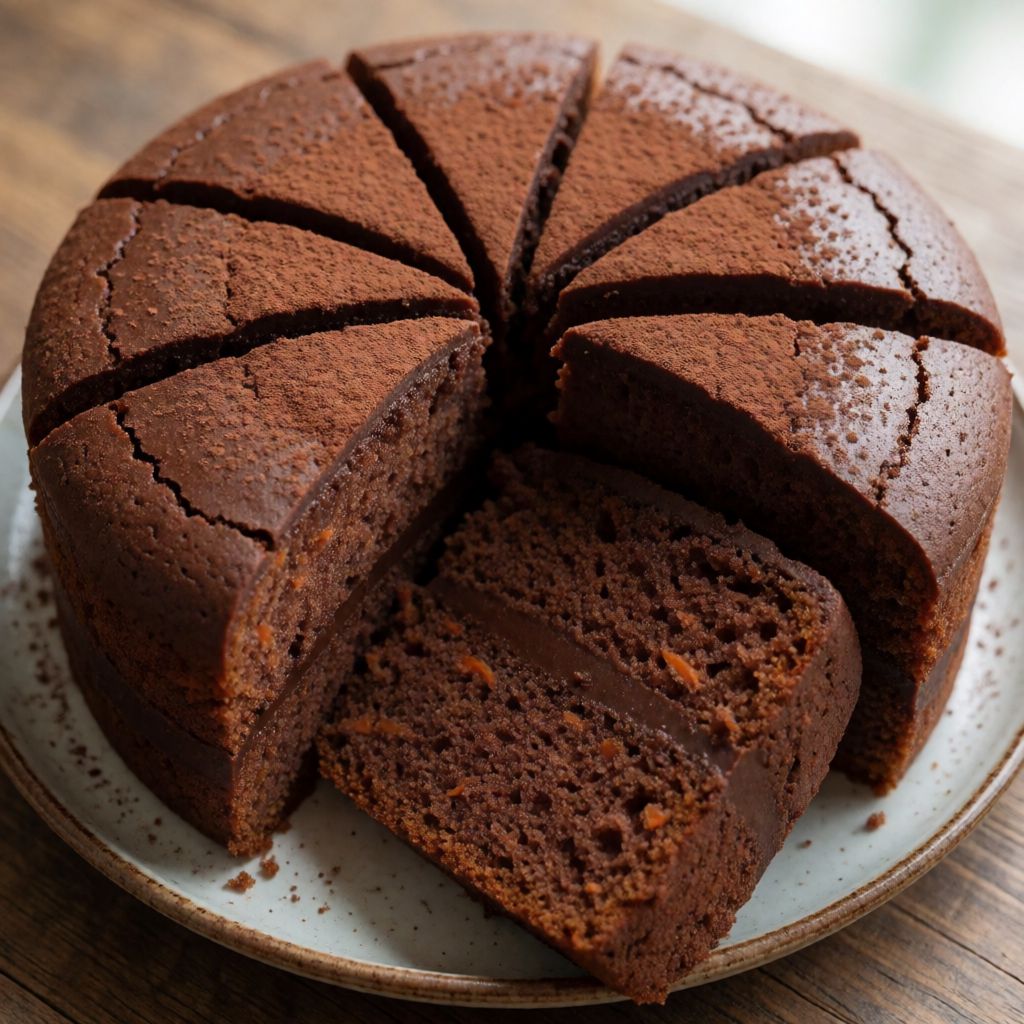
 AI photo
Carrot and Chocolate Cake
A moist carrot cake with cocoa, almond flour and dark chocolate.
Labels are worked out automatically from the ingredients and can be wrong. Check the packaging if it matters to you.
Ingredients
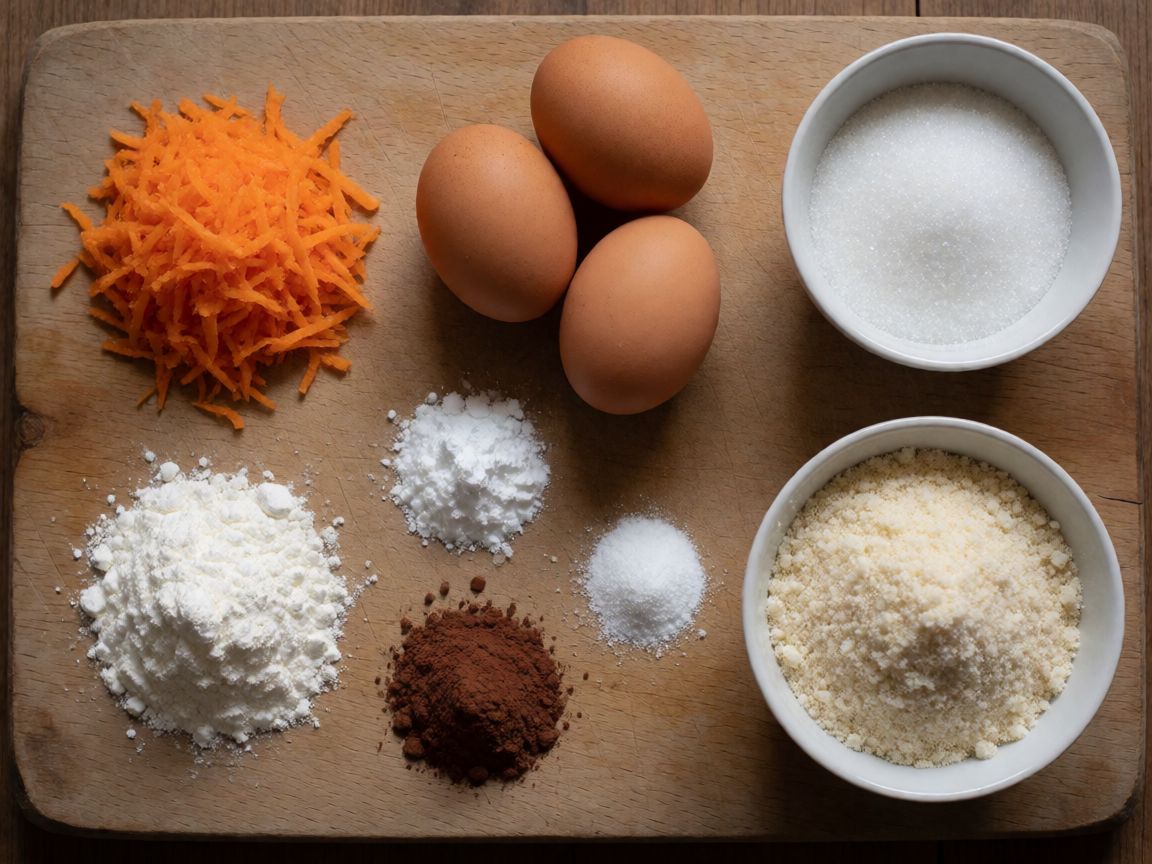
- 300 g Carrots
- 3 pcs Eggs
- 150 g Caster sugar
- 120 g Plain flour
- 50 g Potato starch
- 30 g Cocoa powder
- 100 g Almond flour or the same amount of finely ground almonds
- 16 g Baking powder
- 125 ml Yogurt
- 80 g Butter softened
- 100 g Dark chocolate







Steps
Peel the carrots and grate them on the coarse side of the grater; set aside.
In a bowl, whisk the eggs with the sugar using an electric mixer until the mixture increases in volume and becomes pale and creamy.
Add the yogurt and the softened butter. Mix well.
Sift together the flour, potato starch, cocoa powder, almond flour and baking powder, then fold them into the batter in batches to avoid lumps.
Add the coarsely chopped dark chocolate and the grated carrots. Mix until evenly combined.
Pour the batter into a 22 cm baking tin, greased with butter and dusted with flour.
Bake in a preheated fan oven at 170°C for 45-50 minutes.
50 minAlternatively, bake in a conventional oven (no fan) at 180°C for 50-55 minutes.
50 minCheck with a wooden skewer: if it comes out dry, the cake is ready.
This isn't the cream-cheese-slathered carrot cake everyone pictures when they hear the name. There's no icing here, no cinnamon. Cocoa and dark chocolate run the show; carrot is the quiet partner that keeps the crumb from drying out and adds sweetness you can't quite place. Some say a carrot cake needs that frosting to be "proper" — no, because the frosting was invented to cover a dry, over-floured crumb. This cake doesn't need covering up.
What decides whether it works is a tug of war between two jobs happening at once. The eggs and sugar, beaten until pale and thick, are doing the lifting — that foam is half your rise, baking powder is only finishing the job. Meanwhile the grated carrot is quietly weeping moisture into the batter the whole time it bakes, and the flour-starch-almond trio has to be sturdy enough to hold that moisture without turning gummy. Get the foam thin and short, or the flour mix wrong, and you get a dense puck that tastes fine but sits in the stomach like a brick.
Grate the carrot raw and leave it raw. Some cooks want to soften it first on the stove, thinking raw shreds won't cook through in the oven — no, because cooking it first drives off the very moisture you want released slowly, inside the batter, during baking. Raw and coarse-grated, it bastes the cake from the inside instead of dumping its water into the mixing bowl.
Carrots: pick the ones with some backbone, not the pre-peeled baby ones softened by months in a bag — they're mostly water and give you less sweetness for the same grams. Coarse grater, not fine: fine shreds dissolve into mush and lose the bit of bite that tells you there's actually carrot in there, not just orange tint.
Eggs and sugar: this step is doing load-bearing work, not decoration. Whisking them to pale and thick traps air that the baking powder alone can't supply — this batter is heavy with carrot, yogurt and butter, and a tired, thin egg mix means a cake that rises an inch and gives up.
Flour, potato starch, almond flour, cocoa: four different jobs. Plain flour gives structure through gluten, potato starch interrupts that gluten so the crumb stays tender instead of chewy, almond flour (or just finely ground almonds if that's what's in the cupboard) adds fat and a nutty backbone without adding more gluten, and cocoa does the flavour and some of the dry bulk. Sift them together and fold them in in batches — not because lumps look bad, but because dumping a brick of dry mix into an aerated batter all at once collapses the air you just beat in, and that air was your rise.
Yogurt and butter: yogurt's acidity is part of why the baking powder activates properly, and its moisture, together with softened butter, is what keeps a cocoa-heavy cake from tasting like dry dust — cocoa is thirsty, it pulls moisture out of everything around it. Any plain, unsweetened yogurt works; the fat content matters more than the brand.
Dark chocolate: chop it coarsely, not finely. Chopped fine, it melts into the batter and just deepens the cocoa flavour you already have from the powder — pointless duplication. Chopped coarse, it leaves pockets that half-melt in the oven, so you bite into actual soft chocolate here and there instead of a uniformly brown sponge. If you want a substitute, use any chocolate with real cocoa solids and no milk powder doing the heavy lifting — milk chocolate will just turn to sweet sludge.
The tin: 22 cm is the size the timing in this recipe is built around. Go wider and the cake bakes faster and flatter; go narrower and the middle stays wet while the edges dry out. If your tin is a different size, trust the skewer over the clock — it's the only part of the recipe that doesn't care what size pan you own.