
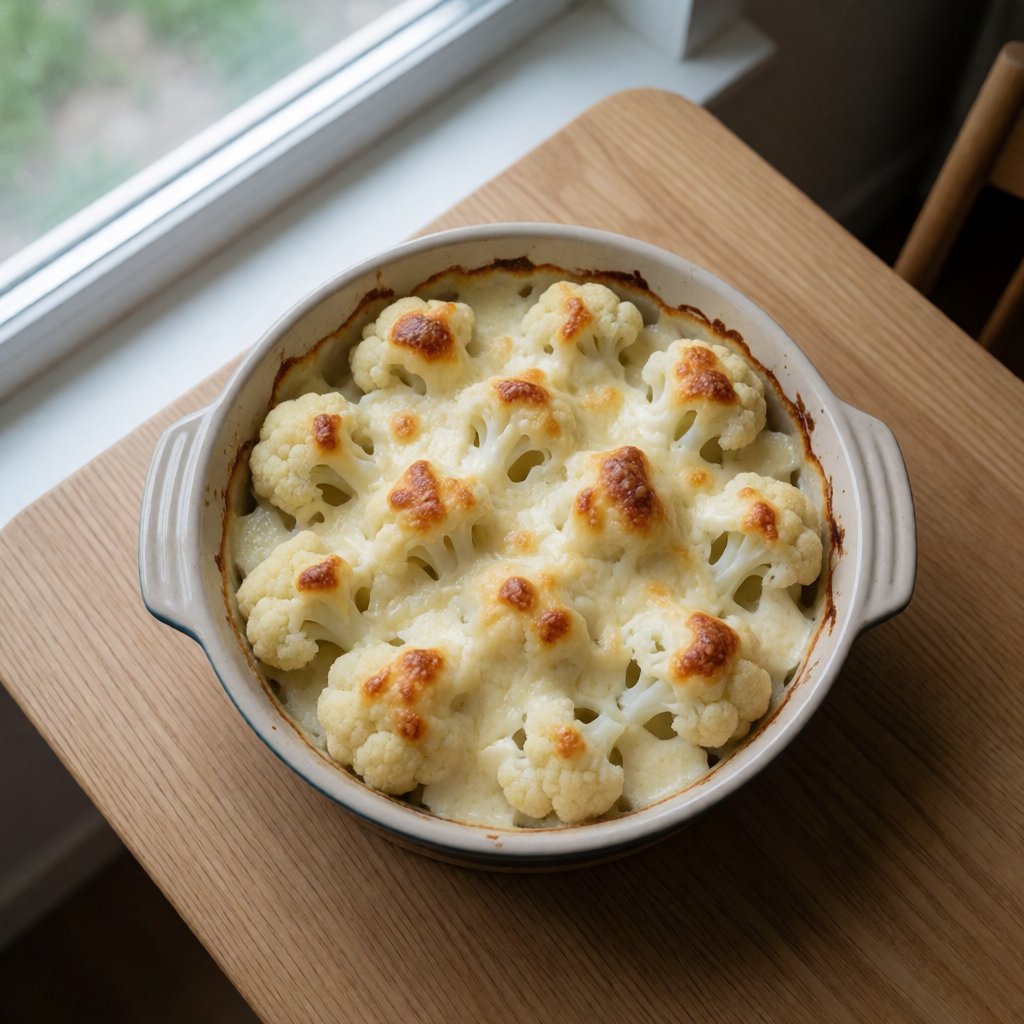
 AI photo
Cauliflower Cheese
A comforting classic: tender cauliflower baked in a creamy cheese sauce until golden.
Labels are worked out automatically from the ingredients and can be wrong. Check the packaging if it matters to you.
Ingredients
- 500 g cauliflower in florets
- 200 ml milk
- 1.5 tbsp plain flour
- 15 g butter
- 60 g cheddar grated
- 1 pinch nutmeg
- 1 pinch salt







Steps
Boil the cauliflower florets for 5 minutes.
5 minMelt the butter, cook the flour for a minute, pour in the milk and stir until thickened, then add half the cheddar and the salt.
3 minPlace the cauliflower in a baking dish, pour over the sauce and sprinkle with the remaining cheddar.
Put the dish in the oven at 200°C and bake for 25 minutes until golden brown.
25 minRemove the dish from the oven.
What was changed
Hard cheese was replaced with cheddar, the cheese traditionally used for British cauliflower cheese.
Cauliflower cheese is not a vegetable with cheese melted on it — it's a béchamel dish wearing cauliflower as a costume. Take away the white sauce and you've got boiled cauliflower, a sad school-dinner memory. Put the sauce back, and the whole point of the dish reveals itself: a cheap vegetable, a small amount of butter and cheese, stretched by flour and milk into something that can sit next to a roast without apologising for itself.
What decides whether it works is not the cauliflower, it's the sauce. Lumps, a pasty raw-flour taste, cheese gone greasy and split under the heat — these are the three ways this dish fails, and all three trace back to rushing the roux-and-milk stage. Get that right and the cauliflower only has to do one thing: not turn to mush, which is exactly what the short parboil is there to prevent.
This is a Sunday roast dish, and it earns its place through economics, not magic. Cauliflower is cheap and filling; a knob of butter, a spoon of flour, a splash of milk and sixty grams of cheese is also cheap — but whisked together and baked to gold, it reads as generous. That sleight of hand is why it's survived in British kitchens for generations: it uses up the same milk and cheddar already sitting in the fridge for tea.
Start with the cauliflower. Boiling it for five minutes isn't cooking it — it's half-cooking it, because it goes into a hot oven afterwards, under sauce, for another twenty-five minutes. If you boil it until a knife slides in with no resistance at all, by the time it comes out of the oven you've got cauliflower porridge. Five minutes should leave it at the stage where a knife still meets a little push-back in the thickest part of the stalk. Drain it properly, too, and shake off the water — a watery vegetable thins the sauce from underneath, and no amount of cheese on top fixes a sauce gone runny at the bottom of the dish.
The sauce is a béchamel, the oldest move in the white-sauce repertoire: fat and flour cooked together first, so every starch grain gets a coat of butter before it ever meets liquid. Some say lumps come from the milk being too cold, or from using the wrong pan — no. Lumps come from flour meeting liquid unevenly, some grains swelling before others have even got wet. Cook the flour in the butter for that minute, until it stops tasting raw and starts smelling faintly biscuity, then add the milk gradually, stirring all the while, so each bit is worked in before the next goes in. You don't need special kit for this — a wide saucepan and a wooden spoon or small whisk, nothing double-boiled about it. You'll feel the change under the spoon: the sauce goes from thin and milky to something that coats the back of it and holds a line when you drag a finger through. That's thickened. It keeps tightening a little more as it cools, and again in the oven, so don't chase a wallpaper-paste texture on the hob.
Only once the sauce is off direct heat do you stir in half the cheddar. Cheese is fat and protein held together in an emulsion, and hit it with too much heat too fast and that emulsion breaks — the fat weeps out and you get a greasy puddle instead of something silky. Folding it into a sauce that's thickened but no longer violently hot lets it melt without splitting. The other half of the cheddar goes on raw, for a different job: not flavour this time, but crust. In a 200°C oven it dries a little at the surface and browns — the same chemistry as a roast potato's crust, just dairy instead of starch, and it's what tells you the dish is actually done: gold-brown and blistering at the edges, not pale and merely melted.
Nutmeg earns its pinch for one reason — milk and butter together taste flat and faintly sweet, and nutmeg lifts the sauce without turning it into "nutmeg sauce." It's an old French béchamel habit, inherited wholesale into British cooking, and it costs almost nothing because a pinch is all it ever needed to be. No nutmeg, use a scrape of mace, or leave it — the dish survives, just a touch quieter.
On the rest: milk needs no flavour of its own strong enough to fight the cheese, so whole or semi-skimmed both work, and a plant milk sold for cooking (not the sweetened kind) will thicken the same way, with less richness. Flour's job is to gelatinise once cooked with fat and liquid, so a gluten-free plain-flour blend will do the same work, just thicken a touch less predictably — have a little extra on hand. For the cheese, you want sharp and genuinely meltable together — mature cheddar is the obvious pick because it's usually already in the fridge, but red Leicester or a strong Gouda does the same job. Low-moisture mozzarella melts beautifully and brings nothing else to the party; you'd end up with something stringy and bland, which defeats the point.
Patience here lives mostly in the sauce. Don't rush the roux, don't tip the milk in all at once because the oven's waiting. Twenty minutes of prep is honest time, not slack to cut. And once it's out of the oven, give it a minute or two before serving — straight from 200°C the sauce is still loose with heat, and it firms up just enough on standing to hold its shape on the plate instead of flooding it.
·