
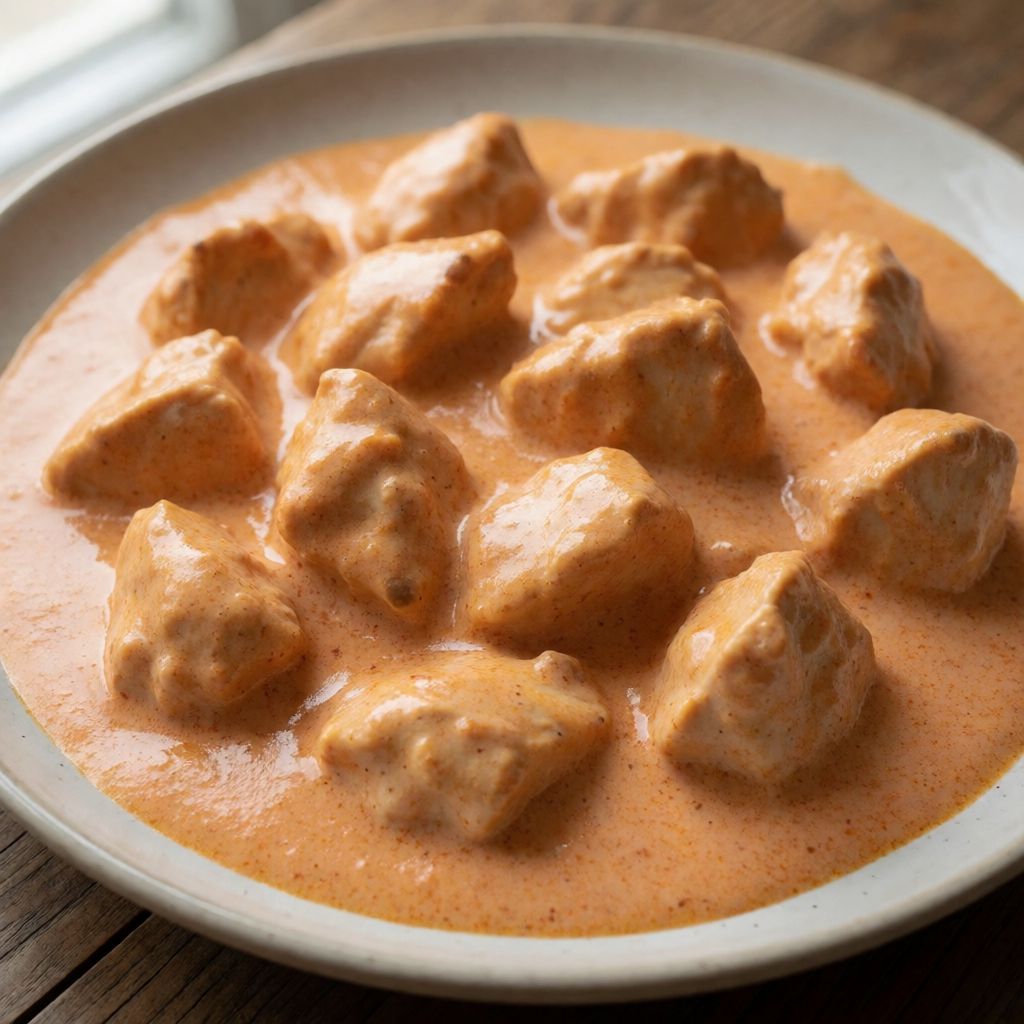
 AI photo
Chicken in Paprika Sauce
A warming chicken dish in a creamy paprika sauce, served with rice, broccoli and green beans.
Labels are worked out automatically from the ingredients and can be wrong. Check the packaging if it matters to you.
Ingredients
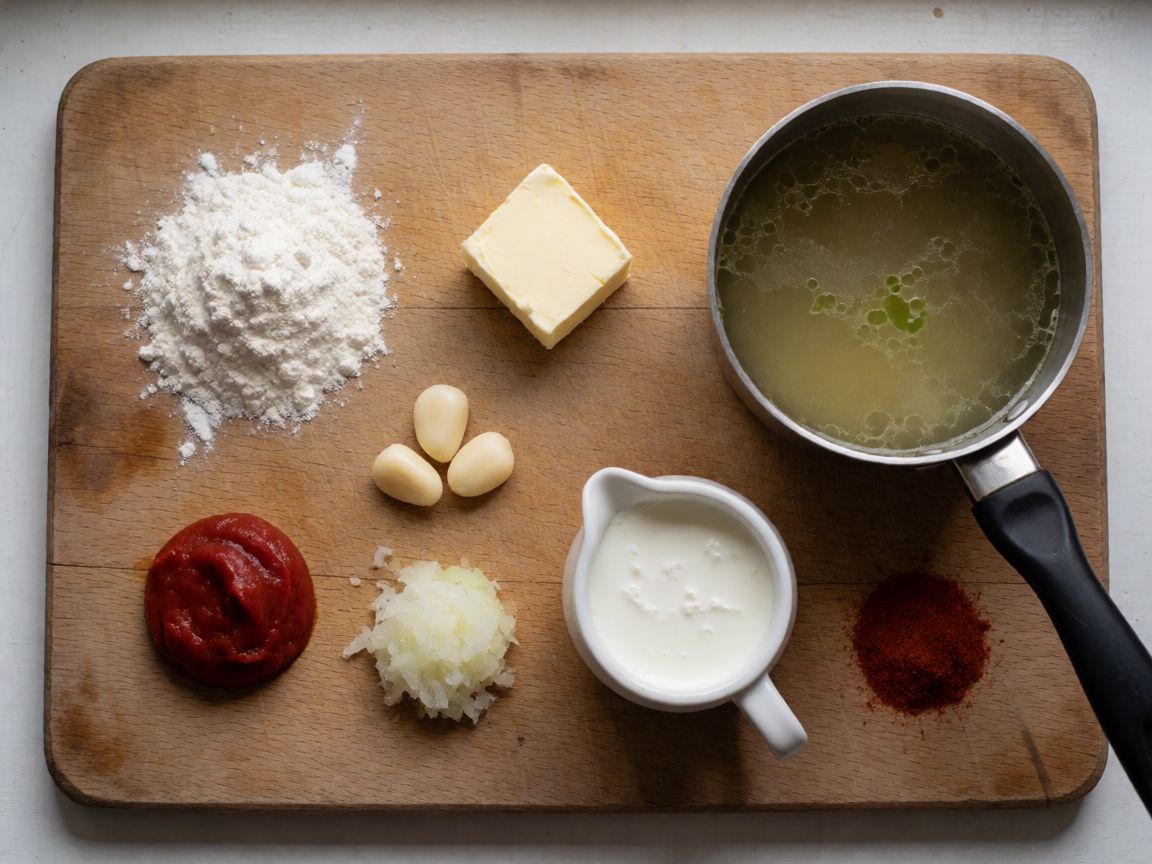
- 25 g Plain flour
- 25 g Butter
- 300 ml Stock
- 250 ml Double cream
- 25 g Tomato paste concentrated
- 3 clove Garlic finely grated
- ½ pcs Onion finely grated
- 3 tsp Paprika sweet
- 1 pinch Cayenne pepper
- 1 tsp Brown sugar
- Salt
- Black pepper freshly ground
- 400 g Chicken breast cut into thick strips
- 25 g Plain flour
- 1 tsp Paprika sweet
- 1 tbsp Olive oil for frying
- 10 g Butter for frying
- Salt
- Black pepper freshly ground
- 300 ml Basmati rice
- 100 g Green beans
- 1 pcs Broccoli broken into small florets
- 100 ml Parsley chopped
















Steps
Cook the rice according to the packet instructions.
Put the broccoli and green beans into a pan of boiling salted water, cover and cook for a maximum of 2 minutes.
2 minDrain the water and keep the vegetables warm under the lid.
Melt the butter in a saucepan and whisk in the flour until it forms a smooth paste.
Pour in the stock, whisking, and bring to the boil.
Add the tomato paste, garlic, onion, paprika, cayenne pepper, brown sugar, salt and pepper.
Coat the chicken breast in the mixture of flour, paprika, salt and pepper.
Fry the meat in a hot pan with butter and oil until golden brown.
Pour the paprika sauce over the meat and simmer for 10 minutes until fully cooked.
10 minServe the chicken with rice, broccoli and green beans, sprinkled with parsley.
This is a paprika chicken, not a paprikash and not a curry, though it borrows a gesture from both. The whole dish stands or falls on one thing: a roux. Butter and flour cooked together into a paste, then stretched with stock, is what makes the sauce cling to the chicken instead of running off it like soup. Skip that step, add paprika straight to stock and cream, and you get a thin orange liquid that tastes of nothing because paprika has no acid, no fat-soluble punch of its own to carry it — it needs fat to bloom in, and the roux is where that happens, quietly, before the liquid even goes in.
Some say paprika is a "spicy" spice. No — sweet paprika, which is what's asked for here, is dried pepper and little else: colour and a faint smoky sweetness, no real heat. The heat in this dish comes from a pinch of cayenne, added separately and on purpose. Confuse the two and you either end up with a sauce that bites when it shouldn't, or a sauce that's all orange and no flavour because you were afraid of the cayenne and left it out along with the paprika's flavour.
What decides whether the chicken itself is good is the second flour coat, the one with paprika in it, going onto meat fried hot and fast, in butter and oil together — oil because it takes the heat without burning, butter because it brings flavour the oil can't. Dry chicken breast, pat it if you must, because a wet surface steams instead of browning, and a steamed crust never becomes a crust at all.
Flour and butter in equal weight, 25g to 25g, is just the ratio for a basic white roux — any cookbook calls it that, nobody needs mysticism here. The two cook together for less than a minute, enough that the flour loses its raw, pasty smell — if you've ever bitten into a sauce and tasted something faintly like wallpaper paste, that's flour that went into liquid without ever meeting fat and heat first. Whisk it, don't stir, because a whisk breaks up any lump the moment it forms; a spoon just pushes lumps around.
Stock here is doing a job double cream alone can't: double cream is rich but flat, no backbone, no savoury depth. Stock gives the sauce something to taste of besides fat and paprika. Use a proper stock if you have it — chicken, since that's what's in the pan — but a good stock cube dissolved in water works; nobody making a Tuesday dinner needs to have simmered bones all weekend. What you shouldn't do is swap stock for water, because then the sauce is cream, flour, and paprika, and it tastes like all three separately rather than one thing.
Tomato paste — the concentrated kind, from a tube or a small tin, not passata — gives acidity and a dark savoury edge that balances the cream's richness and rounds off the brown sugar's sweetness. The sugar is there for exactly one reason: paprika and tomato paste both lean slightly bitter and sharp when cooked, and a single teaspoon of sugar takes the edge off without making the dish taste of dessert. Leave it out and the sauce is edible but harsher than it needs to be; nothing dramatic, just thinner-tasting.
Garlic and onion are grated, not chopped — that matters more than it sounds. Grated, they break down into the sauce entirely, no bite of raw onion left anywhere, no fishing out a stray clove. If you only have garlic powder or dried onion, use less than you think, because dried aromatics concentrate fast and burn bitter if they hit the hot roux directly rather than the liquid.
Chicken breast, cut into thick strips rather than thin ones, so it survives both the hot fry and the ten-minute simmer in sauce without drying into string. Thigh meat works too, and forgives a slightly longer simmer better than breast does, if you prefer it or if that's what's in the fridge — just know it changes the texture, softer, a touch more fat.
For the oil: anything with no flavour of its own and a reasonably high smoke point does the job — a flavourless vegetable oil, a light olive oil, not an extra virgin one, which burns bitter at frying heat and wastes its own good flavour in the process. The butter alongside it isn't decorative; oil alone fries cleanly but butter browns the surface of the chicken faster and deeper because of the milk solids in it, which is the actual mechanism behind that deep gold crust everyone's after and nobody explains.
The rice, broccoli and beans are the quiet part of the dish, and the only real instruction worth repeating is: don't drown the broccoli and beans. Covering the pan and giving them two minutes in boiling water is enough to take the rawness off without boiling the green out of them — any longer and you get khaki florets that taste of nothing, which is the single most common way people ruin vegetables in this country, out of habit more than intention. Keep them under a lid off the heat afterwards and they stay hot without overcooking further; that's the whole trick, no magic in it.
Patience here is short but real — ten minutes of simmering isn't negotiable down to five because you're hungry. That's the time the chicken needs to finish cooking through in the sauce rather than staying pink near the bone of the strip, and the time the sauce needs to thicken to the point it coats a spoon rather than runs off it.