
 AI photo
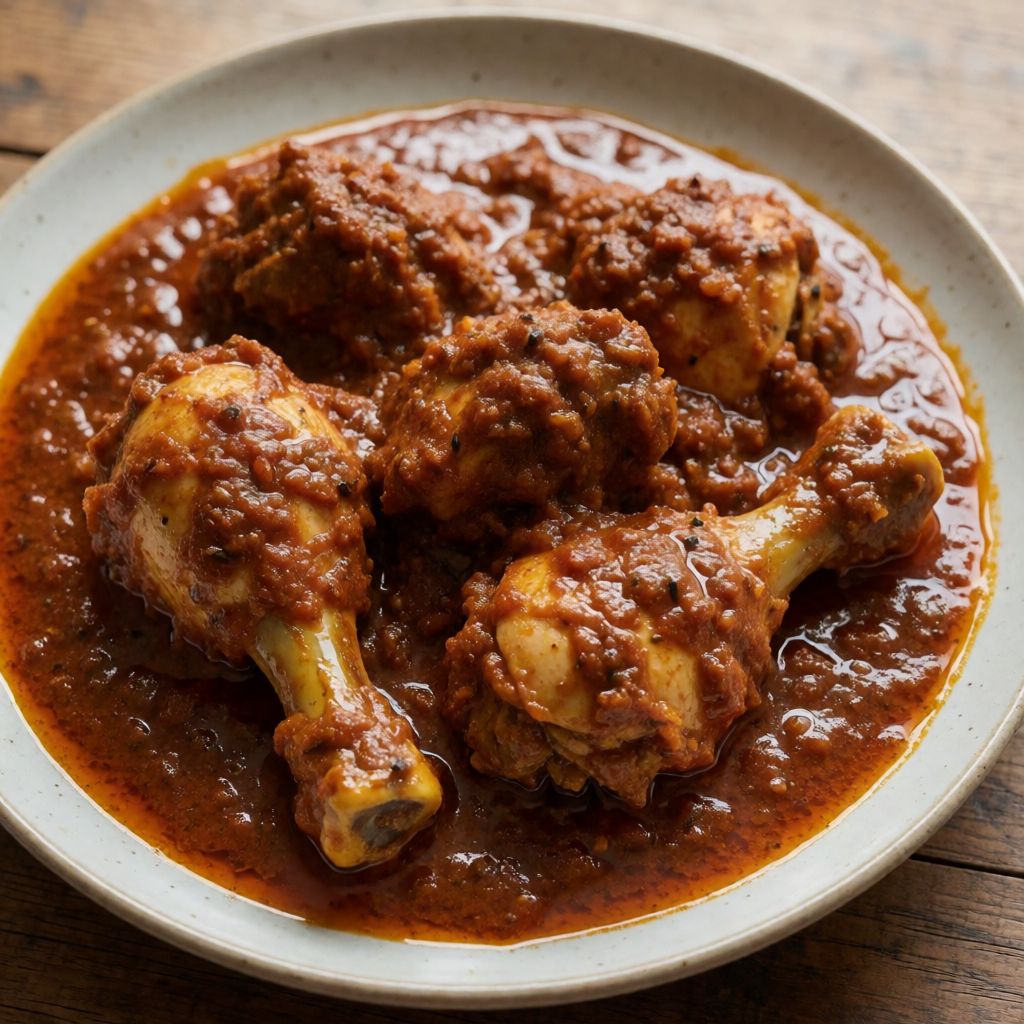
Chicken Vindaloo
A spiced, tangy chicken curry marinated in warming spices and vinegar, then simmered until tender.
Ingredients
- 1 tsp Cardamom ground
- 0.5 tsp Cloves ground
- 1 tsp Cinnamon ground
- 1 tsp Ground coriander
- 1 tsp Cumin ground
- 1 tsp Fennel seeds
- 0.5 tsp Chilli flakes
- 1 tbsp Ginger finely grated
- 4 clove Garlic crushed
- 1 tsp Mustard seed powder
- 1 tsp Paprika
- 1 tsp Turmeric ground
- 50 ml Apple cider vinegar
- 1 tbsp Sugar
- 450 g Chicken breast cut into cubes
- 2 pcs Onion finely chopped
- 100 ml Stock
- 2 tbsp Tomato paste
- 1 tbsp Olive oil
- Salt
- Black pepper freshly ground
- 400 ml Basmati rice cooked according to packet instructions
- 1 bunch Coriander for sprinkling, fresh






















Steps
Place the cardamom, cinnamon, cloves, coriander, cumin, fennel seeds and chilli flakes in a dry pan and toast over medium heat until fragrant.
3 minMix the ground spices with the chilli, ginger, garlic, mustard, paprika, turmeric, sugar and apple cider vinegar into a thick paste.
Coat the chicken pieces in the marinade and leave in the fridge for 12-24 hours.
1080 minBefore serving, fry the onion over medium heat in a pot with oil until soft.
4 minAdd the chicken with the marinade and reduce the heat slightly. Heat through well.
3 minAdd the stock and tomato paste. Simmer covered for about 20 minutes, or until the chicken is tender.
20 minServe with basmati rice and good bread.
Vindaloo gets blamed for being "just a hot curry," and that's the first myth worth putting down. The name is a Portuguese hangover — carne de vinha d'alhos, meat in wine and garlic — brought to Goa by sailors who needed to keep pork edible on a ship with no fridge. No wine in the colony, so vinegar did the preserving job instead, and garlic did what garlic always does against bacteria. That's it, that's the whole "exotic" origin story: a solution to spoilage that stuck around because it tasted good once the danger of spoiling was gone. The chilli came later, from the same trade routes, piled on because by then it was about flavour, not survival.
So the vinegar in your marinade isn't there to make the chicken "tangy" in some vague way — it's an acid doing a specific job: breaking down surface proteins so the spice paste actually penetrates instead of sitting on top like a coating. That's why the 12-24 hours in the fridge is not a suggestion you can skip to save a Sunday evening. Four hours of marinating gives you seasoned skin. Twelve-plus gives you seasoned meat. Patience is the main ingredient here, more than any one spice — toasting cumin for an extra minute won't save a chicken breast that only sat in the paste for forty minutes.
Go through the spice list and you'll notice it's two different jobs stacked together: cardamom, cinnamon, cloves, fennel, coriander, cumin are the "warm" aromatics — the ones you toast — and turmeric, paprika, mustard powder, chilli are the "colour and heat" group, added raw into the paste afterwards. Don't toast the second group with the first; turmeric and paprika scorch and turn bitter fast, they're there for colour and punch, not aroma, so they go in cold once the paste is being mixed, not into the dry pan. If you're missing fennel seed, don't panic and leave a hole — a pinch more cumin plus a tiny pinch of aniseed-adjacent something (even a crushed fennel tea bag, which sounds mad but works) gets you close; what matters is something with that faint liquorice note, not the specific seed.
Mustard seed powder is doing something structural, not just flavour: it's an emulsifier, it helps the oil and vinegar in the paste actually hold together into a paste rather than separate into a slick and a puddle. If you only have whole mustard seeds, toast and grind them with the other dry spices in step one — don't skip it thinking it's a minor flavour note, it's half the reason the marinade coats the chicken evenly instead of sliding off.
Ginger and garlic — grate the ginger, don't chop it, because chopped ginger leaves stringy fibres that never break down in a twenty-minute simmer and you end up chewing little threads later. Crushed garlic rather than sliced for the same reason: more surface area means it actually dissolves into the paste instead of staying as distinct pieces that burn in the pan before the onion's even soft.
Apple cider vinegar is a fine modern substitute for the original palm or toddy vinegar — any vinegar with a clean, non-overpowering base will do the acid job, white wine vinegar works, malt vinegar will drag your dish toward fish-and-chip-shop territory and fight the spices, so skip that one specifically. The sugar isn't there to sweeten the dish in any noticeable way — it's balancing the vinegar's sharpness so the sauce doesn't taste purely sour, a small counterweight, not a flavour of its own.
Onion "until soft" is the real instruction, not the four minutes attached to it — what you're watching for is the onion losing its raw bite and turning translucent at the edges, still pale, not coloured. If you push it to brown here you're building a different dish; vindaloo's base stays light because the colour and depth are meant to come from the spice paste and tomato, not from caramelised onion the way a British-style curry-house korma leans on. In a domestic pot rather than a kazan, this happens faster and less evenly than people expect — a wide, heavy-based pan gives you more surface contact with the heat and stops the onion sweating unevenly in a small puddle in the centre, which is the usual reason home versions go patchy-brown in spots.
The stock and tomato paste loosen the thick marinade into something simmer-able — any plain stock works, chicken if you have it, vegetable if you don't, water with a bouillon cube at a pinch, it's a volume and salt contributor more than a flavour pillar at this stage. Covering the pot for the twenty minutes matters because a plate or lid traps the steam that's doing half the cooking — in a shallow domestic pan without a tight lid, that moisture escapes fast and you'll find the sauce reducing to a paste before the chicken's actually cooked through, so if your lid doesn't seal well, check it a touch earlier than you'd think and add a splash more stock rather than trust the clock. Doneness on the chicken isn't a timer question anyway — cut the thickest piece, if the inside's gone from pink-translucent to opaque white right through, it's done; breast punishes you fast for overcooking, so this is one case where checking early costs you nothing and checking late costs you a dry Sunday dinner.