
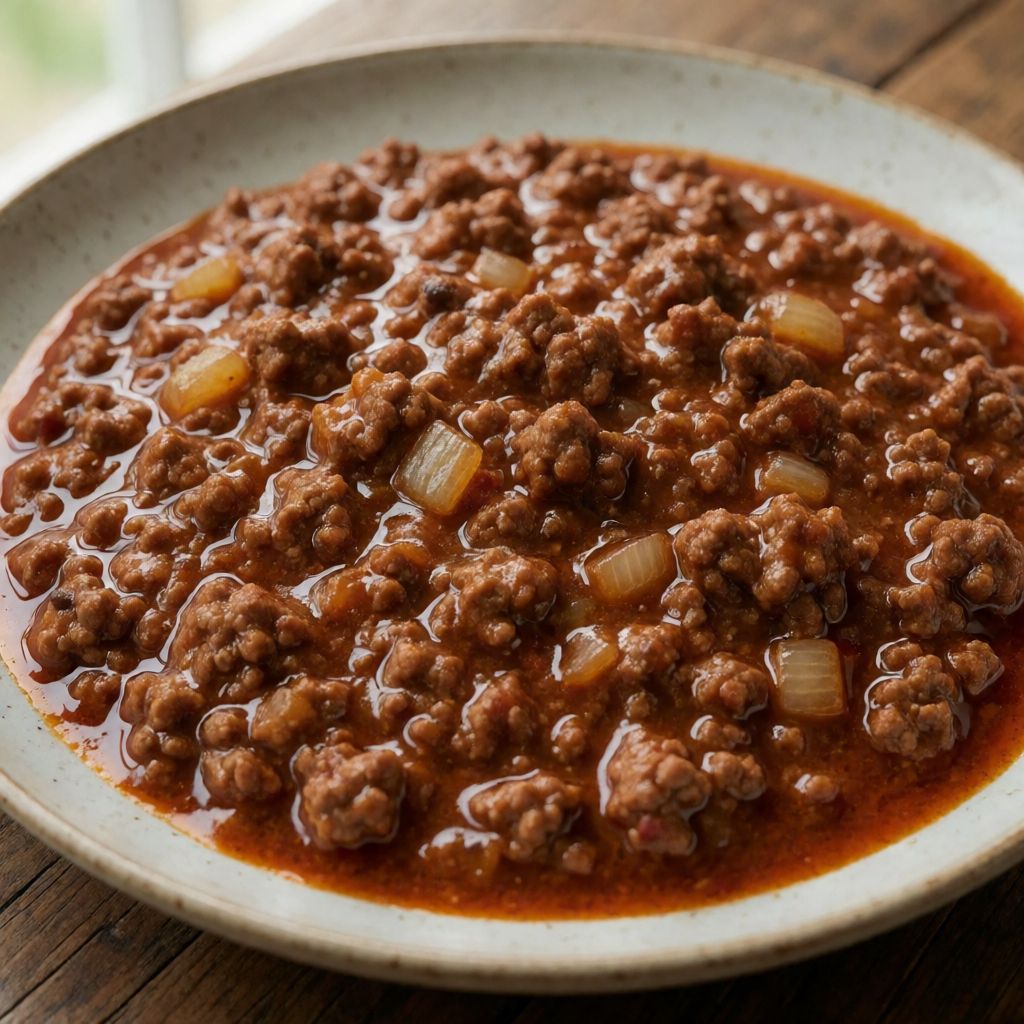
 AI photo
Chilli Con Carne
A warming chilli con carne with beef, tomatoes and kidney beans, finished with a touch of dark chocolate.
Labels are worked out automatically from the ingredients and can be wrong. Check the packaging if it matters to you.
Ingredients
- 1 tsp Cumin ground
- 1 tsp Cinnamon
- 1 tsp Ground coriander
- 0.5 tsp Chilli flakes
- 2 clove Garlic finely chopped
- 2 pcs Onion finely chopped
- 350 g Minced beef
- 400 g Tinned chopped tomatoes
- 3 tbsp Sun-dried tomatoes finely chopped
- 100 ml Beef stock
- 2 can Red kidney beans drained and rinsed
- 40 g Dark chocolate
- 3 tbsp Olive oil
- Salt
- Black pepper freshly ground
- 125 g Tortilla chips
- 300 ml Rice
- 200 ml Crème fraîche
- 150 g Mature cheddar
- 1 bunch Coriander fresh
- 1 pcs Red chilli finely chopped




















Steps
Heat the oil over medium-low heat. Add the cumin, cinnamon, ground coriander, chilli flakes and garlic and stir for a few minutes until the spices release their aroma.
3 minLower the heat, add the chopped onion and stir until softened.
6 minAdd the minced beef and fry over high heat until browned, breaking up any lumps.
6 minAdd the chopped tomatoes, sun-dried tomatoes and beef stock. Cover and simmer for half an hour.
30 minTaste the sauce; if you'd like more heat, add a little more chilli.
If the sauce turns out too hot, don't rush to fix it — the beans and chocolate will soon balance it out.
Add the kidney beans and heat through for 5 minutes.
5 minRemove from the heat, stir in half the chocolate first, then taste and add the rest if needed.
1 minSeason with salt and black pepper.
Serve with tortilla chips, rice, good bread, crème fraîche and, if you like, bake with cheddar on top.
Chilli con carne is a braise pretending to be a quick fry. Everything before the lid goes on is just three minutes of flattery for your nose — the oil waking up cumin, cinnamon, coriander and chilli so their oils actually dissolve into fat instead of sitting raw on your tongue. Spices are fat-soluble, not water-soluble. Toast them dry in a pan and you get ash; drop them straight into cold tomato and you get spice that tastes like sawdust for the first bite and then disappears. The oil is the carrier. That's the whole mechanism of the first minute, no mysticism in it.
What decides whether this works is the long simmer, not the beef and not the beans. Half an hour under a lid is where chopped tomato, a slosh of stock and sun-dried tomato paste-like scraps stop being separate things and start being one sauce — collagen in the beef breaking down just enough, acidity softening, the kitchen starting to smell like itself rather than like tin and onion. Thirty minutes is a floor, not a deadline: the sauce is done when it coats a spoon and holds its shape for a second before sliding off, not when a timer rings.
Some say chilli needs hours to be "proper." No — it needs enough time for the sauce to thicken and the flavours to stop arguing with each other, and forty-five minutes total does that for minced beef, which is already in small pieces and has nothing tough to dissolve. A brisket chilli needs hours because you're breaking down connective tissue the size of a fist. Mince has none of that drama.
On the beef: 350g minced beef for four people is lean by chilli standards — this isn't a dish built on rendered fat the way a ragù is, it's built on the sauce doing the heavy lifting. Fry it hard and fast over high heat, not because searing "locks in juices" (it doesn't — that's an old kitchen myth that survives because browning really does taste good, just not for the reason people think) but because browning is the Maillard reaction: sugars and proteins at the meat's surface rearranging into hundreds of new flavour compounds that a gentle simmer alone would never produce. Breaking the lumps up as it browns matters for a plainer reason — a clump of mince insulates its own centre and stays grey and raw inside while the outside scorches.
On the tomatoes, two kinds doing two jobs. Tinned chopped tomato gives you bulk and acidity and liquid to simmer in; it's cheap, consistent, picked and tinned at ripeness, which is more than most fresh supermarket tomatoes in a British winter can claim. Sun-dried tomato adds concentrated, almost caramelised sweetness without adding more liquid — it's doing the job a long, slow reduction would do if you had three hours instead of thirty minutes. If you've no sun-dried tomato, a spoon of tomato purée fried briefly in the pan before the stock goes in gets you most of the way there; the point is concentration, not the specific jar.
On the spices: cumin, cinnamon, ground coriander and chilli flakes is a Tex-Mex spice logic more than an authentic-to-anywhere one — this dish is itself an American invention built from Mexican ingredients and cowboy practicality, not a dish with a single ancestral home to be loyal to. So treat the mix as a direction, not a law. No cinnamon in the cupboard — leave it out rather than reaching for nutmeg or allspice as a swap; it changes the character more than people expect for such a small quantity.
On the beans and the heat: tinned kidney beans, drained and rinsed, mostly because the canning liquid is starchy and a little metallic-tasting, and rinsing keeps your sauce from turning cloudy and tasting of tin. They go in late, near the end, because beans are already cooked — more time in the pot only breaks their skins and turns them to mush, and a bean that's lost its shape has lost its job, which is to give the sauce texture against the soft beef.
Any neutral oil with no smell of its own works for the first step — sunflower, vegetable, a mild rapeseed. Olive oil is specified here and it's fine, but a fruity extra virgin is wasted on spice-blooming; save that bottle for drizzling on something raw, where you'll actually taste it.
On serving in a British flat: tortilla chips, rice, crème fraîche, grated mature cheddar and fresh coriander are the usual spread, and cheddar melted under a grill does the job nacho cheese does elsewhere — Britain has cheddar in every fridge, so that's what goes on top, no need to hunt down Monterey Jack. If you're baking it with cheese, do that in whatever oven dish you've got; a wide frying pan with an ovenproof handle saves you washing up a second dish, which on a Sunday already given over to a roast is not nothing.