
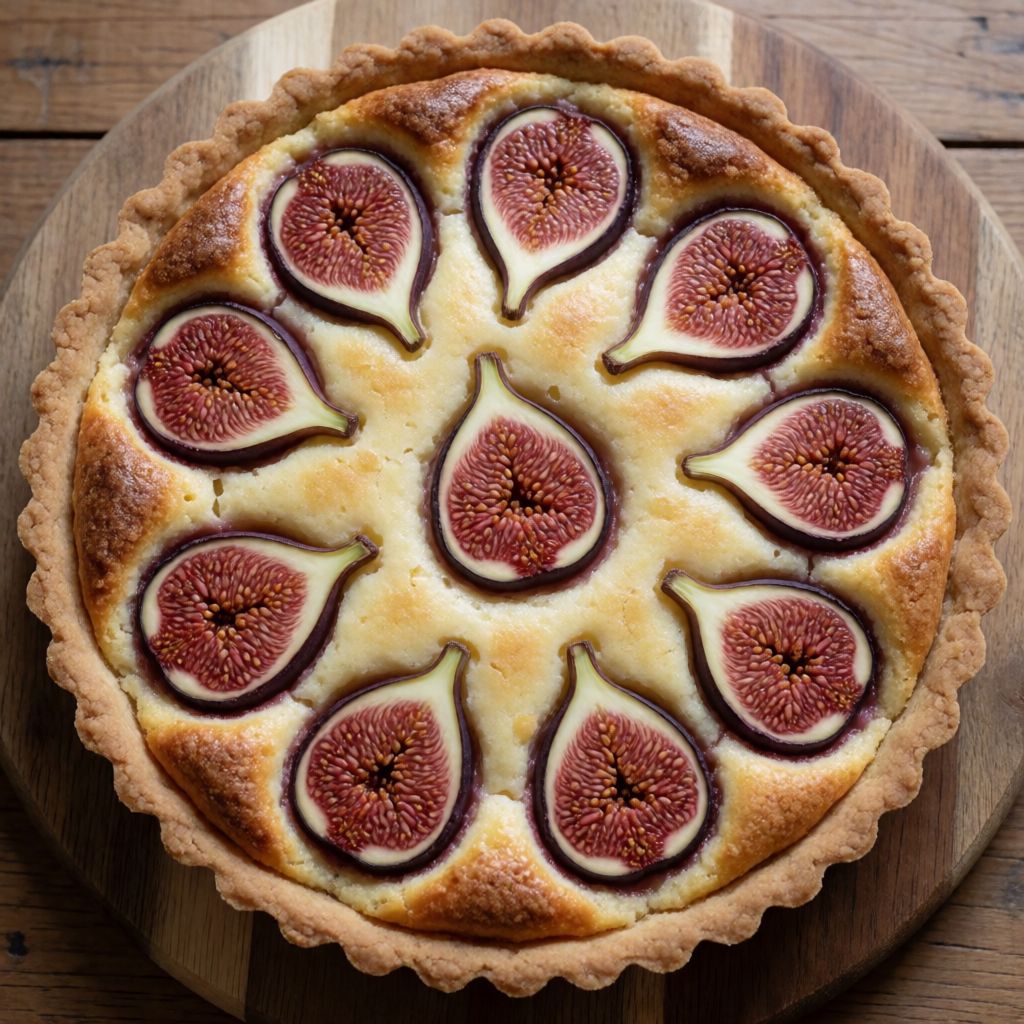
 AI photo
Frangipane Tart with Ricotta and Fig
A buttery pastry tart filled with almond and ricotta frangipane, fig jam and fresh figs.
Labels are worked out automatically from the ingredients and can be wrong. Check the packaging if it matters to you.
Ingredients
- 300 g Plain flour
- pinch Salt
- 110 g Caster sugar
- 150 g Butter
- 1 pcs Eggs
- 2 pcs Egg yolks
- 1 tbsp Vanilla extract
- 100 g Almonds
- 100 g Ricotta
- 100 g Caster sugar
- 1 pcs Eggs
- 5 tbsp Fig jam white or black
- pinch Almond flakes to taste
- pinch Icing sugar to taste
- 6 pcs Figs








Steps
Tip the flour onto the work surface in a mound, make a well in the centre and add the sugar, a pinch of salt, the butter, egg yolks, egg and vanilla extract.
Knead the dough by hand until you have a smooth, soft ball.
Wrap the dough in cling film and leave it to rest in the fridge.
30 minGrind the almonds to a powder in a blender together with the sugar.
Put the ricotta in a bowl and beat with a mixer for a few minutes.
Add the sugar and beat for a further 2 minutes.
2 minAdd the ground almonds and beat a little more.
Add the egg and mix for a further 3 minutes.
3 minChill the cream in the fridge.
Take out the dough, roll it into a thin sheet and line the base and sides of the tin.
Chill the tin in the fridge.
Preheat the oven to 180°C.
Knead the leftover dough, roll it out and cut biscuits of any shape.
Bake the biscuits.
Take out the tart base, prick the bottom with a fork and spread with fig jam.
Spread the ricotta frangipane cream over it, level it and sprinkle with almond flakes.
Bake the tart.
35 minLet the tart cool, remove it from the tin and decorate with fresh figs, the biscuits and icing sugar.
What was changed
Vanillin was swapped for Vanilla extract, which is more familiar to British cooks.
This is a pasta frolla shell — the Italian answer to shortcrust, built on egg yolks instead of water — carrying a frangipane that's gone sideways in a good way: instead of butter and almonds whipped together, you've got ricotta doing the work of binding and keeping it damp, with ground almonds for structure and fig jam as the dark, sticky bridge between pastry and cream. It reads like a lot of steps, but it's really three separate small jobs — pastry, filling, fruit — done one after another and left to rest between.
What decides whether this works isn't skill, it's patience, twice. First the dough: it has to go into the fridge cold and come out firm, because warm butter in a dough means it spreads sideways in the oven instead of holding its shape, and you get a tart base that's shrunk up the sides by the time it's baked. Second, the cream: ricotta releases water as it heats, and if you don't chill the mixture after beating it, that water sits loose in the filling and your frangipane weeps instead of setting into a soft, sliceable curd.
Some say pastry has to be made in a bowl, with cold hands and a cold bowl, almost ceremonially — no, because what matters is the butter's temperature, not the vessel. A warm kitchen counter on a hot day will soften butter just as fast as warm hands will. Work quickly, and if your kitchen runs hot, that's what the fridge rest is for — it buys back what your hands or your worktop gave away.
Six people, one 9-10 inch tart tin — this isn't a big bake, it's a Sunday-afternoon one, finished with tea rather than anything grander.
Flour is just flour here — plain, no need for anything fancier, because this dough gets its tenderness from fat and yolk, not from gluten development. In fact gluten is the enemy: knead this past "smooth ball" and into "elastic dough that springs back" and you've built the same stretchy network you want in bread, which is exactly what makes pastry chewy and tough instead of short and sandy. That's the whole reason it rests in the fridge rather than getting rolled straight away — cold lets whatever gluten did form relax, so the dough doesn't fight you when you line the tin, and doesn't shrink back on itself in the oven.
The two yolks alongside the whole egg are doing a specific job: yolks are fat and emulsifier, almost no water, so they enrich the dough and help bind it without adding the moisture that activates gluten the way plain water would. This is why pasta frolla rolls out more like a biscuit dough than a British shortcrust — it's closer to a cookie than to a pie crust, and that's deliberate, not a failure to be "proper" shortcrust.
Butter: 150g, and it wants to be cool but pliable, not melted and not fridge-hard either — if it's too cold it won't incorporate and you'll be kneading forever, breaking down the structure you're trying to protect. Any butter will do, salted or not, just adjust your pinch of salt accordingly; there's no substitute here that keeps the same shortness, because this dough's whole character comes from butter's fat crystals sitting between flour particles, not melting into them.
The almonds get ground with the sugar together, not separately — sugar crystals act as a kind of abrasive, so blending them with the almonds stops the nuts turning into almond butter from their own oil heating up under the blade. Skip that trick and grind almonds alone too long, and you'll end up with paste instead of powder. Ground almonds here aren't flavour alone; they're the frangipane's skeleton, soaking up moisture from the egg and ricotta so the filling sets rather than stays a puddle.
Ricotta stands in for the classic frangipane's beaten butter — lighter, looser, a little sour, which is why this filling tastes fresher and less heavy than the almond-and-butter original despite being just as rich. If ricotta isn't to hand, a well-drained quark or a thick strained yoghurt gets you closer than cream cheese would, because you want something soft and slightly curdy, not something smooth and stabilised.
Fig jam does two jobs at once: it's the first thing to meet the pastry, so it has to be sticky enough to seal the base lightly and stop the frangipane soaking straight into the dough and making it soggy underneath — this is the same logic as spreading jam under frangipane in a classic Bakewell, it's not decoration, it's a moisture barrier. Any thick, dark preserve with some tartness does this job; fig just happens to pair with almond in flavour the way it also happens to pair in texture.
Fresh figs on top at the end rather than baked in — that's about keeping their shape and a bit of raw sweetness against the cooked filling; baked whole figs collapse and lose the contrast you're going for. Out of fig season in the UK, that's real — you won't get good figs most of the year here, so a good fig jam swirl on top, or poached dried figs, does the honest substitute job rather than pretending.
Oven at 180°C is a genuinely moderate heat — hot enough to set egg proteins in the ricotta filling and brown the pastry edges, not so hot that the outside of the frangipane sets into a skin before the centre's cooked through. The tart's done less by the clock than by the look: edges deep gold, centre no longer wobbling like liquid but with a gentle, custardy give when you nudge the tin — the 35 minutes is where to start checking, not where to stop.
Six servings, a standard round tart tin about 9-10 inches — enough for a Sunday pudding after the roast, with the extra pastry biscuits as something to have with the tea that follows, which is really what they're there for.