
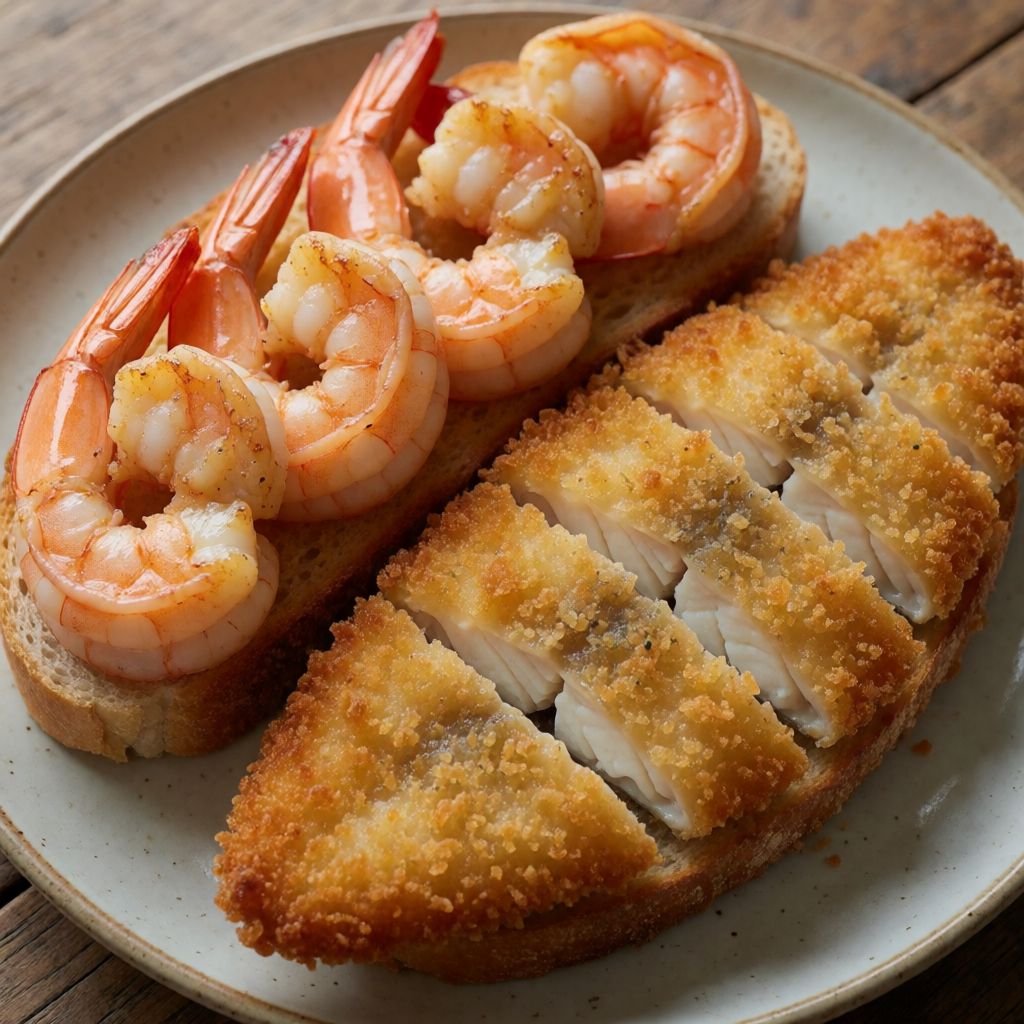
 AI photo
Open Sandwich with Fried Fish and Prawns
An open sandwich layering pan-fried and poached fish fillet, prawns, asparagus and a creamy sauce on buttered bread.
Labels are worked out automatically from the ingredients and can be wrong. Check the packaging if it matters to you.
Ingredients
- 8 pcs Turbot fillet
- 1 tbsp Plain flour
- 50 g Breadcrumbs
- 1 pcs Egg
- 1 tbsp Butter for frying
- 1 tbsp Olive oil for frying
- 50 ml White wine
- Salt
- Black pepper freshly ground
- 100 g Prawns
- 100 g Lumpfish roe
- 4 pcs White asparagus
- 4 pcs Green asparagus
- 100 ml Crème fraîche 18% crème fraîche
- 2 tbsp Mayonnaise
- 2 tbsp Tomato purée
- 1 pcs Lemon 1 tbsp of juice
- 1 pinch Paprika
- 1 pinch Smoked paprika
- 2 pcs Dill handfuls, for garnish
















to serve

Steps
For the sauce, mix the crème fraîche, mayonnaise and tomato purée; season with salt, pepper, lemon juice and paprika. Add a pinch of smoked paprika if you like — it gives a nice flavour but can be left out.
Season half of the turbot fillets with salt and pepper and roll them up. Place in a greased ovenproof dish, pour over the white wine and cover with an ovenproof plate. Bake in an oven preheated to 175°C (fan) for about 10-15 minutes.
12 minPat the remaining fillets dry with kitchen paper and coat in flour. Dip in beaten egg, then in breadcrumbs seasoned with salt and pepper. Fry the fillets in a pan in a mixture of butter and olive oil.
Peel the white asparagus with a peeler and trim the woody ends. Boil for 3 minutes in salted water with pepper and a wedge of lemon.
3 minSnap off the tips of the green asparagus. Heat a pan and melt butter until foaming. Quickly fry the green asparagus for 1-2 minutes, season with salt and freshly ground pepper.
2 minCut both types of asparagus into bite-sized pieces.
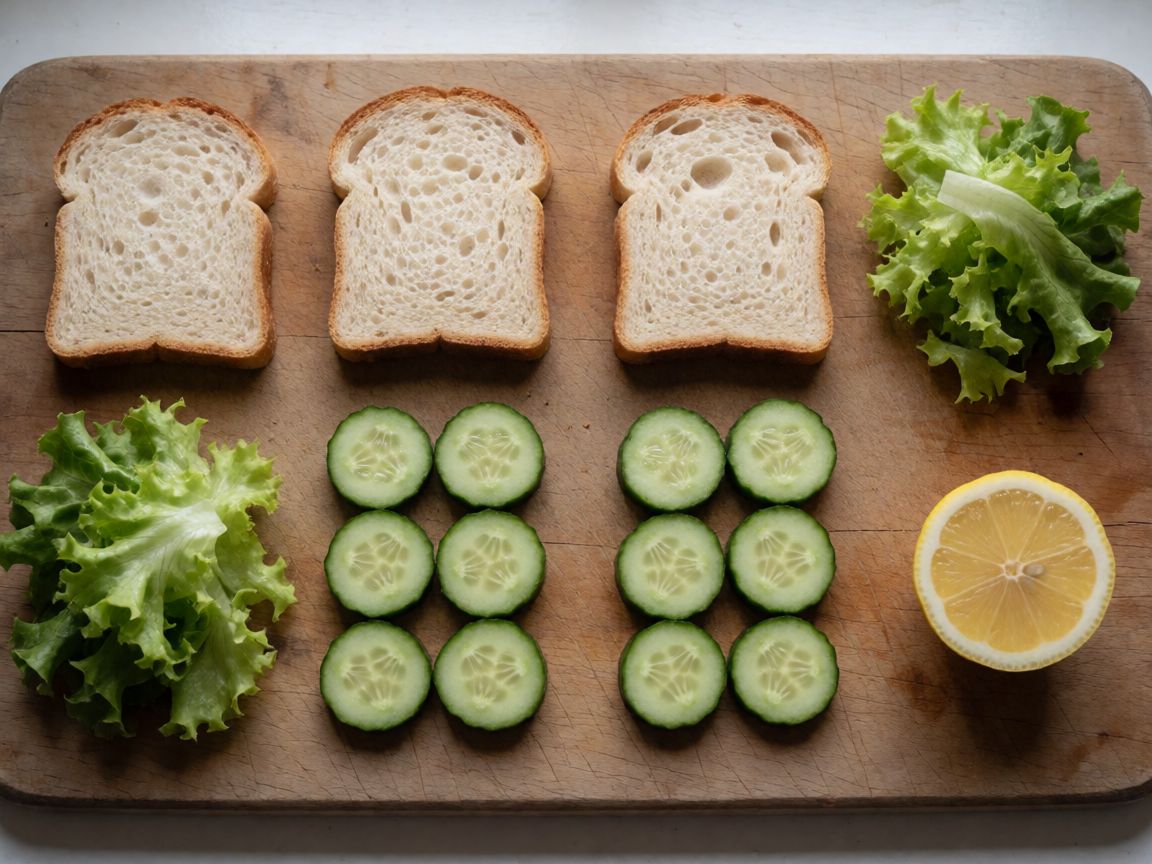
Butter the bread slices and top with lettuce, the fried and poached fish fillets, prawns, asparagus, lumpfish roe, sauce, dill, lemon wedges and cucumber. Finish with a sprinkle of salt and freshly ground pepper.
What was changed
We swapped the original fish roe for Lumpfish roe, since the local fishmonger doesn't carry it and this is the roe UK shoppers would use instead.
This is a Scandinavian idea wearing an English jacket: an open sandwich, which means the bread is a plate, not a wrapper. Nothing folds over, nothing hides, so every bit of untidiness shows. That's the whole discipline of the dish — it looks assembled, almost careless, but it only works if each separate component was got right on its own first, because there's no second slice to apologise for a dry fish or a split sauce.
What decides it is that you're running two cooking methods on the same fish and treating them as different jobs, not two versions of the same job. Half the turbot gets poached — rolled, covered, steamed gently in its own wine — because rolled fillets are delicate and thin, and dry heat would turn them to string before the inside finished. The other half gets the crumb and the hot fat, because that's the only way to get a crust, and a crust needs contact with a surface hot enough to brown, which poaching can never give you. Pretending one method could do both jobs is where most "mixed seafood plate" sandwiches go wrong — they fry everything, or poach everything, and lose half the texture contrast the dish is built on.
The sauce is doing more work than it looks like. Crème fraîche, mayonnaise, tomato purée and lemon juice — that's acidity cutting fat, cutting fat cutting richness, in a loop. Skip the acid and the whole plate turns heavy inside two bites, because you've got butter-fried fish, oily prawns and roe sitting on buttered bread with nothing to interrupt them.
Turbot is specified, and it earns its place — firm-fleshed, low in that loose flake that falls apart the second you poach it. If turbot's not sitting in front of you or the price has made you wince, go by the criterion, not the name: a flat fish, firm enough to roll without tearing, mild enough that a crumb coating doesn't fight it. Brill, plaice, even a thick sole will behave the same way. A fillet that's already flaking before it's cooked won't survive the rolling step — that's not your fault, that's the fish.
The breadcrumb coating — flour, egg, crumb, in that order — is a sequence, not three separate seasonings. Flour gives the egg something to grip, because egg slides off wet fish on its own. Egg gives the crumb something to grip, because dry crumb won't stick to bare flour. Skip the flour and you get patchy crumb, bald spots where the fish shows through and burns. It's the same logic as any crumbed cutlet, nothing mystical about it.
Butter and olive oil together in the pan: butter alone burns before the fish is through, because milk solids scorch at a temperature well below what you need to crisp a crumb. Olive oil raises the ceiling. Any neutral oil with a decent smoke point does the same job — the butter's there for flavour, not for the heat, so you're not locked into that exact pairing.
The two asparagus treatments aren't decoration-by-colour, they're matched to two different textures. White asparagus is grown blocked from light, which is why it's blunter and more fibrous near the base — it needs the brief boil to soften that fibre, same reason you peel it first, because the skin is tougher than the flesh under it. Green asparagus has seen the sun, built up chlorophyll and a thinner structure, and a quick hot pan is enough; boil it the same way as the white and you'll get grey mush where you wanted a bite with some resistance left. Snapping the tips rather than cutting them is the old trick for finding where the stem naturally goes tender — the fibre tells you itself where to stop.
Lumpfish roe stands in for something pricier without apology — it's the budget move, and a fair one, brininess and pop without the cost of proper caviar. If you can't find it, a good trout roe does similar work; what you're after is salt-burst texture, not a particular fish.
Patience shows up in two places people rush past: letting the poached fish actually rest covered rather than lifting the plate to peek — every lift lets heat escape and you're back to raw longer than you'd think — and not building the sandwich until every component is at the temperature it should be, meaning the fried fish has stopped sizzling and the asparagus has stopped steaming in its own heat. Build it too hot and the lettuce wilts, the mayonnaise sauce starts to separate against the warmth, and you've undone the sauce's whole acid-fat balance before anyone's had a bite.
No oven temperature here is invented — 175°C fan is what the fish needs to steam through gently without the wine boiling off before the fish is done; much hotter and you'd reduce the liquid to nothing while the middle of the rolled fillet stayed translucent. Watch for that translucence going opaque, right through — that's the actual sign, the clock is just there to stop you hovering.