
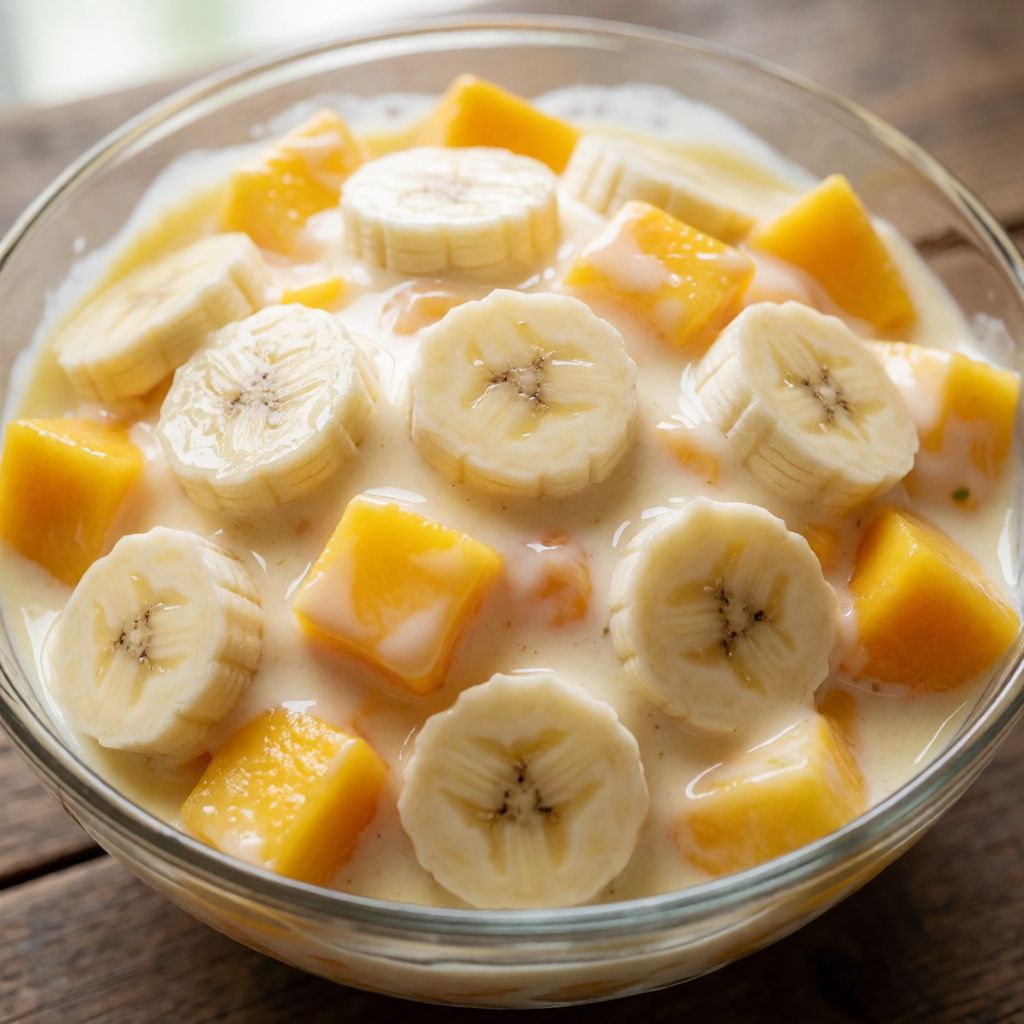
 AI photo
Fruit Salad with Vanilla Cream
A refreshing fruit salad topped with a light whisked egg yolk and cream mixture.
Labels are worked out automatically from the ingredients and can be wrong. Check the packaging if it matters to you.
Ingredients
- 4 pcs Egg Yolks
- 60 g Caster Sugar
- ½ tsp Vanilla Powder
- 200 ml Whipping Cream
- 2 pcs Banana sliced
- 1 pcs Mango diced
- 1 pcs Apple diced
- ½ pcs Pineapple diced
- 100 ml Pomegranate seeds
- ½ package Grapes halved
- 2 pcs Tangerine cut into segments
- 1 pcs Kiwi finely diced
- 30 g Dark Chocolate chopped



Steps
Whisk the vanilla powder, egg yolks and sugar until light and creamy.
Pour the cream into a clean bowl and whip until it forms soft peaks.
Fold the egg mixture into the whipped cream.
Gently mix the chopped fruit in a bowl and serve with the vanilla cream.
This isn't a cooked custard poured over fruit — there's no heat in the whole recipe, cook time zero, and that's not a typo. What you're making is a raw egg-and-sugar foam, worked by hand until it turns pale and thick, folded into whipped cream. The result sits somewhere between a zabaglione and the tinned-fruit-and-cream pudding your gran might have made, except the cream here carries its own air and its own sweetness, and the fruit does the rest.
Two things decide whether it works. First: can you whisk yolk and sugar into a ribbon — a trail that sits on the surface for a second before sinking back — using nothing but your arm and friction? No flame will rescue you here, so the sugar has to be fine enough to dissolve on mechanical work alone. Second: once you've whipped the cream to soft peaks, can you fold the egg foam in without beating the air back out of it? Folding and whisking are not the same motion, and treating them as interchangeable is where this cream goes flat and wet instead of staying light.
The fruit is the easy part and the part people rush. Cut everything close to serving, not an hour before. Apple and banana brown the moment air touches their flesh — that's oxidation, not bad luck — and pomegranate seeds and halved grapes bleed juice the longer they sit, which turns a bowl of distinct fruit into a puddle. Assemble, then serve. Patience here means patience with the cream, not with the fruit — the fruit wants speed.
Start with the yolks. Four of them, whisked with the sugar and vanilla powder until the colour lifts from deep orange to pale yellow and the texture thickens — that colour change is air being beaten in, and the thickening is sugar dissolving into the yolk's water content, nothing more exotic. Caster sugar matters here specifically because there's no heat to melt it; granulated will stay grainy under your whisk far longer, and icing sugar will dissolve too fast and bring in starch you don't want. If you only have granulated, give it longer, don't give up and add water.
Vanilla powder is the dried, ground pod — it gives flavour without adding liquid, which keeps the egg mixture at the right thickness for folding. If you've only got vanilla extract, use it, but a drop less cream or a touch longer whisking at the next stage will balance the extra liquid; a scraped pod's seeds work too and look better than either.
The cream must be cold from the fridge, full-fat whipping cream — the fat needs to be solid enough to hold its shape around the air bubbles you're beating in. Whip to soft peaks, meaning it holds a shape but still slumps gently off the whisk — go further and the fat clumps start separating from the water, which is the first step toward butter, and butter folded into fruit salad helps nobody.
For the fruit, size is doing a job, not decoration. Kiwi diced small because its texture is soft and a big chunk turns to mush under a spoon; pineapple and mango in slightly bigger dice because they hold shape and give you something to bite against the cream; banana sliced, not diced, because it's already soft and falls apart if you cut it smaller. Any firm, juicy fruit in season can stand in for what's listed — the only rule is a mix of textures: something crisp (apple), something soft (banana, mango), something that bursts (pomegranate, grape).
The dark chocolate, chopped and scattered at the end, is there for bitterness against all that sweetness — it's the one ingredient with no mechanism to explain, just balance. Use whatever dark chocolate you'd eat on its own; nothing under about 60% cocoa does the job, because milk chocolate just adds more sugar to a dish that already has plenty.
One honest limit of a home kitchen: you have no bain-marie step here to fall back on if you're nervous about raw egg, because this recipe doesn't use one — it relies entirely on egg quality. If you're serving this to anyone pregnant, very young, or elderly and want a safety margin beyond the Lion mark, pasteurised liquid egg yolk from a carton will whisk and fold exactly the same way and nobody will know the difference in the bowl.