
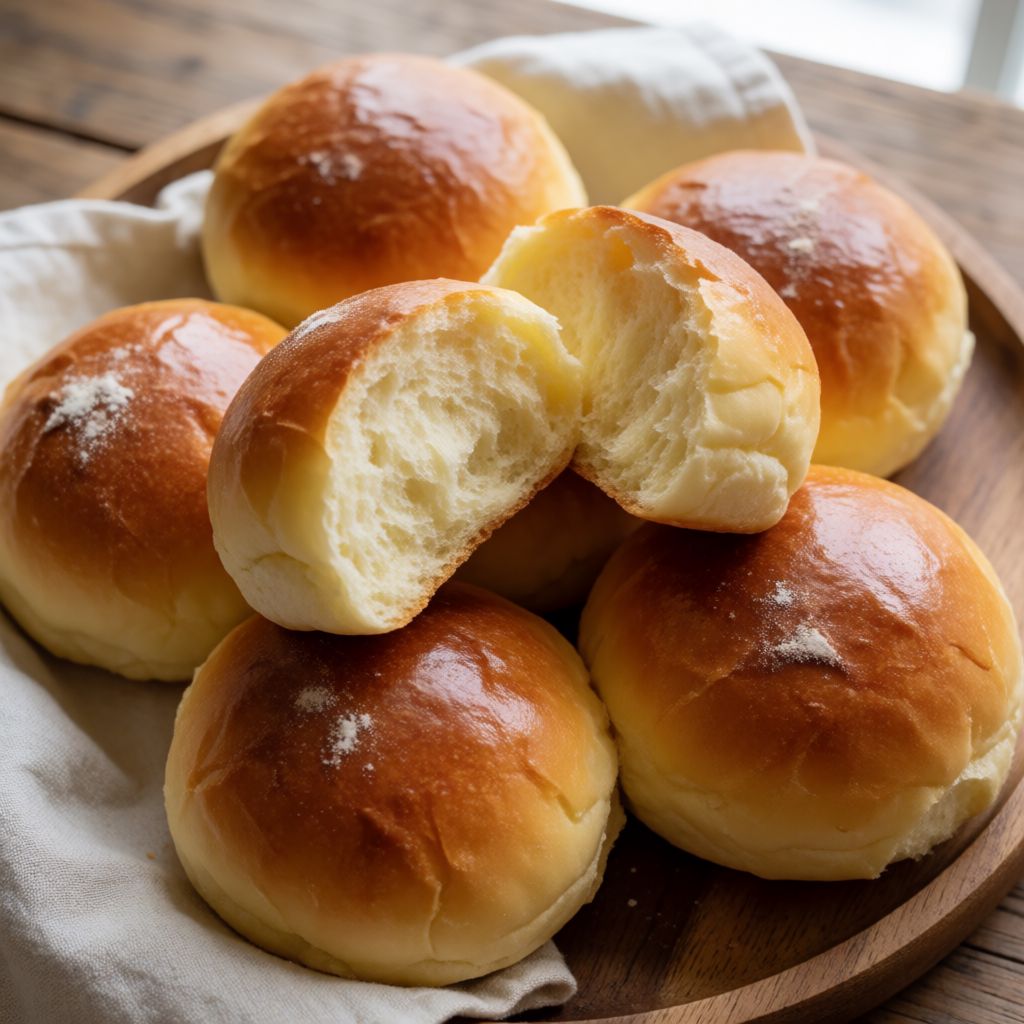
 AI photo
Gourmet Filled Bread Rolls
Soft homemade bread rolls, baked plain, then split and filled with your favourite toppings.
Labels are worked out automatically from the ingredients and can be wrong. Check the packaging if it matters to you.
Ingredients
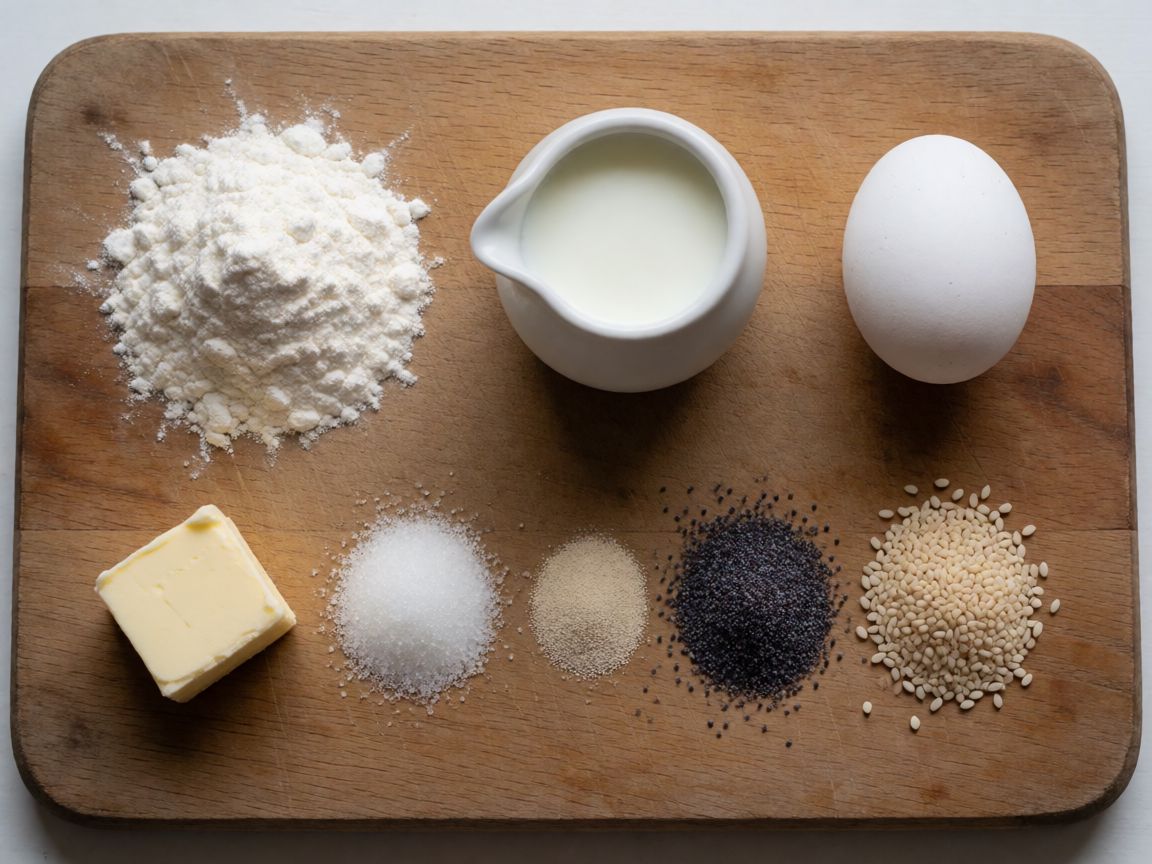
- 300 g Plain flour
- 150 ml Milk
- 1 pcs Egg
- 50 g Butter
- 15 g Caster sugar
- 5 g Salt
- 4 g Yeast
- Olive oil to taste
- Poppy seeds to taste
- Sesame seeds to taste
- Tomato to taste
- Mozzarella to taste
- Lettuce to taste
- Mayonnaise to taste
- Smoked salmon to taste
- Cream cheese to taste
- Radicchio to taste
- Balsamic glaze to taste
- Aubergine to taste
- Courgette to taste
- Basil to taste




















Steps
Sift the plain flour into a bowl, add the yeast and mix.
Add the egg and knead the dough with upward folding motions.
Gradually add the milk, salt, sugar and butter, continuing to knead.
Turn the dough onto a floured surface and knead until smooth.
Shape the dough into a ball, brush with olive oil, cover with cling film and leave to rest.
5 minKnock back the dough, transfer to a bowl greased with olive oil, cover with cling film and leave to rise.
Divide the risen dough into 6 equal pieces.
Shape into 6 balls and place on a baking tray lined with parchment.
Brush the balls with olive oil, cover with cling film and leave to rise.
120 minBrush the balls with milk and sprinkle with poppy seeds and sesame seeds.
Bake at the oven's maximum temperature.
10 minCut the rolls open and fill to your taste.
Serve the gourmet rolls immediately after filling.
This is an enriched bread roll — brioche's plainer cousin — baked hard and fast, then split and turned into whatever sandwich you fancy. The dough is the whole project; the fillings (salmon and cream cheese, or mozzarella and tomato, or aubergine and courgette) are just furniture you put in afterwards. Six rolls, six different sandwiches if you want, because "to taste" on every topping means nobody has to agree on lunch.
What decides whether this works is the dough's structure, and that comes from two things: how you handle the butter and egg, and whether you actually let it rise twice. Egg and butter are what make this a "roll" and not just bread — they coat the gluten strands in fat, so the crumb tears soft instead of chewing like a baguette crust. Skip that enrichment and you've made a dinner roll pretending to be gourmet.
The double rise is not decoration, it's patience doing actual work. The first rest and knock-back develops flavour and evens out the gluten network; the second, long proof — two hours, not a guess, because yeast at UK room temperature in winter is sluggish and in a warm July kitchen is fast — is what gives you a light, aerated crumb rather than a dense knot you have to fight through with a bread knife. Rush that second rise and the rolls bake into fists.
Flour first: plain flour, not strong bread flour, is deliberate here — this is a soft-crumbed roll, not a chewy artisan loaf, so you don't want the extra gluten strength that bread flour brings. If you only have strong flour, cut it with a bit of cornflour or just accept a slightly firmer bite — it won't ruin the batch.
The egg and butter are the enrichment that makes this dough behave like brioche-lite. Egg gives structure and a faint golden crumb; butter, worked in gradually rather than dumped in at the start, coats gluten strands so they slide past each other instead of locking rigid — that's why the dough stays kneadable instead of tearing. Any neutral fat with no flavour of its own can stand in for butter in a pinch — a flavourless oil, say — but you lose the richness that butter alone gives, because oil doesn't solidify and firm up the crumb on cooling the way butter does.
Milk instead of water is about tenderness and colour: the natural sugars and proteins in milk brown faster under that hot oven blast and soften the crumb slightly compared to water-based dough. If you're out of milk, a plant milk with some fat content gets you close; skimmed milk or water will bake paler and slightly less soft, not a disaster, just different.
Yeast at 4g against 300g flour is a modest amount — this isn't meant to race through its rise, it's meant to develop slowly enough to build real flavour, especially in the two-hour second proof. Caster sugar does double duty: a little feeds the yeast, and the rest sweetens the crumb just enough to balance savoury fillings like salmon or mozzarella. Salt is not optional seasoning here — it's what stops the yeast fermenting too fast and going slack and sour; miss it and the dough can overproof into a flat, boozy-smelling mess before you've even got the oven hot.
As for the fillings — understand that "to taste" is not vagueness, it's the point. Tomato, mozzarella and basil make a caprese-style roll; smoked salmon and cream cheese make a classic British brunch sandwich; aubergine and courgette want to be cooked down first — grilled or pan-fried until they bend soft, not raw and squeaking — before you tuck them in, otherwise you're just eating raw vegetable in bread. Balsamic glaze is there to cut through the richness of cheese or oily salmon; radicchio adds bitterness where lettuce alone would be flat. Swap any of them for what's in your fridge — the roll doesn't care, as long as whatever goes in is cool or barely warm, not hot, because hot filling against a soft crumb just steams the bread soggy. Fill them at the table, right before eating — that's rule thirteen in the method for a reason: an enriched roll left filled goes limp within the hour, and nobody wants a Sunday-lunch sandwich with a soggy bottom.