
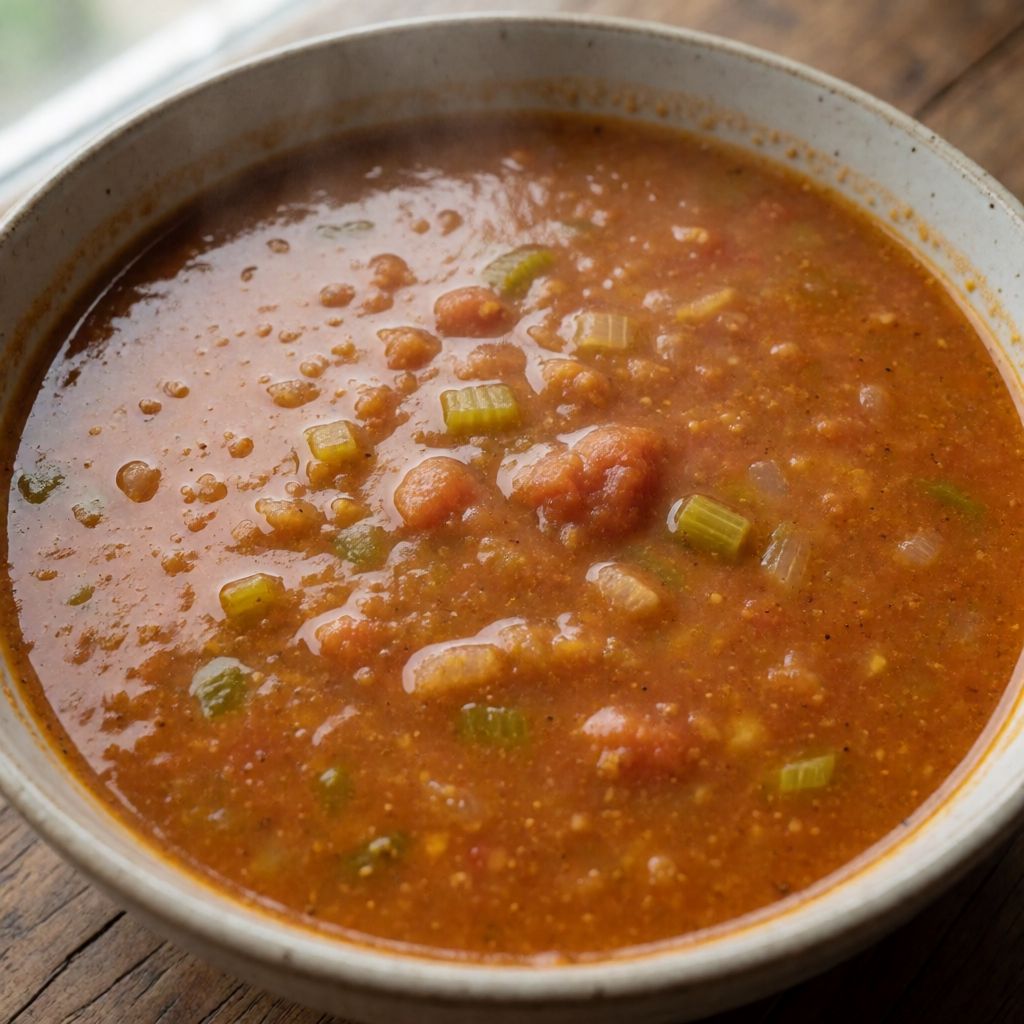
 AI photo
Harira – Moroccan Soup
A warming Moroccan soup with chickpeas, lentils and spices.
Ingredients
- 1 tbsp Cumin
- 1 tbsp Ground coriander
- 2 pcs Onion finely chopped
- 3 clove Garlic finely chopped
- 2 pcs Celery diced
- 50 g Tomato paste
- 400 g Canned chopped tomatoes
- 100 g Courgette coarsely grated
- 1 tsp Turmeric
- 1 tbsp Ginger finely grated
- 0.5 pcs Red chilli finely chopped
- 1 tsp Paprika
- 1 tsp Smoked paprika
- 1 pinch Saffron
- 1 l Stock
- 1 can Chickpeas drained and rinsed
- 75 g Red lentils
- 0.5 pcs Lemon juice
- 2 tbsp Olive oil for frying
- Salt to taste
- Black pepper to taste, freshly ground
- 1 tbsp Olive oil
- 1 tsp Salt
- 0.5 tsp Smoked paprika
- 1 bunch Mint fresh
- 1 bunch Parsley roughly chopped






















Steps
Toss the chickpeas with olive oil, smoked paprika and salt, and roast on a lined baking tray in an oven preheated to 175°C (fan) for about 20–25 minutes, turning a few times during roasting.
23 minToast the cumin and coriander in a dry hot pan, stirring, until fragrant. Lower the heat, add the oil, onion and garlic and fry, stirring, until the onion is soft.
Add the celery, tomato paste, chopped canned tomatoes, courgette, turmeric, ginger, red chilli, paprika, smoked paprika, saffron, stock, chickpeas and red lentils.
Bring to the boil, stirring, cover, lower the heat and simmer gently for about 20–25 minutes.
23 minSeason with lemon juice, salt and black pepper and serve the hot soup with the roasted chickpeas, mint and parsley.
Harira isn't really soup in the brothy, British sense — it's closer to a stew that got thinned out, built to break a fast rather than start a meal. That's its history: this is the dish Moroccan families eat at sundown in Ramadan, when a body that's had nothing all day needs protein, carbohydrate and spice in one bowl, fast, without sitting down to three courses. The lentils and chickpeas carry the protein, the tomato carries the acidity that wakes up an empty stomach, and the spice does the job your Sunday roast gravy does with a fraction of the fat — it makes the whole thing taste rich without being heavy.
What decides whether it works is the order of two things: toasting the spice before it ever meets liquid, and cooking the lentils in the tomato-and-stock mixture rather than pre-boiling them. Cumin and coriander seeds (or in this case, already-ground) have their flavour locked in oil-soluble compounds — dump them straight into a wet pan and most of that flavour stays locked. Hit them in a dry, hot pan first, thirty seconds, maybe a minute, until your kitchen suddenly smells like a spice shop rather than your own flat — that's the compound releasing. Some cooks skip this, thinking ground spice is already "activated" because it's been through a grinder. No — grinding exposes surface area, it doesn't cook anything. Toasting is the actual chemical step.
On the onion and garlic: you want them soft, not browned. This is the stage people rush because "medium heat" on a hob dial means nothing — every hob's medium is different, every pan too. Go by the onion itself: it starts opaque and sharp-smelling, and you're watching for it to turn translucent and sweet-smelling, slack rather than crisp at the edges. If it's catching colour and smelling toasty before it's gone soft, your pan's too hot for this stage — pull it back. Browning here isn't a disaster, but it pushes the whole soup toward a caramelised, almost French-onion-soup direction that fights with the spice rather than supporting it.
Tomato paste plus canned chopped tomatoes is doing a two-speed job: the paste is concentrated, almost burnt-sugar savoury, and needs a minute cooked into the onions before any liquid goes in, or it tastes raw and metallic in the final soup — that's the actual cause of a tinny aftertaste people sometimes blame on "cheap tomato paste." It's not the brand, it's that the paste never got fried. The canned tomatoes bring acidity and water content; any decent tin works, you're not after San Marzano perfection for a dish this spiced.
Turmeric, ginger, chilli, paprika, smoked paprika, saffron — that's a lot of spice doing overlapping but distinct jobs. Turmeric is colour and a faint bitterness, not heat. Smoked paprika is the one actually carrying "cooked over fire" flavour in a dish that, on a UK hob, never goes near a fire — it's doing the work a real wood-fired kazan would do for free. If you haven't got saffron, don't panic and don't substitute turmeric for it thinking it's "the same colour spice" — it isn't the same job. Saffron gives a particular honeyed, hay-like note; without it the soup is still completely fine, just slightly flatter. A pinch steeped a minute in a spoonful of the hot stock before going in releases more of it than dropping the threads in dry.
The courgette, coarsely grated, nearly disappears into the pot — that's intentional, it's bulk and a little sweetness, not a vegetable you're meant to bite into and identify. If you haven't got courgette, any quick-cooking, watery vegetable that grates small works the same way.
Lemon juice goes in at the very end, off the heat or near it, because citrus acid cooked for twenty minutes loses its brightness and turns flat and slightly bitter — that's the reason it's step five and not step three. Taste before you add it all; half a lemon is a guide, not a law, since lemons vary wildly in how sour they actually are.
On the chickpeas roasting separately: an oven that runs fan at 175°C is drier heat than a pan, which is exactly why it crisps them rather than steaming them soft the way they'd go if added straight to the simmering pot. If your oven doesn't have a fan setting, go a notch hotter on a conventional setting and check them a few minutes early — domestic ovens vary by as much as 15–20 degrees from what the dial claims, so trust the chickpeas' look: pale gold going slightly matte and cracked at the skin, not still shiny and plump.
Mint and parsley scattered fresh at the end are the one place in this dish where nothing is cooked, nothing is softened — and that's deliberate too. After twenty minutes of simmered spice, you want one green, raw, cold-tasting thing on top to cut through it, the same logic as a squeeze of lemon on a kebab. Skip it and the bowl still works; it just stops feeling finished.
And give it the time it asks for. Twenty-five minutes of gentle simmer is a lower bound, not a target to race toward — a pot that's rattling the lid with a hard boil will cook the lentils unevenly and reduce the liquid faster than the flavour actually develops. Patience here isn't virtue for its own sake; it's the difference between a soup that tastes assembled and one that tastes cooked.