
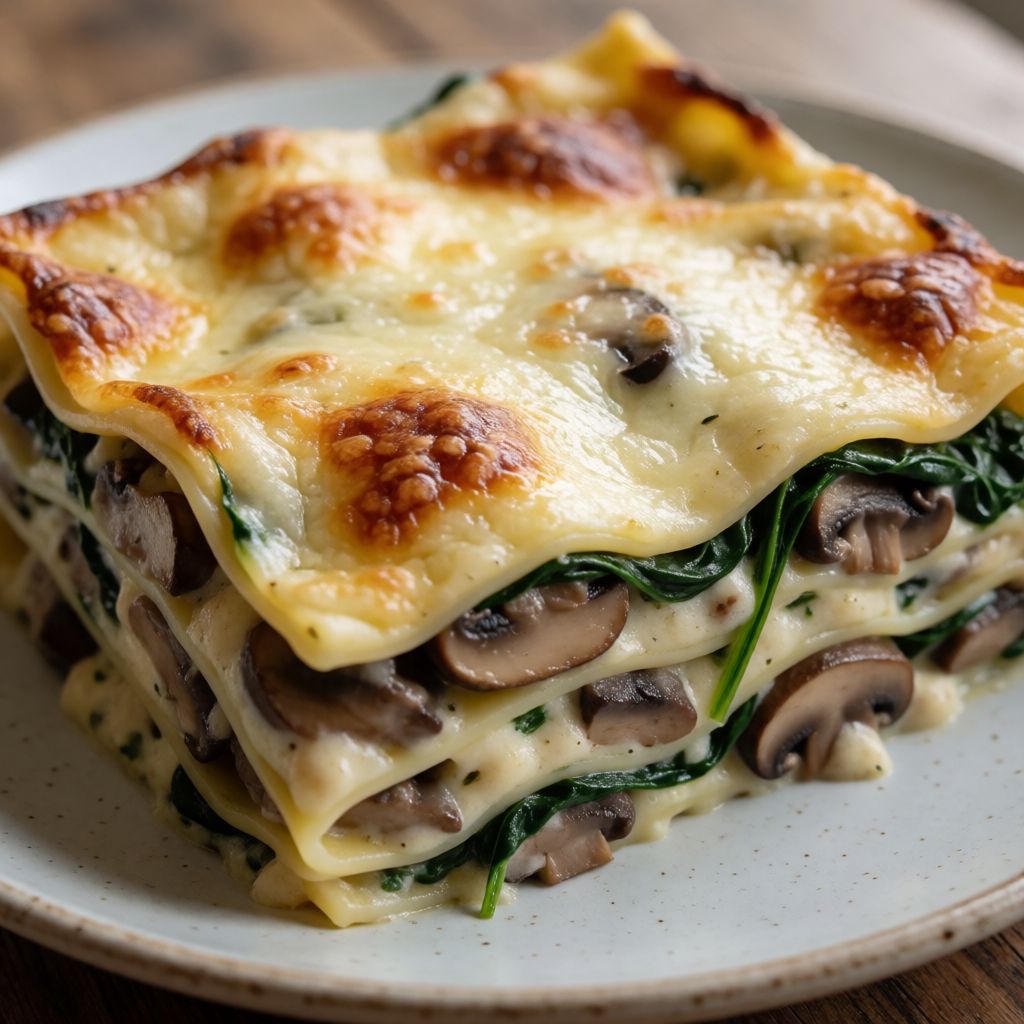
 AI photo
Mushroom Lasagne
A rich mushroom lasagne with spinach, white wine and a mornay sauce, finished with a fresh herb salad.
Labels are worked out automatically from the ingredients and can be wrong. Check the packaging if it matters to you.
Ingredients
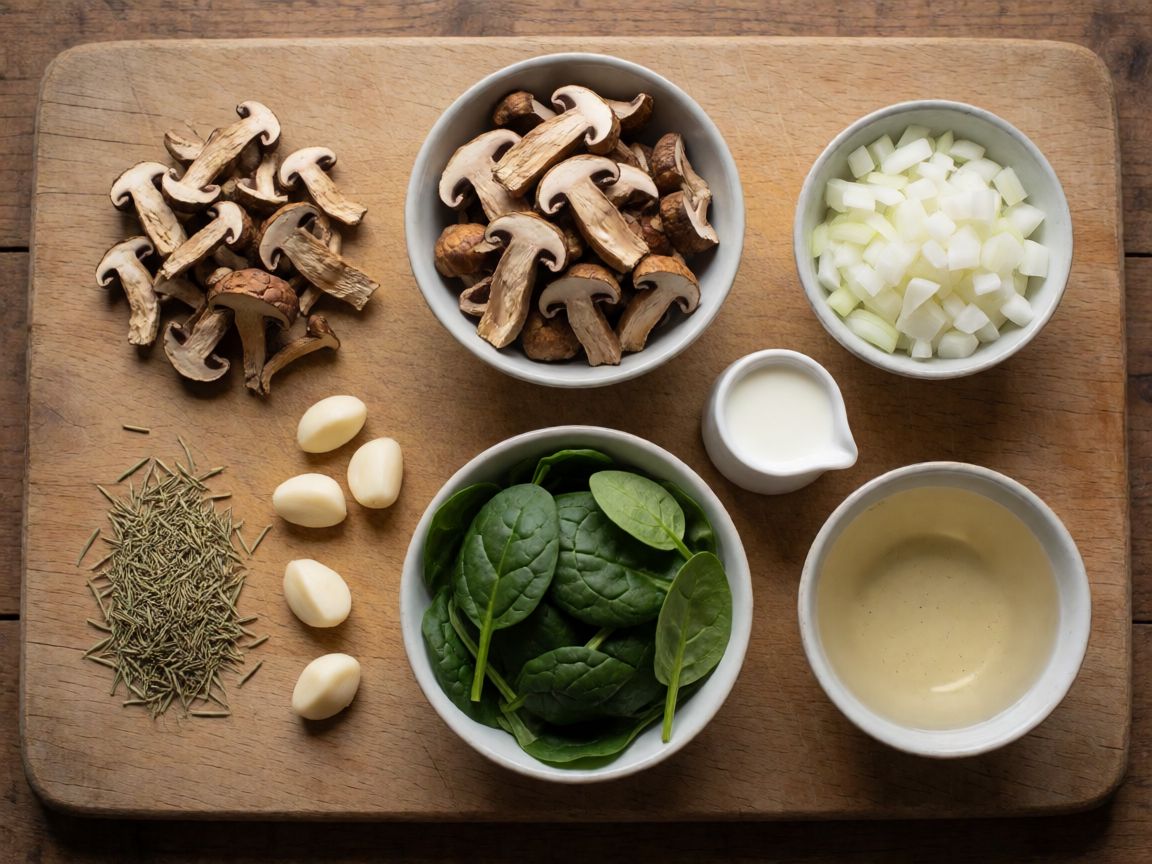
- 20 g Dried porcini mushrooms
- 400 g Mushrooms quartered
- 1 pcs Onion finely chopped
- 3 clove Garlic finely grated
- 0.5 tsp Dried rosemary
- 300 g Spinach
- 200 ml White wine
- 200 ml Double cream
- 1 pcs Lemon finely grated zest and a little juice
- 200 g Lasagne sheets fresh
- 50 g Panko breadcrumbs
- 50 g Parmesan freshly grated
- 3 tbsp Olive oil for frying
- 25 g Butter for frying
- Salt
- Black pepper freshly ground














For the mornay sauce
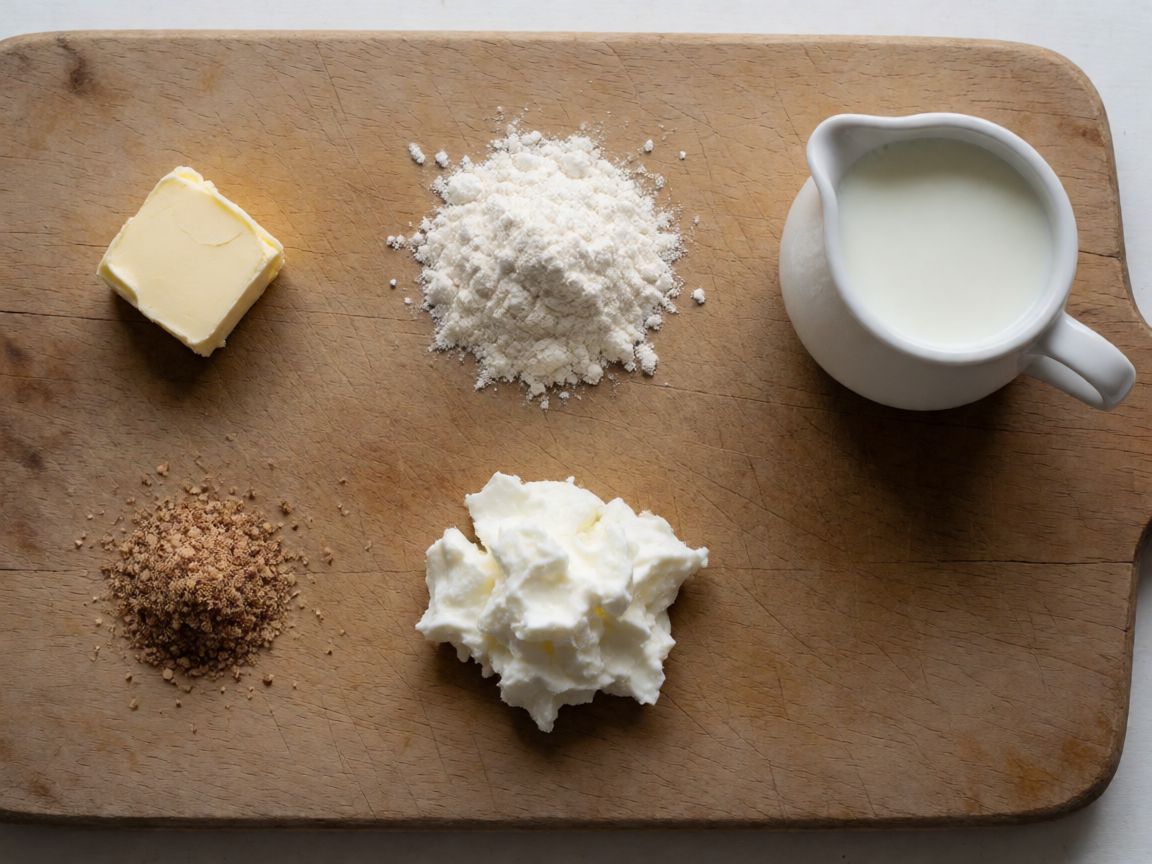
- 25 g Butter
- 25 g Plain flour
- 300 ml Milk
- 1 pinch Nutmeg grated
- 125 g Mozzarella fresh



To serve
- 1 bunch Thyme a handful, fresh
- 1 tbsp Olive oil
- 1 tbsp Lemon juice
- 1 tsp Honey
- 1 tsp Dijon mustard
- 125 g Salad leaf mix





Steps
Soak the dried mushrooms as directed on the packet, then drain.
12 minHeat a frying pan with the oil, melt the butter in it and let it foam. Fry the mushrooms over high heat until nicely browned. Lower the heat and add the onion, garlic, rosemary, spinach and the drained soaked mushrooms.
Heat everything through well until the onion softens and the spinach wilts. Add the white wine and cream, bring briefly to the boil and season with the grated lemon zest, salt and freshly ground pepper.
2 minMornay sauce: melt the butter in a saucepan, stir in the flour and cook, stirring, until it comes together into a smooth paste. Gradually whisk in the milk, a little at a time, until you have a smooth sauce. Add the cheese and stir until melted.
Season with grated nutmeg, salt and pepper.
Assemble the lasagne: spread a little of the mushroom sauce in a greased ovenproof dish. Lay lasagne sheets on top and add a little mornay sauce. Alternate layers of mushroom sauce and lasagne sheets, finishing with the mornay sauce.
Sprinkle with panko and freshly grated Parmesan and bake in a fan oven preheated to 200°C for about 15 minutes, until the lasagne sheets are soft.
15 minTo serve: whisk a vinaigrette of olive oil, lemon juice, honey and mustard. Season with salt and pepper and toss with the salad leaves. Serve the mushroom lasagne with fresh thyme and the salad.
2 min
This isn't really a lasagne in the Italian sense of ragù and béchamel stacked by rote — it's two sauces doing two different jobs, and the dish only works if you keep that division straight. One sauce is wet and dark: mushrooms, wine, cream, spinach — flavour. The other is pale and thick: a mornay, which is just béchamel with cheese melted into it — structure and glue. Layer them without understanding which is which and you get either a soggy slump or a dry brick.
The whole thing turns on two mushroom textures working together. Fresh mushrooms quartered and fried hard, and dried porcini soaked back to softness. Fresh mushrooms alone give you bite but a flat, watery flavour — mushrooms are mostly water, and frying them hard is how you drive that water off before it drowns your sauce. Dried porcini, on the other hand, have had their flavour concentrated by dehydration; what you're really after when you soak them isn't the mushroom pieces, it's the soaking liquid, dark and smelling of the forest floor, carrying all that flavour back into the pan. Use it if the recipe doesn't tell you to throw it away — some people do, and that's the whole point of the ingredient lost for nothing.
Fresh lasagne sheets matter here more than tradition insists — not because dried is inferior, but because dried sheets need either boiling first or a genuinely wet bake to soften, and this bake is short, fifteen minutes in a hot oven, mostly there to melt cheese and set the top rather than cook pasta from raw. Fresh sheets are already pliable and higher in moisture, so they finish softening from the sauce around them in that window. If all you have is dried, you're not locked out — just give them a few minutes in boiling water first, or accept a slightly longer, covered bake so the middle sheets actually get there.
The frying pan does two separate jobs and you have to let it finish the first before starting the second. High heat first, for the mushrooms alone — a wide domestic pan, not a kazan, so the mushrooms sit in a single layer and the water coming out of them can evaporate instead of pooling underneath and boiling them grey. Some say mushrooms shouldn't be crowded in the pan — no, because it's true, and this is why: crowd them and they steam in their own liquid instead of browning, and browning is where the savoury depth actually comes from. Only once they've taken colour do you drop the heat and bring in the onion, garlic, rosemary and spinach — gentler things that would scorch or turn bitter on the heat the mushrooms needed.
Double cream and wine go in only at the end, and briefly — a boil to marry them, not a simmer to reduce them to nothing. Cream here isn't decoration, it's what keeps the mushroom layer from drying out under the oven's heat, since without fat the sauce would just thin and run off during baking. If cream isn't to hand, crème fraîche works on the same principle — fat carrying flavour and holding moisture — though it brings its own sourness, so taste before you add the lemon.
Butter for the mornay specifically, not oil — the recipe asks for a neutral fat to cook flour evenly, and butter does that while also contributing its own flavour to a sauce that's otherwise just milk and cheese, which needs the help. The cheese in the mornay should be something that melts without turning grainy or oily — a hard, well-aged cheese works, Parmesan is the obvious one since it's already called for elsewhere in the recipe for the crust, so you're not buying two cheeses for one dish.
Nutmeg is traditional in a béchamel-family sauce not out of habit for its own sake, but because it was one of the few spices that could cut through a very rich, very bland dairy sauce without competing with it — a single pinch, grated fresh if you can, because pre-ground nutmeg loses its sharpness fast sitting in a jar.
Mozzarella inside the layers and panko with Parmesan on top are doing different work again. The mozzarella melts and binds, stretching between layers so a cut slice holds its shape instead of sliding. The panko and Parmesan on top are there for contrast — crunch against the soft interior — and this is the one place where real heat matters and you can watch for it: the top should go from pale to gold, not brown all over, because that's the line between crisp and burnt bitterness, and a fan oven at 200°C will cross it faster than you expect if your dish sits high in the oven.
The salad and its vinaigrette aren't an afterthought — honey, mustard and lemon juice whisked with oil is there because the lasagne itself is heavy with cream, cheese and butter, and something sharp and bitter on the plate alongside it is what stops the whole meal from sitting like a stone. Four people, one ovenproof dish of reasonable size for 400g of filling and 200g of sheets — not a roasting tin meant for a Sunday joint, just something deep enough for three or four layers without the sauce creeping over the rim as it bakes.