
 AI photo
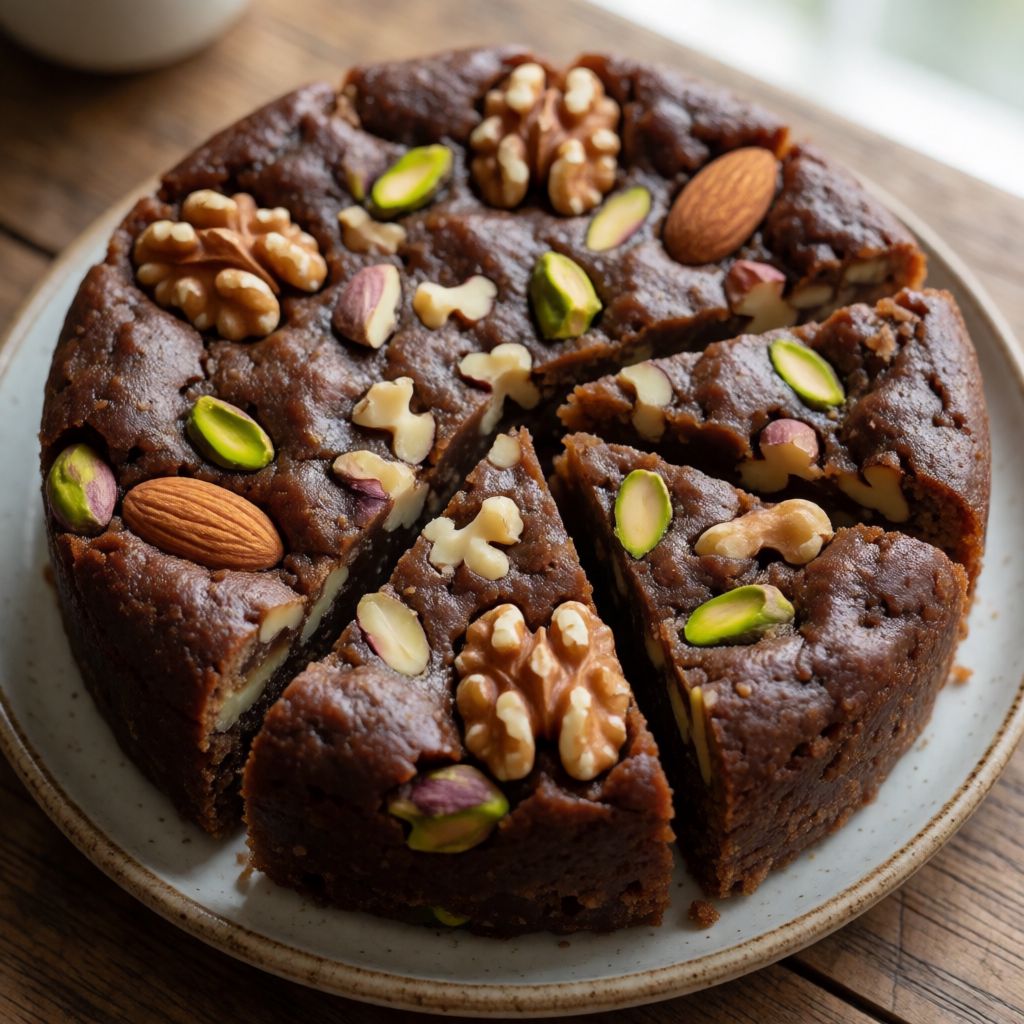
Panpepato
A rich Italian spiced chocolate and nut bar, studded with raisins and warmed with cinnamon, nutmeg and black pepper.
Labels are worked out automatically from the ingredients and can be wrong. Check the packaging if it matters to you.
Ingredients
- pcs Walnuts shelled
- pcs Almonds shelled
- pcs Hazelnuts shelled
- pcs Pistachios shelled
- 100 g Plain flour
- 100 g Acacia honey
- 100 g Dark chocolate
- 50 g Raisins
- pinch Cinnamon
- pinch Nutmeg
- pinch Black pepper











Steps
Soak the raisins in water or rum.
Toast the nuts and dried fruit in the oven at 160°C.
25 minRoughly chop the nuts and dried fruit on a board.
Transfer the nuts and dried fruit to a large bowl.
Add the spices to taste and mix.
Add the flour and squeezed-out raisins, and mix.
Melt the chopped chocolate with the honey and a couple of spoons of water over a water bath.
Pour the melted chocolate over the nut mixture and mix evenly.
Shape a small loaf on a parchment-lined baking tray.
Bake the panpepato in the oven at 180°C.
20 minRemove from the oven and let it cool before serving.
Panpepato is Siena's answer to the question "what do you do with the walnut harvest before it rots." Pepper gives it the name — "peppered bread" — and that one spice is the whole clue to what this is: not a cake, not a biscuit, but a dense, dark, nut-held-together-by-chocolate thing that was built to survive a journey and a winter, not to be eaten fresh and soft. What decides whether yours works isn't the baking — it's whether the nut-to-binder ratio sets, so that when you slice it, it holds a clean edge instead of crumbling or oozing.
The toasting at 160°C is the real engine of the flavour. Raw nuts taste of starch and nothing else; heat drives off that flat, raw-batter smell and lets the oils inside the nut come forward — that's the smell that fills the kitchen and tells you they're ready, not a clock. Watch the colour: hazelnut skins start to crack and the flesh underneath goes from pale to light gold. Go past gold into brown and the oils have turned bitter, and no amount of honey afterward will cover that.
Some say you should use any honey. No — acacia is chosen because it's nearly flavourless and barely sets, which means it binds without arguing with the chocolate and spices for your attention. A heavier honey (heather, chestnut) will fight the pepper and nutmeg for the top note, and you'll taste honey instead of the whole thing.
On ingredients, start with the nuts — walnuts, almonds, hazelnuts, pistachios, all shelled. The dish doesn't actually need all four; what it needs is contrast of texture and oil content, so if you're missing pistachios, don't panic and don't buy a whole bag for a pinch's worth — cashews or pine nuts will do the same job of "different crunch, different fat." Walnuts you want fresh-smelling, not dusty — old walnut oil turns rancid and there's no spice strong enough to hide that.
The raisins get soaked first, in water or rum, for one reason: dry raisins pull moisture out of everything around them in the oven and turn leathery and sharp between your teeth. A soak plumps them back up so they stay soft inside a dense loaf. Rum adds flavour on top of that, but it's not doing the softening alone — plain water does the softening job just as well if you don't want the alcohol.
Dark chocolate is the glue, melted with honey over a water bath — not direct heat, because chocolate seizes and turns grainy the moment it scorches, and a water bath simply can't get hot enough to do that to it. Use chocolate with no added milk fats or vanilla sugar dressed up in it; a plain 70% bar reads cleaner here than a cheap "cooking chocolate" that's mostly sugar and barely any cocoa — you'll taste the difference as bitterness holding its ground against the honey rather than disappearing into sweetness.
Cinnamon, nutmeg, and black pepper are not decoration — this is the "pepato," the peppered part, and it's what separates this from a plain fruit-and-nut loaf. Go easy and taste the mix in the bowl before you commit it to chocolate; once it's baked you can't walk it back. Some people drop the pepper assuming it belongs in savoury food only — no, it belongs here on purpose, as a dry heat that sits under the sweetness and stops it being one-note, the same logic as black pepper in a good gingerbread.
On your hob: 160°C for toasting and 180°C for baking are both well inside what a domestic fan oven does honestly, so no translation needed there. The one domestic trap is the water bath for the chocolate — in a flat kitchen without a proper bain-marie, a heatproof bowl sitting in a pan with a couple of centimetres of simmering water, not touching the bottom, does the job. Keep the water at a bare simmer, not a boil — boiling water throws up steam that can condense and drip into the chocolate, and a single drop of water in melted chocolate makes it grab and turn into a stiff, unworkable paste.
Once it's shaped into a loaf and baked, the cooling is not an optional pause — it's where the chocolate-honey binder actually sets hard enough to slice. Cut it warm and it'll smear; give it the time to come down to room temperature and the structure locks. This feeds six as a dessert cut in thin slices — it's rich and dense, closer to a fruitcake slice than a cake slice, so don't plate it generously the first time; you can always go back for more, which, with a British Sunday spread already carrying a roast and then tea, is probably the better plan anyway.