
 AI photo
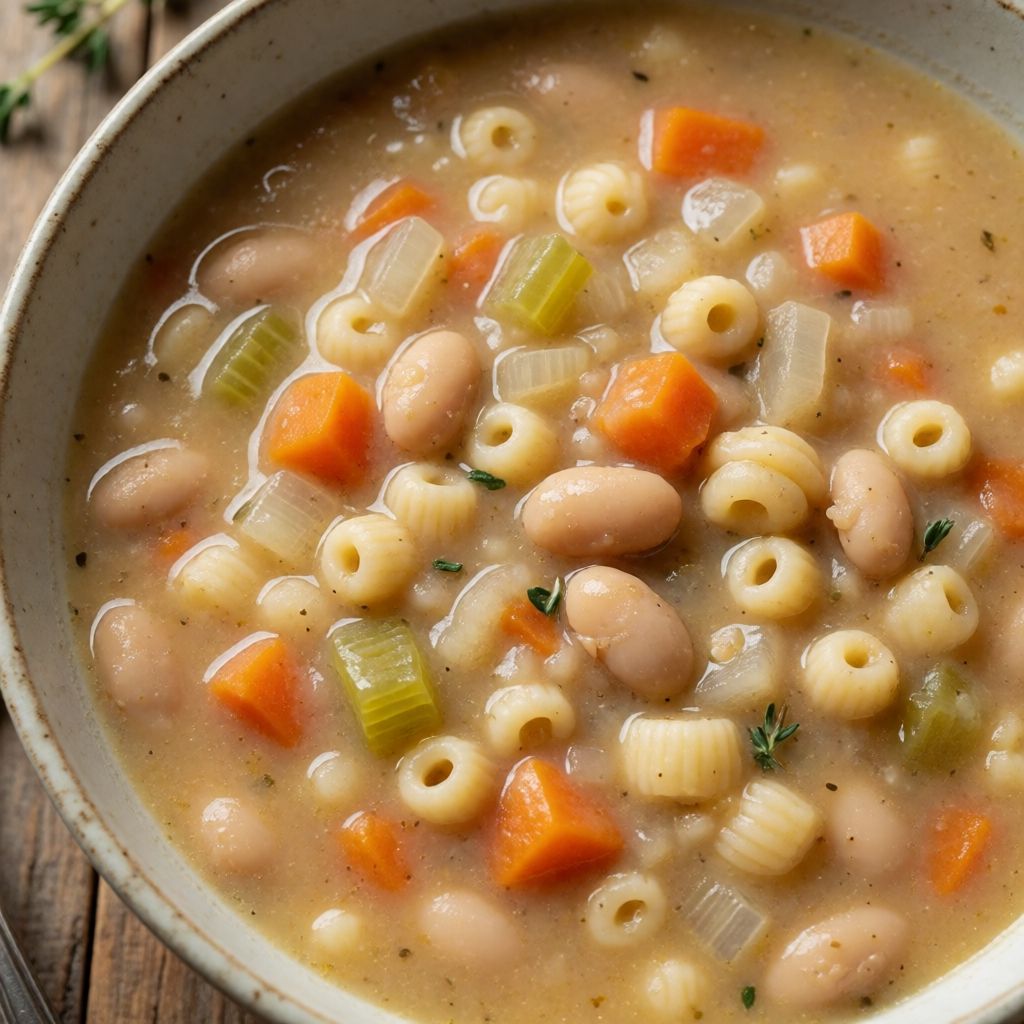
Pasta e Fagioli
A hearty Italian pasta and bean soup, simmered with vegetables, white wine and parmesan rind.
Labels are worked out automatically from the ingredients and can be wrong. Check the packaging if it matters to you.
Ingredients
- 1 pcs Onion diced
- 200 g Carrot finely diced
- 2 pcs Celery finely diced
- 100 g Fennel finely diced
- 3 clove Garlic finely grated
- 1 tsp Dried thyme
- 1 tsp Dried rosemary
- 400 g Canned chopped tomatoes
- 100 ml White wine
- 800 ml Stock
- 1 pcs Parmesan rind, for flavouring
- 2 pcs Bay leaf
- 2 can Cannellini beans
- 250 g Pasta
- 50 g Kale roughly chopped
- 2 tbsp Olive oil
- Salt to taste
- Black pepper to taste, freshly ground
- 50 g Parmesan freshly grated
- 3 tbsp Parsley fresh

















Steps
Heat the oil in a pot over medium heat and sauté the onion, carrot, celery, fennel and garlic for 5 minutes, until the onion softens.
5 minAdd the thyme, rosemary, chopped tomatoes, white wine, stock, parmesan rind and bay leaves. Bring to the boil.
Simmer the soup gently for 15 minutes.
15 minAdd the cannellini beans to the soup, season with salt and freshly ground black pepper, and bring back to the boil.
Add the pasta and adjust the consistency of the soup with extra stock if needed. Simmer gently until the pasta is perfectly tender.
Remove the bay leaves and stir in the kale just before serving.
Serve the hot soup in deep bowls, sprinkled with parmesan and a little parsley.
Pasta e fagioli isn't really a pasta dish with beans thrown in — it's a bean soup that pasta happens to finish cooking in. That order matters. The beans give you a starchy, savoury liquid before the pasta ever goes near the pot; the pasta then drinks that liquid and lets off its own starch, and the whole thing thickens itself without a roux or a cornflour slurry in sight. This is peasant arithmetic: beans and stale pasta ends were what was left in the cupboard at the end of the week, and the soup is built to stretch both as far as they'll go.
What decides whether it works is restraint at two separate points. First, the vegetable base — onion, carrot, celery, fennel — has to go soft, not brown. You want it translucent and slack, not caramelised, because this is a backdrop for the beans and tomato, not the main flavour. A good steady sizzle with a bit of hiss from the vegetable water hitting the oil is what you're after; if it's gone quiet and the onion's taking on colour, pull the heat back. Second, and this is where most home versions fall apart: the pasta must not sit in the soup once it's done. Short pasta left swimming in hot broth keeps cooking and keeps swelling, turning a clean soup into bean-flavoured wallpaper paste by the time it reaches the table.
On the vegetables: onion, carrot, celery and fennel together are a soffritto with an extra voice. Fennel isn't traditional everywhere this soup is made — some regions skip it entirely — but it brings a faint aniseed sweetness that plays well against the tomato and beans, and it softens fast, in the same five minutes as the rest, so it's no trouble to include. If you don't like it or don't have it, leave it out and add a touch more celery; you won't ruin anything, you'll just lose a subtlety most people wouldn't name if you didn't point it out.
The parmesan rind is doing real work, not decoration. Rind has almost none of the fat and protein that makes the grated cheese melt and seize, but it's packed with the same glutamates, so a 15-minute simmer pulls savouriness out of it without any greasiness or stringiness in the pot. If you've been throwing your rinds away, stop — keep a bag of them in the freezer. No rind on hand, a splash more stock and an extra minute of simmering with the bay leaves gets you close enough; it just won't have quite the same depth.
Canned beans are the sensible choice here, not a shortcut to feel apologetic about. Dried beans need soaking and an hour or more of their own cooking, and the soup doesn't want that kind of time investment on a weeknight — tinned cannellini are already soft, already seasoned by nothing but water and salt, and they go straight in. If you only have butter beans or haricot, use them; the texture shifts slightly but the soup doesn't notice.
White wine in the pot isn't there to make you tipsy or to taste "winey" — it's there to deglaze whatever's caught on the bottom from the vegetables and to add acidity that balances the sweetness of the softened onion and carrot. If you don't drink or don't want an open bottle for one splash, a spoon of wine vinegar added with the stock does the acid job, just without the aromatic lift; it's a trade, not a full swap.
Any pasta shape that's small and sturdy works — ditalini is classic because it's roughly bean-sized and sits neatly on a spoon with the beans, but broken spaghetti or small shells behave the same way. What you don't want is anything delicate like angel hair, which turns to mush the moment it's a minute past done, and this soup, cooked in a domestic pot on a domestic hob without a kazan's gentle, even heat, is more prone to overshooting than you'd think — the heat under a British gas ring or an electric coil tends to sit stubbornly hot even on a "low" setting, so keep an eye rather than trusting the dial.
Kale goes in last and only needs the residual heat of the pot to wilt — it should still have some bite and colour, not go to khaki sludge. This is the same logic as not overcooking the pasta: anything green loses its point the moment you boil the life out of it. And patience, properly, belongs to the first fifteen minutes of simmering before the beans go in — that's when the tomato loses its tinned sharpness and the stock actually becomes the dish, not just the liquid it's sitting in. Rush that stage and you'll taste the rush in every spoonful.