
 AI photo
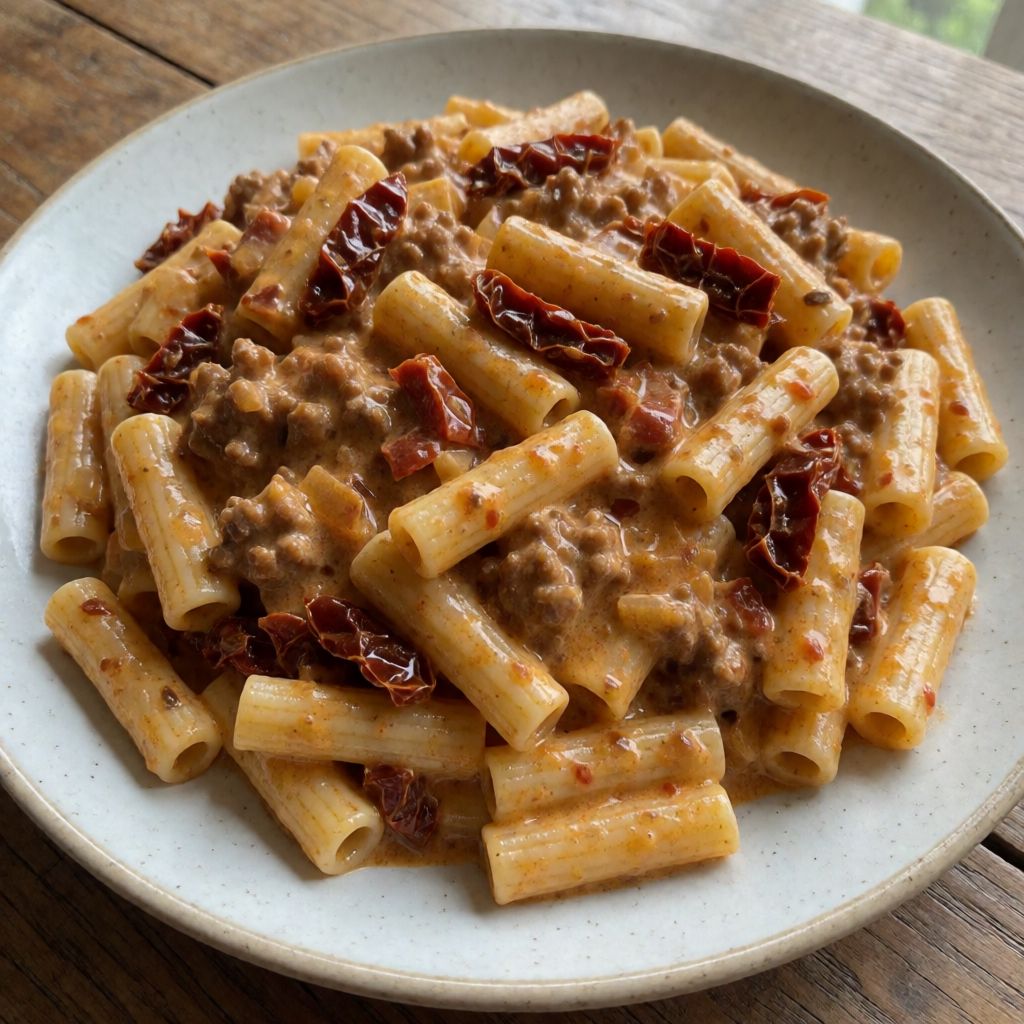
Pasta with Spicy Sausage
A creamy tomato pasta with spicy nduja sausage, finished with burrata, basil and rocket.
Labels are worked out automatically from the ingredients and can be wrong. Check the packaging if it matters to you.
Ingredients
- 2 pcs Onion finely chopped
- 2 clove Garlic finely chopped
- 1 tbsp Sun-dried tomatoes finely chopped
- 2 tbsp Nduja
- 400 g Canned chopped tomatoes
- 150 ml Double cream
- 1 tsp Sugar
- 400 g Pasta
- 100 g Spinach
- 1 bunch Basil fresh
- Salt
- Black pepper freshly ground
- 2 tbsp Olive oil for frying
- 2 pcs Burrata
- 50 g Parmesan finely grated
- 0.5 bunch Basil fresh
- 50 g Rocket
















Steps
Fry the onion in oil in a pan until soft. Add the sun-dried tomatoes, garlic and nduja and mix well so the nduja melts a little.
Add the chopped tomatoes, sugar and cream, and bring to a gentle simmer. Season with salt and pepper and let the sauce simmer on medium-low heat.
Cook the pasta in salted water until 1-2 minutes before fully al dente. Drain, reserving some water in a bowl, and transfer the hot pasta to the pan with the sauce. Mix well and adjust the consistency with the reserved pasta water.
Stir the spinach and fresh basil into the dish and serve on plates with half a burrata, parmesan, rocket and basil leaves.
This is a sausage-and-tomato pasta that never saw an actual sausage — the pork, fat and chilli all come from nduja, so the "sausage" in the name is really the Calabrian spreadable salami doing a sausage's job without the casing. What decides whether this works is one thing: does the nduja get a chance to melt into the fat before the tomatoes drown it, or does it just sit there as a lump of chilli paste. Melt it first, properly, and the whole sauce tastes of it. Skip that and you've made a fairly ordinary tomato cream sauce with regret in it.
The second thing that decides it is restraint with the cream. This isn't a carbonara-style emulsion where cream carries the whole dish — it's there to round off the acidity of canned tomatoes and the heat of the nduja, nothing more. Too much and you get a pink, gloopy sauce that tastes of neither pork fat nor tomato, just dairy. The sugar does similar quiet work: canned tomatoes are often sharper than fresh ones because they've been concentrated and had time in the can to develop acid, and a small spoon of sugar isn't sweetening the dish, it's correcting it.
Some say a cream sauce can't take burrata on top without becoming sickly rich. No — because the burrata isn't stirred in, it's set whole on the hot pasta at the end and left to slump open with its own heat. The outside gives a cool, milky contrast to a hot, spiced sauce, rather than adding to the richness already in the pan. That's the point of serving it this way rather than tearing it through everything.
Nduja is the hinge of the whole dish, so know what it is before you buy it: a soft, spreadable salami from Calabria, pork fat and meat minced fine and seasoned hard with chilli, then left to cure just enough to hold its texture without ever becoming sliceable. It behaves like a seasoning paste, not a protein you cook through — which is why step one has you melting it into onion and garlic rather than browning it. If your supermarket doesn't stock it, the honest substitute is a good chorizo, finely chopped and fried properly until it renders fat, plus a pinch of chilli flakes to make up the heat chorizo doesn't have on its own. It won't melt the same way, but it gives you fat-plus-chilli, which is the function you're replacing.
Sun-dried tomatoes earn their place by being more concentrated than the tinned tomatoes that follow — a small amount of genuinely intense tomato flavour and a bit of chew, sitting underneath the sauce rather than making it. If you've only got the dry kind, not the oil-packed kind, soak them in hot water for a few minutes first or they'll stay leathery in the finished sauce.
Canned chopped tomatoes are the right call over fresh ones here, and this is economics, not romance: tomatoes are picked and canned at their ripest because the canning season is short and fixed, while the fresh ones on a British shelf in February have travelled a long way and ripened on the way, not on the vine. For a sauce this quick, canned gives you reliable acidity and body every time.
Double cream, not single or "cooking cream," because it has enough fat to survive sitting in a simmering, acidic tomato sauce without splitting into watery curds. If you only have single cream, add it off the heat, right at the end, and don't let it come back to a simmer, or you'll get a grainy sauce instead of a silky one.
Pasta choice isn't specified beyond "pasta," so use something with a surface or a hollow that catches sauce — a rigatoni, a penne, a fusilli — rather than a thin strand that just gets coated and slides off. Cooking it one or two minutes short of done matters for a real reason: it keeps cooking in the sauce, in the pasta water you add back, and that starchy water is what makes the sauce cling to the pasta instead of pooling underneath it. Throw that water away and you'll be adding plain tap water to loosen the sauce instead, which thins flavour along with texture.
Burrata, parmesan, rocket and the second half of the basil aren't cooked at all — they're the cold-and-fresh layer on top of a hot, rich base, and that contrast is the whole reason they're listed separately from the basil stirred into the sauce. Don't swap burrata for mozzarella without noticing the difference: mozzarella is dense and bouncy right through, burrata has that collapsing, creamy centre, and it's the collapsing that's doing the work on the plate. If you can't get burrata, a ball of good buffalo mozzarella torn open while still warmish is the nearest thing, not a cold supermarket block straight from the fridge.