
 AI photo
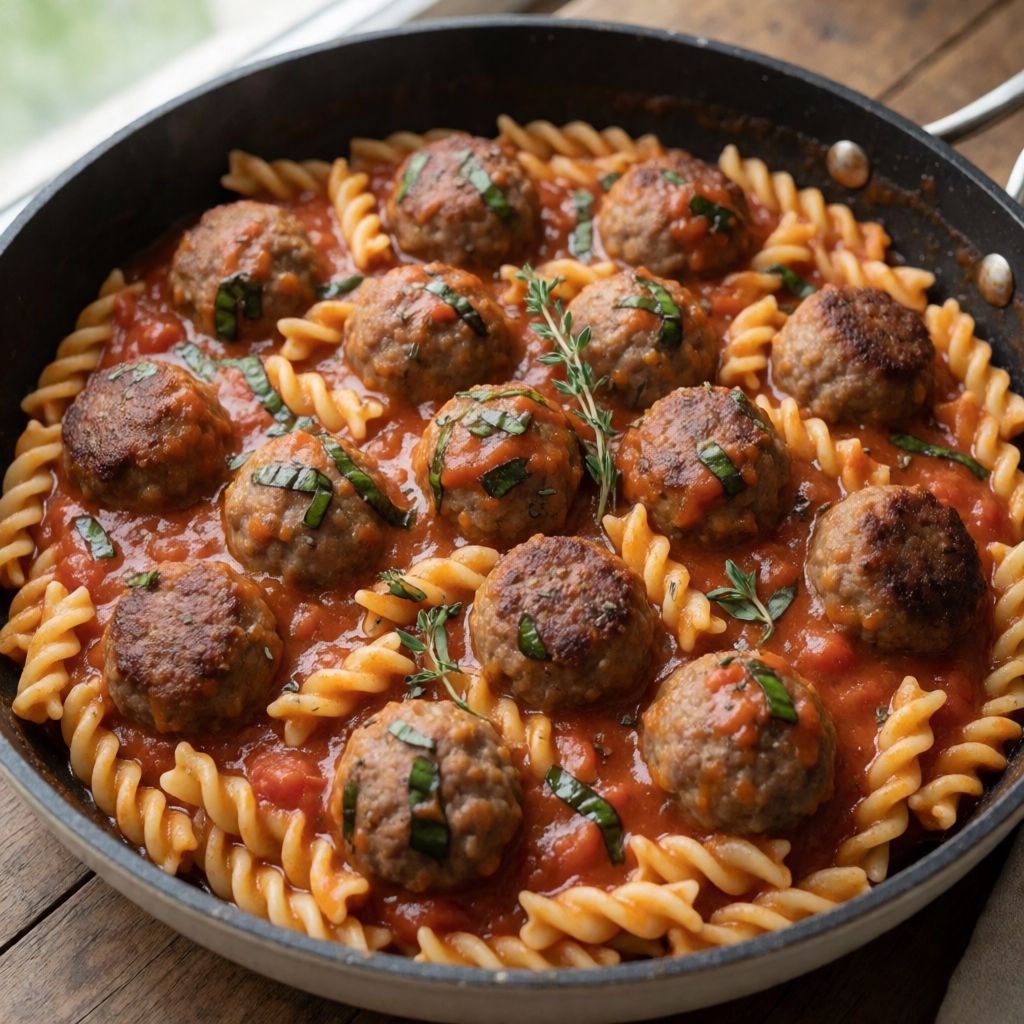
One-Pot Pasta with Tomato Sauce and Meatballs
A quick, fuss-free one-pot pasta with tomato sauce and little sausage meatballs, everything simmered together in a single pan.
Labels are worked out automatically from the ingredients and can be wrong. Check the packaging if it matters to you.
Ingredients
- 400 g Pasta
- 350 g Pork sausages casings removed
- 400 g Chopped tomatoes tinned
- 2 tbsp Tomato purée
- 1 bunch Basil leaves only
- 4 pcs Thyme sprigs, leaves only
- 1 tbsp Sun-dried tomatoes finely chopped
- 1 pcs Onion finely chopped
- 3 clove Garlic finely chopped
- 2 pcs Celery sticks, coarsely grated
- ½ pcs Courgette coarsely grated
- 125 g Mozzarella fresh
- 600 ml Stock
- 1 tsp Salt
- 1 tsp Black pepper freshly ground
- 50 g Parmesan freshly grated
- 75 g Rocket

















Steps
Remove the casings from the sausages and shape the meat into small balls, about 2-3 cm, like meatballs.
Grease the bottom of the pot with oil and add all the ingredients at once: the meatballs, chopped onion, garlic, celery, courgette, pasta, tomatoes, tomato purée, mozzarella, stock, salt, pepper, basil and thyme.
Bring to the boil over medium-high heat, making sure the pasta stays covered with liquid.
Cover and simmer for about 10-15 minutes, until the pasta is cooked al dente.
12 minServe hot, sprinkled with freshly grated Parmesan and rocket.
This is a one-pot pasta, which sounds like a shortcut but is really a different cooking method pretending to be a familiar dish. You don't boil pasta separately and marry it to a sauce afterwards — everything goes into the same pot raw and cold, and the starch that would normally drain away down the sink stays in the liquid instead, thickening it as the pasta cooks. The sauce isn't made; it's what's left when the stock reduces and the pasta's own starch binds it. That's the whole mechanism, and it's why this dish lives or dies on liquid-to-pasta ratio, not on how carefully you fry anything.
What decides whether it works: does the pasta stay just covered by liquid the whole time it cooks. Not drowned, not peeking out dry at the edges. Too much stock and you get a thin tomato soup with pasta floating in it, no body to the sauce. Too little and the pasta at the top cooks unevenly or scorches to the pot while the bottom is still underdone — because unlike a kazan that holds heat evenly round its curve, a flat domestic pan has a hot spot right where the burner sits, and anything touching metal there with no liquid cushion will catch and stick. So you watch the surface, not the clock. The 12 minutes on the recipe is a floor, not a verdict — pasta shapes vary by brand even within "penne," and your hob's medium-high is not your neighbour's.
The vegetables — onion, celery, courgette, grated not diced — aren't there for texture you'll notice on the fork. Grated, they collapse into the sauce and surrender their liquid quickly, which matters because they're going in raw alongside everything else with no separate sauté step to soften them first. If you chopped them instead of grating, they'd still be crunchy when the pasta's done, because they'd need longer at the heat than the pasta does. Grating is the shortcut that makes "everything in at once" actually work.
Sausages: buy ones you'd be happy to eat on their own, skin and all, because the skin is the only thing you're discarding — the seasoning inside is doing real work and you can't fix a bland sausage by adding more salt afterwards; the fat renders into the sauce as it cooks and that fat is a big part of why the finished dish tastes rounder than a plain tomato pasta. No pork sausage in the house — any coarse fresh sausage with a fat content you trust works the same way: Cumberland, Toulouse, even a mild Italian one if you want to lean that direction. Mince on its own won't do it; you lose the seasoning the sausage-maker already built in, and you'd need to season twice as hard to compensate.
Tinned tomatoes plus tomato purée is two different jobs, not one job doubled. The tinned tomatoes bring the bulk and the acid; the purée is concentrated, almost no water in it, and its job is to thicken and deepen colour without diluting. If you only had purée you'd need to add a lot more stock and accept a thinner, sharper sauce. Sun-dried tomatoes in small quantity are there for the savoury edge concentrated drying gives — a teaspoon of their oil stirred in does more than the tomatoes themselves.
Celery and courgette are the "use what's going soft in the drawer" vegetables of this dish — history here is just domestic economics: a one-pot recipe exists because washing up one pot instead of three is worth something on a weeknight, and the vegetables chosen are the ones that grate easily and don't need their own cooking time. Swap courgette for grated carrot if that's what you have — same reasoning, same grate, same collapse into the sauce — just don't swap in something that needs longer to soften, like raw potato, because then you're back to uneven cooking.
Mozzarella goes in during the cook, not after — unusual, and it means it's not there for the stretch and pull you'd want on a pizza. In the pot it melts into pockets through the sauce, so you get occasional soft, milky bites rather than a cheese pull. Any fresh, low-moisture-but-still-soft mozzarella does this; a hard aged mozzarella won't melt the same way and a very wet ball will mostly just add water.
Stock, not water: 600ml for 400g pasta is a tight ratio deliberately, because stock reducing down with the tomatoes and the sausage fat is what gives you a sauce with some backbone by the time the pasta's done, rather than thin tomato water. Any stock with actual flavour works — chicken, vegetable, even a good bouillon cube dissolved properly — the test isn't the brand, it's whether it tastes of something before you've added anything else to it.
Rocket and Parmesan go on at the very end, off the heat, because they're the one textural contrast in a dish that's otherwise soft all the way through — peppery raw leaf against hot, starchy pasta. Add the rocket into the pot while it's cooking and it just wilts into one more soft green thing, and you've lost the only crunch the dish has.
Patience here looks different from a long-braise patience — it's watchfulness, not waiting. You're standing by the pot checking the liquid level and the pasta's bend, not setting a timer and walking off to do something else, because a flat domestic hob doesn't forgive an unwatched pot the way a slow oven does.