
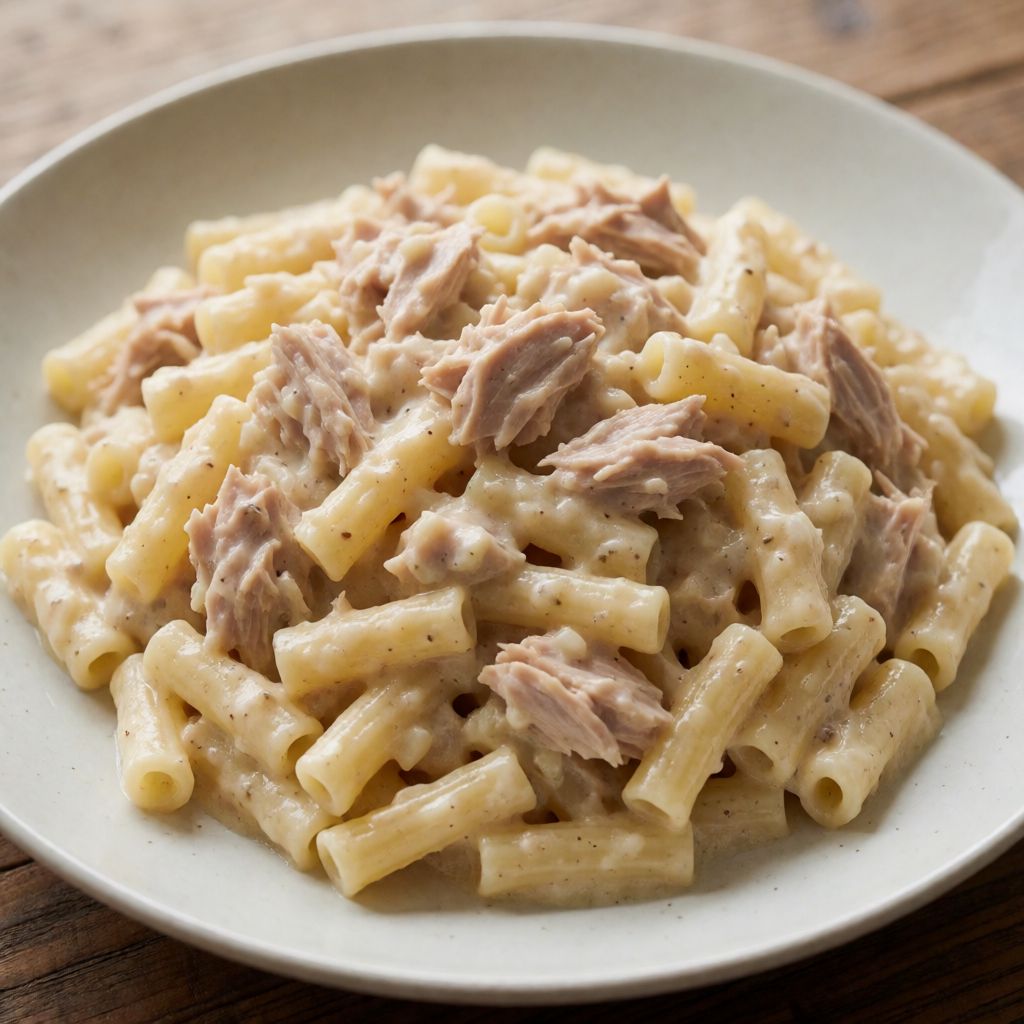
 AI photo
Pasta with Tuna Sauce
A quick pasta dish with a creamy tuna sauce, mozzarella and parmesan.
Labels are worked out automatically from the ingredients and can be wrong. Check the packaging if it matters to you.
Ingredients
- 400 g Pasta
- 1 can Tuna in water, drained
- 200 ml Crème fraîche 18%
- 100 ml Stock
- 1 tsp Cornflour
- 2 clove Garlic crushed
- 125 g Mozzarella cut into cubes
- 50 g Parmesan freshly grated
- Salt
- Black pepper freshly ground
- 1 bunch Fresh herbs finely chopped











Steps
Cook the pasta in a pot with plenty of water according to the packet instructions.
Mix the tuna, vegetable stock, cornflour and garlic in a pan and stir while heating until it comes to a boil.
Add the crème fraîche, mozzarella and parmesan and stir until the cheese has melted, keeping the heat just below boiling.
Season the sauce with salt and pepper.
Drain the pasta and toss it hot with the tuna sauce.
Serve immediately, sprinkled with the freshly chopped herbs.
This isn't really a tuna dish — it's a lesson in what happens to dairy and cheese near boiling point, and tuna happens to be sitting in the pan while you learn it. It feeds four, and from kettle on to plates on the table you're looking at twenty minutes. The whole dish succeeds or fails on one decision: do you let the sauce roll once the cream and cheese go in, or do you hold it just under that point, where the surface barely trembles instead of breaking into bubbles. Boil it, and the fat in the crème fraîche and mozzarella splits away from the water — you get an oily puddle with grains of curd floating in it, and no amount of stirring brings it back together. Patience is the actual ingredient in that step. Rushing the heat to melt the cheese faster is exactly how you lose the sauce.
Some say tuna pasta is the lazy cousin of a "real" fish pasta — no, because the tin is doing a specific, honest job: it hands you cooked, salted protein in under a minute, so all your attention goes to the part that genuinely needs watching, which is the sauce. This is a weekday dinner built for the gap between the shopping bag and a fed table, not a dish pretending to be the Sunday roast.
The cornflour is doing real work, not padding: it thickens the stock-and-tuna base before the dairy arrives, so the crème fraîche isn't left to do all the thickening under heat — which is exactly the moment it's most likely to split. Mix the cornflour into the cold stock before any heat touches it. Cornflour dropped straight into something already hot gelatinises on contact and sets into a lump before it has a chance to spread, and no amount of stirring dissolves a lump that's already formed.
Crème fraîche at 18% is chosen for a reason — enough fat to stay stable near heat, but not so little that it behaves like milk and curdles the moment it meets salt or acid from the tuna and cheese. Without it, double cream with a spoon of lemon juice, or soured cream, will stand in — but soured cream carries less fat, so give it a gentler heat than you think it needs, and keep stirring while it warms through.
Mozzarella is picked for how it melts: into long threads that hold together, rather than breaking into oil and grain. That's its protein doing the work, not magic. A hard, aged cheese like mature cheddar would seize and split under this same gentle heat — wrong tool for this particular job. Save that kind of cheese for grating on top, which is exactly what the parmesan is here for.
Parmesan, freshly grated, gives the sauce its sharp backbone — the tuna and cream are mild on their own, and parmesan is the ingredient doing the seasoning on the savoury side rather than the salt side. Pre-grated parmesan from a tub has usually dried past the point of melting cleanly; it sits on the surface like sawdust instead of disappearing into the sauce.
Tuna packed in water, drained — not oil. Oil-packed tuna arrives with its own fat already in it, and this sauce doesn't need a second fat fighting the cream and cheese for space. Water-packed keeps the dish light enough that the cheese's fat is the only fat doing any work, and you can taste it.
Stock should be mild enough to stay out of the tuna's way — a light chicken or vegetable stock, even a cube dissolved in hot water, does the job. Fresh herbs at the end aren't decoration: parsley or dill cuts through two cheeses and a cream sauce and gives the last bite somewhere to land. Leave them out and the dish tastes flat even when everything else went right.