
 AI photo
Fried Pork Gyoza with Dipping Sauce
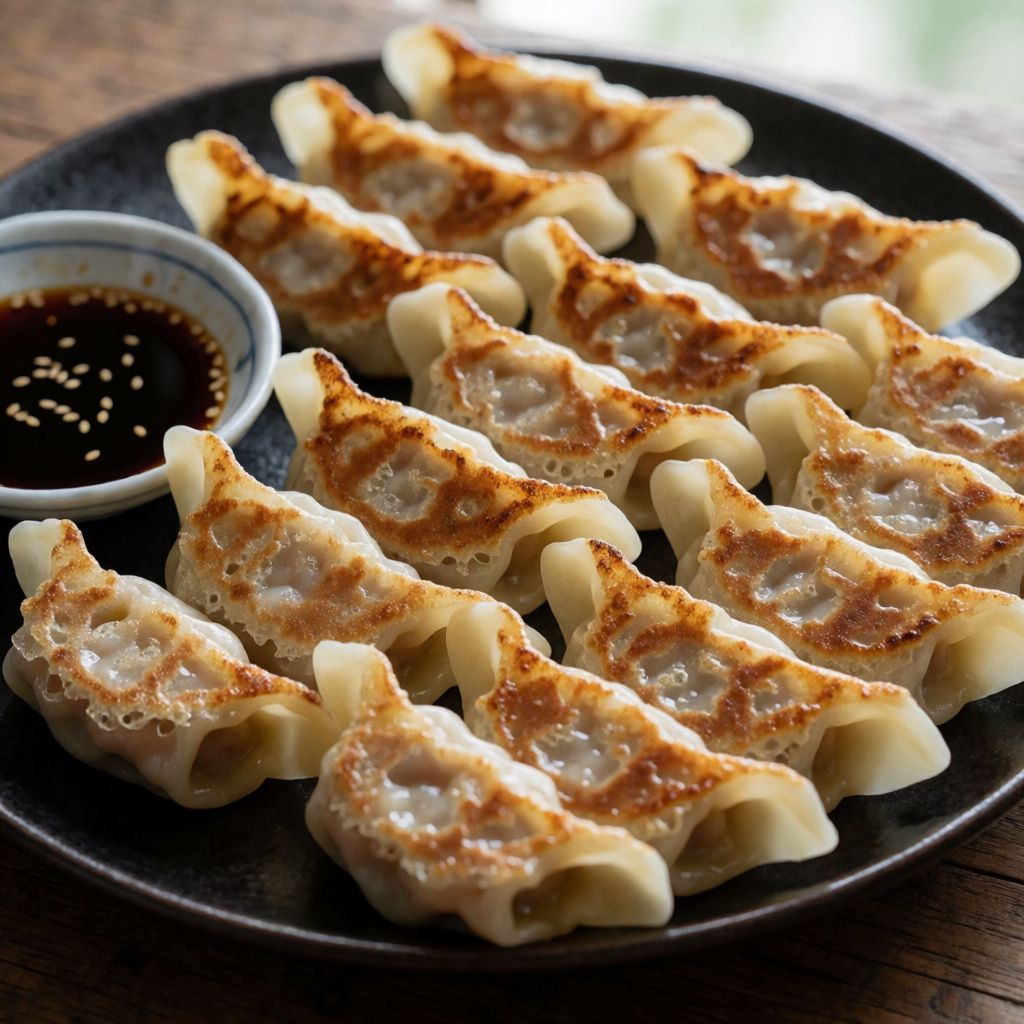
Crispy pan-fried pork gyoza, pan-fried then steamed, served with a soy-vinegar dipping sauce.
Labels are worked out automatically from the ingredients and can be wrong. Check the packaging if it matters to you.
Ingredients
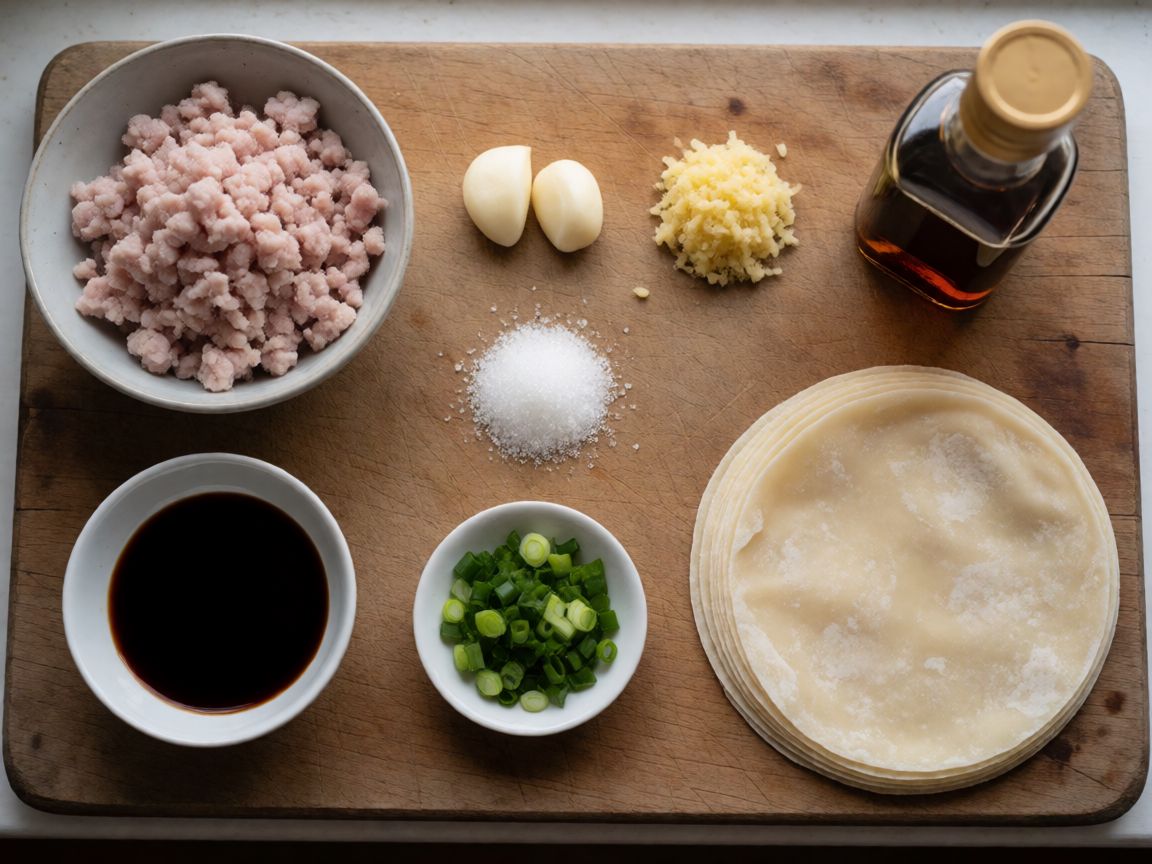
- 400 g Pork mince
- 2 clove Garlic finely grated
- 1 tsp Ginger finely grated
- ½ tsp Sugar
- 1 tbsp Sesame oil
- 1 tbsp Soy sauce
- 2 pcs Spring onion finely chopped
- Black pepper freshly ground
- 30 pcs Gyoza wrappers
- 4 tbsp Vegetable oil for frying
- 100 ml Stock
- 1 pcs Spring onion thinly sliced
- 4 tbsp Rice vinegar
- 4 tbsp Soy sauce
- 1 clove Garlic finely chopped
- 1 tsp Ginger finely grated
- 1 pinch Chilli flakes
- 1 tbsp Sesame oil
- Black pepper freshly ground










To serve
- 1 tbsp Sesame seeds toasted

Steps
Mix the mince, garlic, ginger, sugar, sesame oil and soy sauce, then add the spring onion and pepper.
Chill the filling in the fridge for 30 minutes so the flavours come together.
30 minPlace about 1½ tsp of filling in the centre of a gyoza wrapper, dampen the edge with water and fold over.
Pleat the edges to seal the gyoza, then set on a sheet of baking paper.
Heat a pan with oil and fry the gyoza flat-side down until crisp.
Pour in the stock or water, cover with a lid and steam for 2–3 minutes.
3 minRepeat the frying and steaming with the remaining gyoza.
Mix the rice vinegar, soy sauce, garlic, ginger and chilli flakes well in a bowl.
Pour the sauce into small bowls, add the sesame oil and freshly ground pepper.
Serve the gyoza with the dipping sauce and sprinkle with toasted sesame seeds.
A gyoza is really two cooking methods arguing in one pan, and the whole dish is built on making peace between them. You fry the bottom hard and dry until it's a crisp, almost lacquered shell — that's a Maillard reaction, sugars and proteins browning, nothing mystical — and then you drown the rest in steam so the top stays soft and the meat inside actually cooks through. One pan, two textures, thirty seconds between them deciding whether you've made a dumpling or a hockey puck.
What decides whether it works isn't the folding — though people obsess over the pleats as if a flat seal were a crime. It's the water you add after frying, and the lid. No lid, no steam, no cooked filling; the bottom will burn black before the pork inside goes from pink to grey. Some say the pleats are what make a gyoza "proper" — no, the pleat is just there to hold the seal shut under steam pressure so the filling doesn't leak out; a dumpling crimped flat with a fork steams exactly the same.
The filling itself has to be wet enough to stay juicy and tight enough to hold its shape raw — that balance comes from the sesame oil and soy sauce binding the mince, not from the amount of meat. Too dry and you get a sawdust centre in a crisp shell; too loose and it weeps through the wrapper seam while frying and you lose your crust to steam escaping the wrong way.
Start with the pork. You want mince with real fat in it — not the leanest tray on the shelf, because lean mince fried this hard and chilled this firm turns dry and crumbly once cooked. Something around 20% fat gives you a filling that stays juicy through both the frying and the steaming. If pork isn't available or you don't eat it, chicken thigh mince works with the fat bumped up by a spoon more sesame oil, because thigh meat is naturally wetter than pork shoulder and needs that oil to carry flavour, not just moisture.
Garlic and ginger are grated, not chopped, for a reason that has nothing to do with aesthetics: grating breaks the cell walls and releases the oils immediately, so a small amount flavours the whole filling evenly instead of sitting in pockets. Chop them instead and you get hot spots — someone's dumpling tastes of raw garlic, someone else's tastes of nothing.
The chilling step is the one people skip, and it's the one that actually matters most after the frying itself. Thirty minutes in the fridge isn't about "letting flavours develop" in some vague mystical sense — it's about the fat solidifying slightly so the mixture holds together when you fold it, and about the salt from the soy sauce having time to work into the proteins, which is what gives you that springy, bouncy bite rather than a loose crumble. Skip it and your filling is looser, harder to seal, and more likely to split a wrapper.
Gyoza wrappers themselves are just a very thin, low-hydration dough — if you can't find them, wonton wrappers are close enough, just slightly thinner, so handle them gently; a spring roll wrapper is too thin and will tear under steam. The water you dampen the edge with isn't decoration, it's glue — it's the starch on the wrapper surface rehydrating enough to fuse two layers together, which is why a dry edge won't seal no matter how hard you pinch it.
For the fry-then-steam stage, you don't need a kazan or a wok lid you don't own — any wide, heavy pan with a lid, or even a large plate set on top to trap steam, does the job; a domestic hob just can't hold the fierce, even heat a wok needs, so don't chase that, work with a flat pan and accept the bottoms will be slightly less uniformly bronzed than a restaurant's. The oil should be hot enough that the gyoza sizzles the second it touches the pan — that's your cue, not a number, because "medium heat" means something different on every hob in the country. Once you add the stock or water and clap the lid on, resist opening it to check: letting steam escape early is exactly what leaves the filling underdone while the bottom's already turned too dark.
The sauce is cheap and quick on purpose — rice vinegar and soy sauce are both pantry staples precisely because this is a dish born from using what's on hand and letting contrast do the work, not expensive ingredients. If you don't have rice vinegar, a mild white wine vinegar cut with a touch of sugar gets you close — anything with sharp acidity and no strong flavour of its own. Add the sesame oil to the sauce right at the end, after everything else, because its aroma is volatile and if it sits mixed in with the acid for long it mutes.
Thirty dumplings sounds like a lot, but gyoza are a sharing food, eaten in threes and fours with tea or beer at the table — count on six to eight as a starter for four people, or make it the main event for two with rice on the side. Patience here isn't poetic — it's the chill time, and it's resisting the urge to peek under the lid. Both of those are ingredients as much as the pork is.