
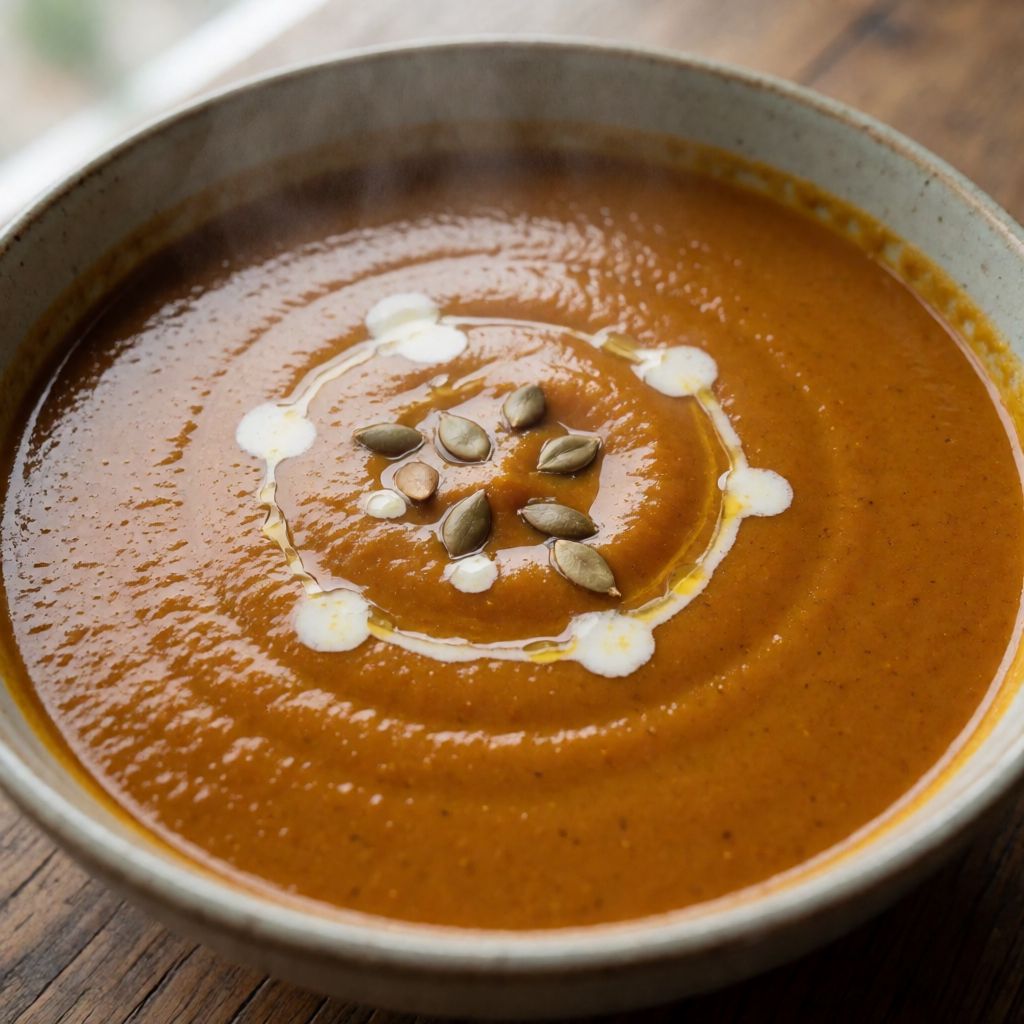
 AI photo
Mexican Pumpkin Soup
A warming, spiced pumpkin soup with Mexican-style toppings — crispy tortilla chips, sweetcorn, cheddar and soured cream.
Labels are worked out automatically from the ingredients and can be wrong. Check the packaging if it matters to you.
Ingredients
- ½ pcs Pumpkin about 500 g
- 2 pcs Onion roughly chopped
- 4 clove Garlic finely chopped
- 300 g Potato diced
- 1 tsp Cumin
- 1 tsp Ground coriander
- 1 tsp Ginger finely grated
- ½ pcs Red chilli halved, deseeded
- 1 l Stock
- 100 ml Double cream
- ½ pcs Lemon
- 2 tbsp Lemon juice
- 1 can Black beans drained and rinsed
- 1 tbsp Olive oil for frying
- Salt to taste
- Black pepper to taste














To serve
- 4 pcs Tortilla
- 100 ml Soured cream
- 300 g Sweetcorn tinned, fresh or frozen
- 1 tsp Butter
- Salt to taste
- 1 bunch Coriander fresh
- 50 g Mature cheddar coarsely grated






Steps
Wash the squash and cut it in half. Scoop out the seeds with a spoon and cut the squash, skin on, into large cubes.
5 minFry the onion and garlic in a pan with oil until soft. Add the cumin, coriander, chilli and ginger. Stir for about a minute until fragrant.
1 minAdd the potato and squash to the pan. Pour in the stock and cover with a lid. Leave to simmer for 20 minutes.
20 minBlend the soup until completely smooth and creamy. Season with the cream, lemon juice, salt and pepper. Return the soup to the pan with the black beans and heat through well.
3 minBrush the tortillas with a little oil and sprinkle with a little flaked salt. Cut into triangles and place on a baking tray lined with baking paper. Bake in a preheated fan oven at 165°C for 10-15 minutes, until crisp.
12 minFry the sweetcorn kernels in butter, stirring, in a pan over medium heat until lightly browned. Sprinkle with salt.
4 minServe the soup hot with soured cream, the fried sweetcorn, grated cheddar and baked tortilla chips.
What was changed
The oven temperature for the tortilla chips was adjusted to for a fan oven.
This is a squash soup wearing a sombrero — pumpkin and potato for body, cumin and chilli for the borrowed Mexican accent, and a pile of toppings doing the actual entertaining. The soup itself is simple to the point of being boring on its own. What saves it from being "just blended veg water" is what you put on top: crunchy tortilla, charred corn, sharp cheddar, cold soured cream. Take those away and you've made a nice but forgettable squash soup. Keep them on and you've made something with texture, heat, and contrast — which is the whole trick of Tex-Mex cooking: it's rarely about one brilliant ingredient, it's about stacking cheap, contrasting things on a base.
What decides whether it works is two things: how far you cook the vegetables before blending, and whether you actually crisp the toppings instead of just plating them cold. The squash and potato need to go soft enough that the blender meets no resistance — any stringy bit left in there shows up as a fibre in your mouth later, and no amount of cream fixes that. And the tortilla chips need real oven heat and real time, not a damp warm-through, or they go soft in the bowl within a minute and you've lost the only crunch in the dish.
Pumpkin, or really any orange squash with firm flesh, is there for bulk and a faint sweetness — it's cheap, it keeps for months on a shelf, and it breaks down into silk when boiled, which is exactly what you want from a blended soup. If your squash is pale and watery rather than deep orange, your soup will taste thinner too — the colour is a decent proxy for flavour here. No pumpkin at hand, any dense squash does the job; butternut even blends smoother, because it carries less fibre than a true pumpkin.
Potato isn't there for taste — it's there for texture. Squash alone blends to something almost foamy, too light; potato brings starch, and starch is what turns "blended vegetables" into "soup that coats a spoon." This is the same reason leek-and-potato soup always has potato in it even though nobody tastes it specifically. Don't swap it for more squash thinking you're intensifying flavour — you'll just thin the body out.
The spice trio — cumin, coriander, ginger — goes in after the onion softens and before the liquid, and that order matters: ground spices release their aromatic oils into fat and heat, not into water. Thrown straight into stock, half their flavour just floats on top and gets skimmed off or ignored. A minute in the hot oiled pan, until you can smell them change from raw to toasted, is doing real chemical work, not just following habit. Some say spices should go in at the start with the onion — no, because raw onion releases water almost immediately, and wet spices don't toast, they stew, and stewed spice tastes dusty rather than warm.
Stock should taste of something before it goes in — a thin stock cube soup stays thin stock cube soup even after an hour of simmering and a blender. If you only have water and a cube, that's fine, just don't expect miracles; this isn't a dish built on a long-simmered bone stock, it's built on spice and texture doing the heavy lifting, so a reasonable stock is enough.
Double cream and lemon juice go in at the very end, off any hard boil, for the same reason: cream can split if it hits furious heat, and lemon juice loses its brightness the longer it's cooked — acid that's been boiled tastes flat, acid added last tastes alive. Soured cream on top at serving is a different ingredient doing a different job: it's cold and sharp against a hot bowl, a contrast, not a flavour you want melted into the whole pot.
Black beans and corn are the cheap protein-and-crunch pairing that defines a lot of Mexican and Tex-Mex cooking, born from what grew well and stored easily, not from any rule about what "belongs." Fry the corn in butter until it actually browns in spots — sweetcorn straight from a tin or bag is wet and bland, and a dry sear is what gives it a toasted, almost nutty edge instead of tasting like tinned vegetables warmed through. The tortilla chips are your crouton, and the oven does what a damp pan won't: it drives the moisture out of the dough so what's left is genuinely brittle, not just warm bread. Any flatbread, cut thin and baked dry, will substitute — the principle is "thin and properly dried," not "must be corn tortilla."
Patience here isn't long — twenty minutes of simmering is a lower bound, not a target, and you'll know it's enough when a knife goes into the potato with no resistance, not when the clock says so. But don't rush the blending stage either: give the soup a minute off the heat before you blend, because boiling-hot liquid in a jug blender builds pressure and will find the one gap in the lid. That's not a myth, that's just physics and a burnt ceiling you don't need to test yourself.