
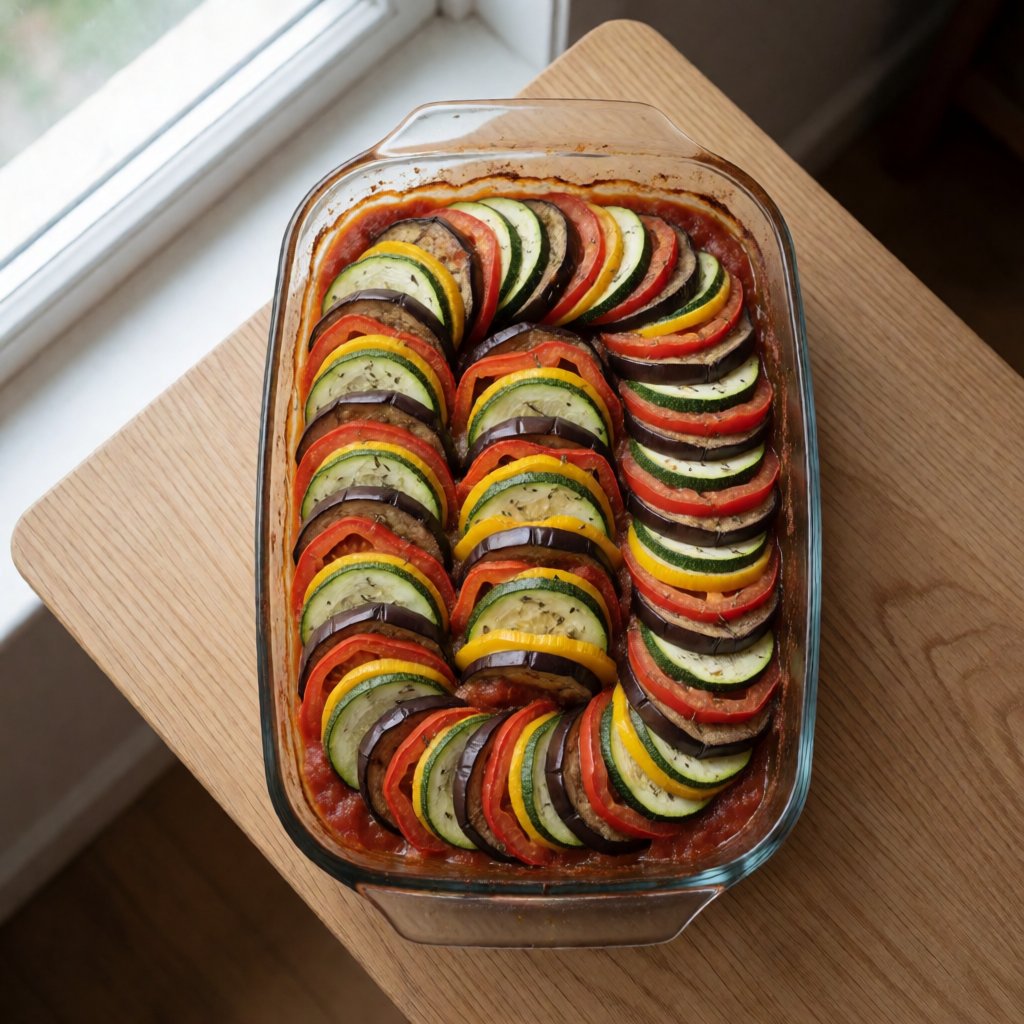
 AI photo
Ratatouille
A colourful French vegetable bake of courgette, aubergine, tomato and pepper, roasted with garlic and herbs.
Labels are worked out automatically from the ingredients and can be wrong. Check the packaging if it matters to you.
Ingredients
- 1 pcs Courgette
- 1 pcs Aubergine small
- 2 pcs Tomato
- 1 pcs Pepper sweet
- 150 ml Tomato Sauce
- 2 clove Garlic
- 2 tbsp Sunflower Oil
- 1 pinch Dried Herbes de Provence or to taste
- 1 pinch Salt or to taste







Steps
Spread the sauce with garlic over the base of the dish, then layer the vegetables in overlapping rounds on top.
Drizzle with oil, sprinkle with the herbs, and season with salt.
Cover the dish with foil and bake for 35 minutes.
35 minRemove the foil and bake for a further 10 minutes.
10 minTake the dish out of the oven.
What was changed
The pepper row was corrected to Pepper, since the recipe needs a whole sweet pepper rather than ground black pepper.
What you're building here isn't a stew, it's a bake: thin rounds of courgette, aubergine, pepper and tomato fanned out over a garlicky tomato base, covered so they steam in their own moisture, then uncovered so the top can dry and just start to catch colour. The whole dish lives or dies on two things — how evenly you slice the vegetables, and whether you trust the foil to do its job instead of peeking under it every five minutes.
Some people think ratatouille has to be a stew — everything thrown in one pot and cooked down until courgette, aubergine and pepper all taste the same, because that's the "authentic peasant" version they've read about. No. That stewed style exists too, but what you have here is the arranged, oven-tray version, built specifically so each vegetable keeps its own bite. The foil does the stewing part for you, gently, without anyone needing to stir.
The foil itself isn't just a lid substitute. It traps the steam coming off the tomato sauce and the vegetables' own water, so the dense aubergine and courgette cook through from the heat circulating around them rather than drying out on top before the centre softens. Take the foil off too early and you get a leathery, pale surface sitting over raw-ish flesh — that's the defect foil is there to prevent. Leave it on the whole time and you get soft vegetables with no colour, no concentration, everything a bit wet and sad.
Courgette: pick one that's firm and heavy for its size — a tired courgette has gone spongy inside and holds more water, which means more steam, which means a soggier bake. Slice it into thin, even rounds; uneven slices cook unevenly, and that's the single most common reason one part of the dish is perfect while another is still crunchy.
Aubergine, small: small ones have a better flesh-to-skin ratio and tend to be less bitter, so they cook faster and more evenly than one big watery one. Some cooks still salt aubergine for half an hour before using it, out of habit — a holdover from older, genuinely bitter varieties. Most aubergine sold now doesn't need it. The pinch of salt in the recipe, spread through the layers, does the seasoning job that matters; you don't need to run a separate ritual for it.
Tomato and tomato sauce are doing two different jobs. The two whole tomatoes, sliced, are structural — part of the pattern, holding their shape among the rounds. The 150ml of sauce underneath is the moisture and the glue, what the vegetables sit in and release their own juice into. If you don't have a jarred or tinned tomato sauce, blitz tinned tomatoes smooth and add a pinch of sugar if they taste sharp — the point is a smooth, fairly thick base, not a watery one, or the whole dish turns soupy under the foil.
Sweet pepper adds sweetness and a bit of structure that holds its shape better than courgette or aubergine under heat — useful, because it stops the dish from being uniformly soft. Any colour of sweet pepper works; it's about sweetness, not colour.
Garlic goes into the sauce layer, not loose on top, for a reason: garlic sitting exposed on top of a hot dish burns fast and turns bitter, while garlic stirred into the sauce infuses it gently as everything steams. Two cloves, crushed or finely chopped, is plenty for this amount of sauce.
Sunflower oil here just needs to be something with no flavour of its own — it's carrying heat and a little shine, not contributing taste. Grapeseed oil or a light, flavourless olive oil work the same way. Keep a strongly flavoured extra virgin olive oil for serving, drizzled raw at the end, if you want it — it brings more character that way than baked in. The herbes de Provence — usually thyme, rosemary, savory, sometimes lavender — can be swapped for dried thyme on its own if that's what's in the cupboard; it's the same Mediterranean idea, scaled down. And give the whole thing the patience it asks for: don't lift the foil early to check, and don't rush the uncovered stage either, waiting for the edges and not the clock.
·