
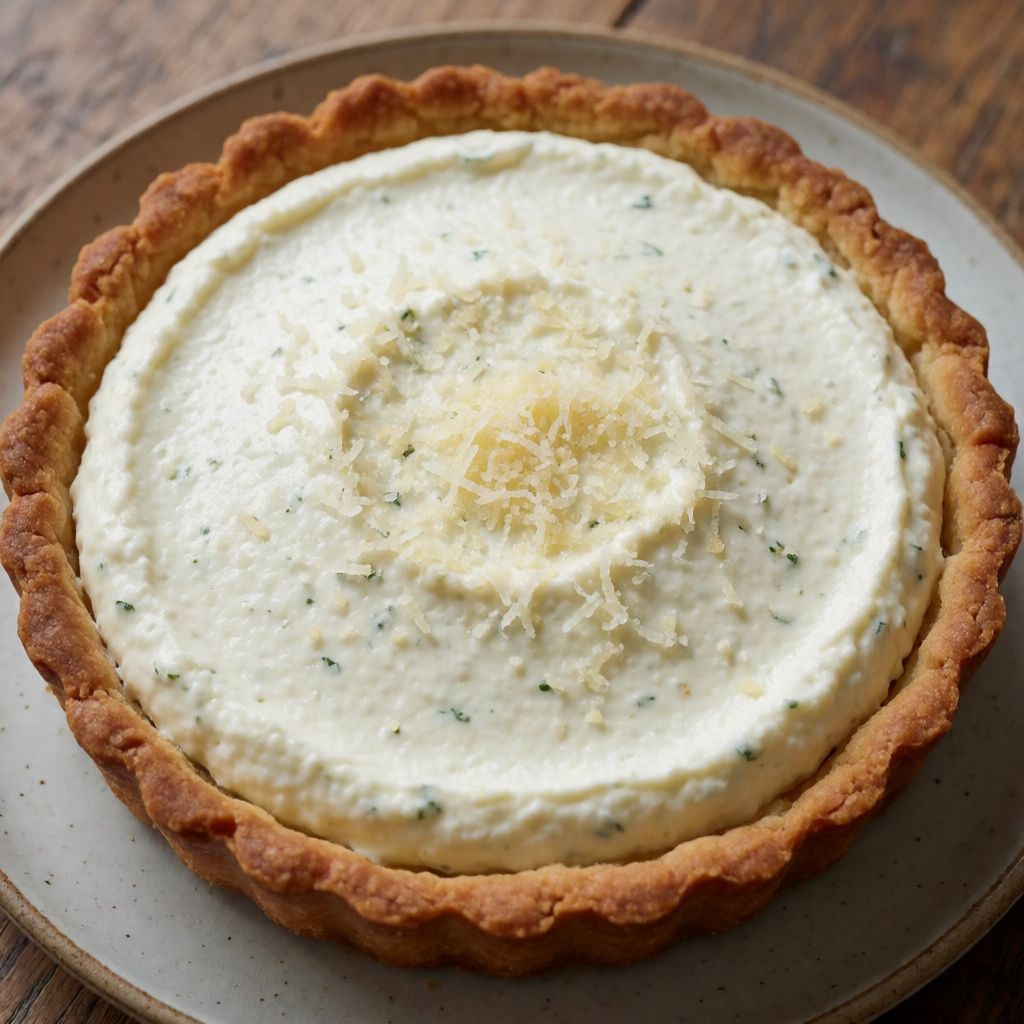
 AI photo
Savoury Parmesan Shortcrust Tart with Herb Mousse
A savoury shortcrust tart made with Parmesan, filled with a creamy herb mousse and topped with tomatoes, olives and cured meat.
Labels are worked out automatically from the ingredients and can be wrong. Check the packaging if it matters to you.
Ingredients
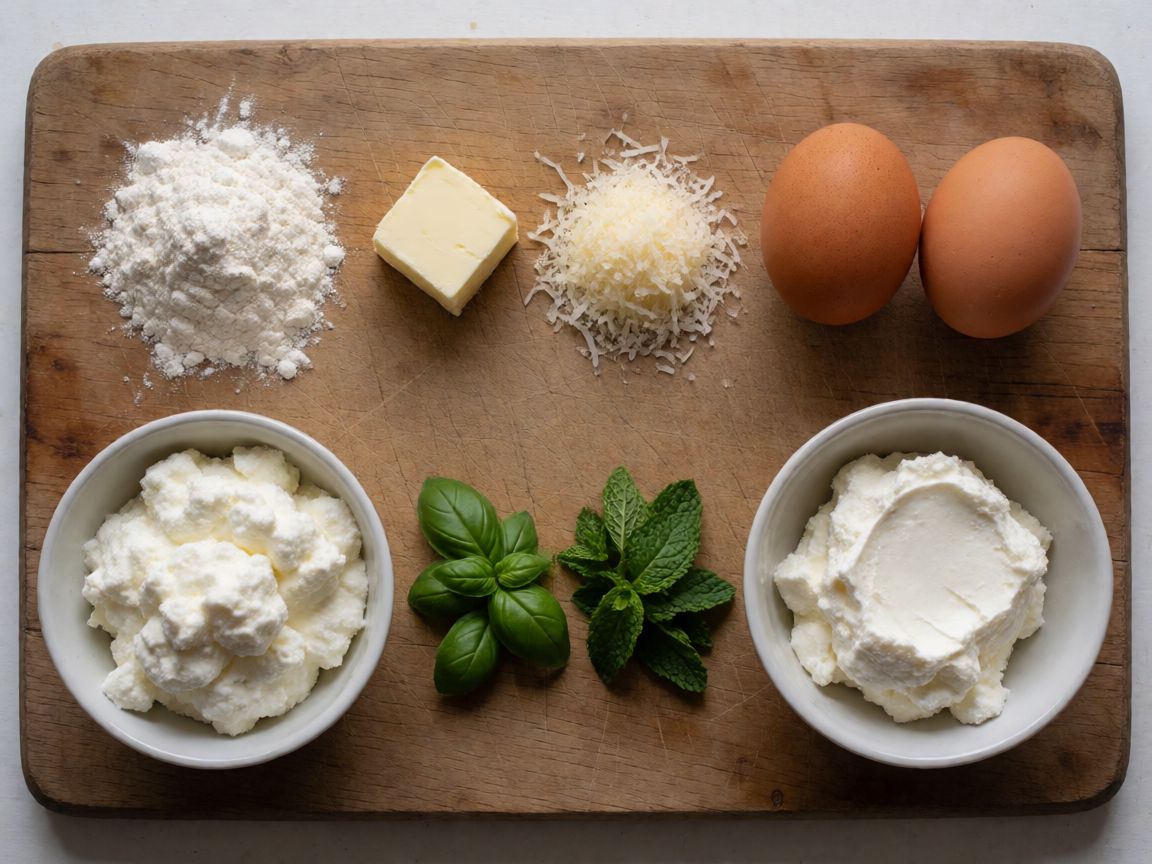
- 300 g Plain flour
- 150 g Butter
- 70 g Parmesan
- 2 pcs Eggs
- 5 g Salt
- 200 g Ricotta
- 250 g Cream cheese
- 25 g Basil
- 15 g Mint
- 20 g Olive oil
- Salt to taste
- Black pepper to taste
- Tomato to taste
- Yellow cherry tomatoes to taste
- Olives to taste
- Bresaola to taste, or Parma ham
- Basil to taste, for serving










Steps
On a work surface, mound the flour, then add the diced butter, eggs, salt and Parmesan.
Knead vigorously by hand until the dough is smooth and firm.
Wrap the dough in cling film and chill in the fridge.
30 minDivide the chilled dough into two parts, one slightly larger than the other.
Roll out the larger piece on a lightly floured surface to a thickness of 6-7 mm.
Cut out a 24 cm circle and shape it as needed.
Combine the trimmings with the second piece, roll out and cut a second shape.
Stack the two discs on top of each other and cut a 10 cm hole in the centre.
Transfer the pieces onto a baking tray lined with baking paper and prick the surface with a fork.
Bake in a fan oven preheated to 170°C.
18 minLeave the pastry to cool completely.
Finely chop the basil and mint for the mousse.
Mix the ricotta with the cream cheese in a bowl.
This is a pâte brisée ring — basically a savoury shortcrust biscuit base — dressed up with a cold herb and cheese mousse and whatever bright, salty things you've got: tomato, olives, cured meat. It's not a quiche, there's no custard, nothing goes back in the oven once it's filled. The tart part is a biscuit; the topping is a fridge job. That split is the whole logic of the dish: bake once, cool completely, then build cold on top. Rush the cooling and the mousse slides off a warm, slightly greasy base instead of sitting on a crisp, matte one.
What decides whether it works is fat control in the dough and water control in the mousse. This pastry has no liquid added — no water, no milk — because the eggs and the butter are doing that job between them, and Parmesan brings its own moisture and salt. Add water "to bring it together" the way some people do with normal shortcrust, and you get a tough, bready ring instead of a short, sandy one. Short means the fat has coated the flour before gluten had a chance to form long strands — that's the whole chemistry of "shortcrust," nothing more mystical than that.
The ring shape with the hole isn't decoration, it's an oven trick: a solid disc that thick bakes unevenly, dry at the edge and pale in the centre before it's cooked through, because the heat has to travel the same distance either way but the centre has less surface losing moisture. Cut a hole and you've turned a solid lump into something closer to a thick ring of even cross-section, so it colours and sets at roughly the same rate all round.
Flour: plain, nothing fancy, no need for "00" type pasta flour here — you're not after elasticity, you're after a neutral base that lets butter and Parmesan carry the flavour. Butter: cold, diced small, and this matters more than people think. If it's soft when you start, it smears into the flour instead of staying in little lumps, and those lumps are what give shortcrust its texture — they melt in the oven and leave tiny gaps, which is the "short" crumble you're after. Some say you must grate frozen butter for pastry — no, not here, diced cold butter kneaded briskly by hand is enough, because you want the warmth of your hands to just soften the edges, not turn the whole lot into paste.
Parmesan: use a hard, dry, properly aged one — the kind that grates into dust, not the soft rubbery stuff sold pre-shredded, because you need its moisture content low and its saltiness concentrated, both doing real work in a dough with no added liquid. No Parmesan in the house, any hard aged grating cheese with a similar dry, sharp character will do — pecorino if you don't mind it saltier and sharper, a mature cheddar at a push, though it'll sit closer to savoury-biscuit than classic Italian.
Eggs: they're your binder and your only liquid, so use them at room temperature if you can — straight from the fridge they chill the butter unevenly and you end up over-kneading to compensate, which is exactly what toughens the dough.
Ricotta and cream cheese: ricotta is loose and slightly grainy on its own, cream cheese is dense and holds a set — together you get something spreadable that still holds its shape on a slice without weeping liquid onto the pastry and turning it soft within the hour. If the ricotta is a wet, watery tub, drain it in a sieve for a bit first; skipping that is the real reason some people's "mousse" turns into a puddle.
Basil and mint: chop them at the last moment, not ahead of time — bruised, pre-chopped herbs sitting in a bowl oxidise and go a dull khaki colour, which has nothing to do with staleness and everything to do with cut cell walls meeting air. Olive oil in the mousse should be one with no strong taste of its own if you want the herbs to lead — a mild, everyday olive oil, not the thick green peppery one you'd drizzle on bread.
The toppings — tomato, cherry tomatoes, olives, bresaola or Parma ham — are not really a recipe, they're a principle: something juicy and sharp (tomato), something salty and briny (olives), something fatty and cured (the ham). Swap within those categories and the tart still makes sense — sun-dried tomato instead of fresh if it's winter and good tomatoes don't exist, speck instead of bresaola, whatever olives you like. What you shouldn't swap is the order: pastry cold, mousse cold, assembled just before it goes to the table, because this dish has no reheating stage to save it if you rush — patience here isn't virtue for its own sake, it's the only thing standing between a crisp base and a soggy one.