
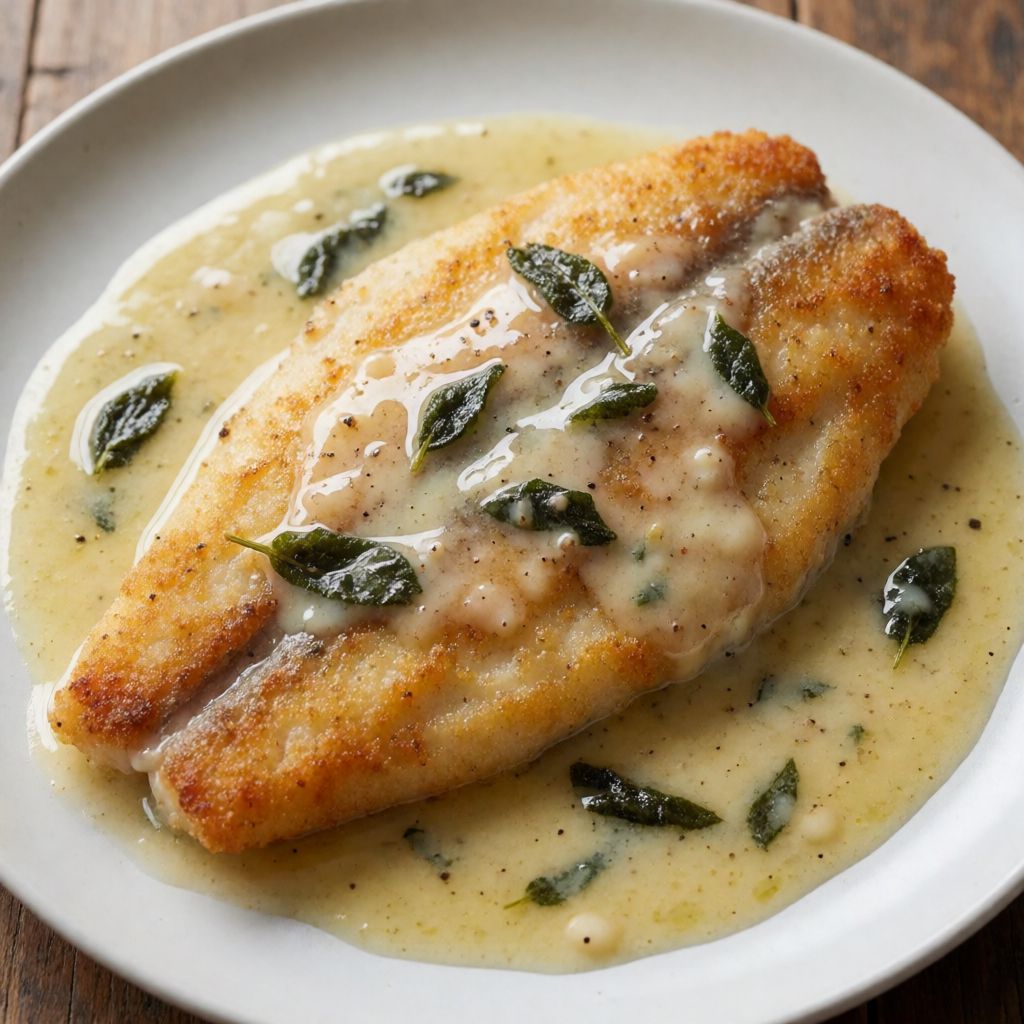
 AI photo
Dover Sole with Sage Butter
A simple pan-fried sole finished with brown butter and crisp sage leaves.
Labels are worked out automatically from the ingredients and can be wrong. Check the packaging if it matters to you.
Ingredients
- 4 pcs Dover sole about 200g each
- Plain flour to taste
- 10-12 pcs Sage leaves
- 150 g Butter melted
- Salt to taste
- Black pepper to taste, ground






Steps
Prepare the sole: using scissors, trim off the tail and dorsal fins, cut above the tail, pull off the skin, slit the belly, remove the innards, and rinse under water.
Coat the sole in flour on all sides and place on a plate.
Melt the butter in a frying pan and add the sage leaves.
Place the sole in the pan and fry, turning carefully, until the internal temperature reaches 63°C.
10 minRemove the sage leaves from the pan and set aside.
Place the sole on a plate, pour over the melted butter, and top with the sage leaves.
Season with salt and a pinch of ground black pepper.
Dover sole in butter and sage is the kind of dish that earned its name honestly — a flat fish from the Channel, sold in Dover's markets since the age of sail, cooked with nothing but flour, butter, and a handful of herb leaves. Whole, bone-in, sole has a flesh so fine it falls apart if you overcook it even slightly, so the whole dish is really an exercise in restraint: don't add, don't rush, don't cover.
What decides whether it works is the butter. Not whether you use "enough", but what temperature it's at when the fish goes in. Butter is mostly water and milk solids suspended in fat — push it too hot and the solids scorch brown and bitter before the fish is even warm through; too cool and the flour coating turns gluey instead of crisp. You want the butter foaming gently, the bubbles small and steady, not spitting and not silent. That's the window.
Flour on the skin side isn't decoration — it's a barrier. Wet fish flesh dropped straight into fat will fight the pan: it sticks, it tears, it weeps water that turns your butter into a shallow poach instead of a fry. A thin dusting of flour draws moisture out to its surface and browns into a crust that releases cleanly. Some say flouring fish is just an old habit, there to stretch an expensive ingredient with cheap starch — no, because without it you'd be peeling sole off the pan in strips.
Doneness here is not a clock, it's a feel through the spatula. The flesh goes from translucent and slack to opaque and just holds together along the backbone — press it gently and it gives like a ripe peach, not raw dough, not rubber. If you have a thermometer, 63°C at the thickest part behind the head is your target, but don't trust it blindly on a fish this thin — by the time the probe reads right, the tail end may already be past its best. Pull the pan off a shade before you think it's ready; carryover heat in a thin fillet finishes the job in the seconds it takes to plate.
On flouring: pat the fish properly dry with paper towel first — the napkin-and-plate setup most flats have instead of proper kitchen linen works fine. Wet skin plus flour makes paste, not crust. Shake off the excess too; a thick coat just turns gummy and tastes of raw flour, it doesn't make the fish "more coated" in any useful sense.
For the butter, go unsalted if you can, because salted butter has more milk solids and burns a touch faster — not a disaster, just one more variable to manage when you're already watching four fish turn gold at once. If you only have salted, fine, just go easier with the seasoning at the end. Any neutral fat with no personality of its own — a flavourless vegetable oil — will fry the fish perfectly well, but you lose the whole point: butter's milk solids are what brown and smell like butter. That's not optional here, it's the dish.
Sage is the right herb because its oil is strong enough to survive hot fat without vanishing — thyme would do something similar, parsley would just go green sludge and do nothing. If you've no fresh sage, leave it out rather than reach for dried; dried sage in melted butter tastes of dust, not herb.
A domestic hob rarely runs a single frying pan hot enough, evenly enough, to do four whole soles at once without the butter overheating in the gaps between fish. Do them two at a time if your pan is normal-sized, keep the first batch warm under foil, and wipe the pan between batches if the butter's gone past golden to brown-black — burnt milk solids will ruin the second batch's flavour even in fresh butter.
Patience is the actual ingredient that's missing from the written steps. Sole does not want to be turned more than once if you can manage it — each flip risks the thin flesh near the fins. Wait for the underside to release on its own, which it will when the crust has set; forcing it with a fish slice before then is how you end up with sole in pieces instead of sole on a plate. Four whole fish like this, with bread and something green, feeds four people properly — it's a dish for a weeknight that feels like more effort went in than actually did.
·