
 AI photo
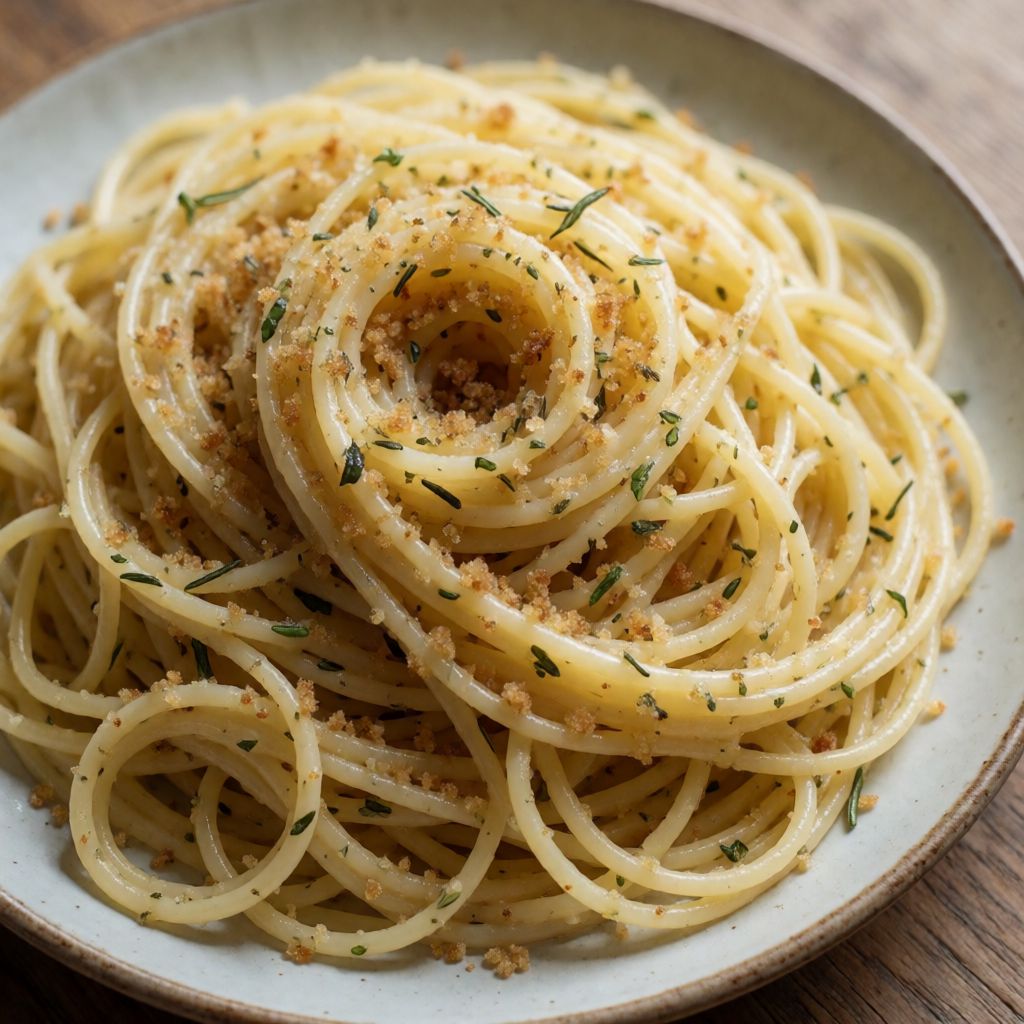
Spaghetti "agrappati"
Spaghetti tossed with garlic-infused oil, toasted breadcrumbs, cherry tomatoes and grana padano.
Labels are worked out automatically from the ingredients and can be wrong. Check the packaging if it matters to you.
Ingredients
- 400 g spaghetti
- 1 bunch rosemary
- 1 bunch basil
- 1 bunch thyme
- olive oil
- dried breadcrumbs
- 200 g tomato
- 3 clove garlic
- 1 tsp vinegar
- sugar
- salt
- black pepper
- grana padano grated













Steps
Infuse the olive oil with a mix of rosemary, basil and thyme.
120 minIn a pan, fry the garlic and breadcrumbs, remove the garlic, add the vinegar and sugar, and set the crumbs aside.
Cook the spaghetti in plenty of salted water.
In another pan, heat the infused oil and fry the chopped garlic.
Add the crushed piccadilly cherry tomatoes and cook over low heat.
10 minTransfer the spaghetti into the pan with the sauce, add the toasted breadcrumbs and grana padano.
Mix well, warm through over the heat for a couple of minutes, then serve.
What was changed
Grana padano is used here as grana padano, the closest hard cheese available for grating over the dish.
"Agrappati" means clung-together — the spaghetti and sauce fuse into one thing, not pasta sitting in a puddle of tomato. That's the whole point of this dish, and it decides everything: the sauce has to be thick enough to coat, not drown, and the breadcrumbs have to be dry and crisp enough to grab onto the strands instead of turning to paste.
The oil is the engine here. You steep rosemary, basil and thyme in it for a couple of hours — not to make a herb soup, but because flavour in fat is flavour that coats every strand of pasta evenly, instead of sitting in clumps the way chopped fresh herbs would if you threw them in at the end. Cold infusion, low and slow, no heat: heat would just cook the herbs into bitterness and burn off the aromatic oils you're trying to capture in the first place.
Some say breadcrumbs in pasta are a poor man's cheese. That's exactly right, and there's no shame in it — this is "pasta povera", peasant cooking from the south where grana was a luxury and stale bread was free. Toasting the crumbs in garlic oil with a touch of vinegar and sugar isn't decoration, it's technique: it dries them further, seasons them, and gives you that sweet-sharp edge that a plain fried crumb never has. Keep them separate from the sauce until the very end or they go soft and you've lost the texture that gives the dish its crunch against the silky noodle.
On a UK hob, "low heat" for the tomato means a sauce that blips rather than spits — if it's throwing tomato over the rim of the pan, it's too hot and you're reducing it to paste instead of letting it thicken gently. You want it glossy and just holding its shape on a spoon, not a jam. Ten minutes is the floor, not the target: watch for the oil separating slightly and sitting on top in small beads — that's your sign it's ready, not the clock.
Piccadilly tomatoes won't be on every shelf in the UK. The criterion is: ripe, low in water, sweet rather than acidic — any small, dense salad tomato works, or good tinned plum tomatoes drained and crushed by hand if it's winter and the fresh ones taste of nothing, which in Britain is often. A pinch of sugar in the pan is there to fix exactly that problem — it's not for sweetness, it's to correct tomatoes that never ripened properly on a cold windowsill.
The herb bunches are rosemary, basil, thyme — not a single dominant note but a background hum. If you're missing one, don't go hunting for a substitute leaf by leaf; the rule is woody herb plus soft herb plus something aromatic in between, so oregano can stand in for thyme, and a bit of sage can cover for rosemary at a pinch. What matters is infusing them in oil long enough, not which three you used.
Breadcrumbs: dried, not fresh — fresh crumbs have moisture in them and will turn gummy the second they hit hot oil instead of toasting. If you only have a sliced loaf gone stale, grate or blitz it and dry it in a low oven first; that's exactly what dried breadcrumbs are, just made at home instead of bought in a bag.
Grana padano is grana padano because it's a hard, aged, low-moisture cheese that grates fine and melts into the hot pasta without turning rubbery — parmesan does the same job and nobody in this kitchen will stop you swapping one for the other. The rule for the oil, if you want one for the base rather than just olive oil: any oil with no smell of its own, so the herbs you're infusing are the only flavour you taste, not the oil's own character fighting them.
The one habit worth breaking before you start: resist draining the spaghetti dry and tipping it in. Keep a little pasta water back and splash it in with the sauce — this is the thing that turns "pasta with sauce on it" into "agrappati", because that starchy water is what actually helps everything grip. Patience is the real ingredient in that final couple of minutes over the heat — don't rush it off the stove the second it looks ready; give it those extra minutes stirring so the clinging actually happens, rather than hoping it'll sort itself out on the plate. It won't.