
 AI photo
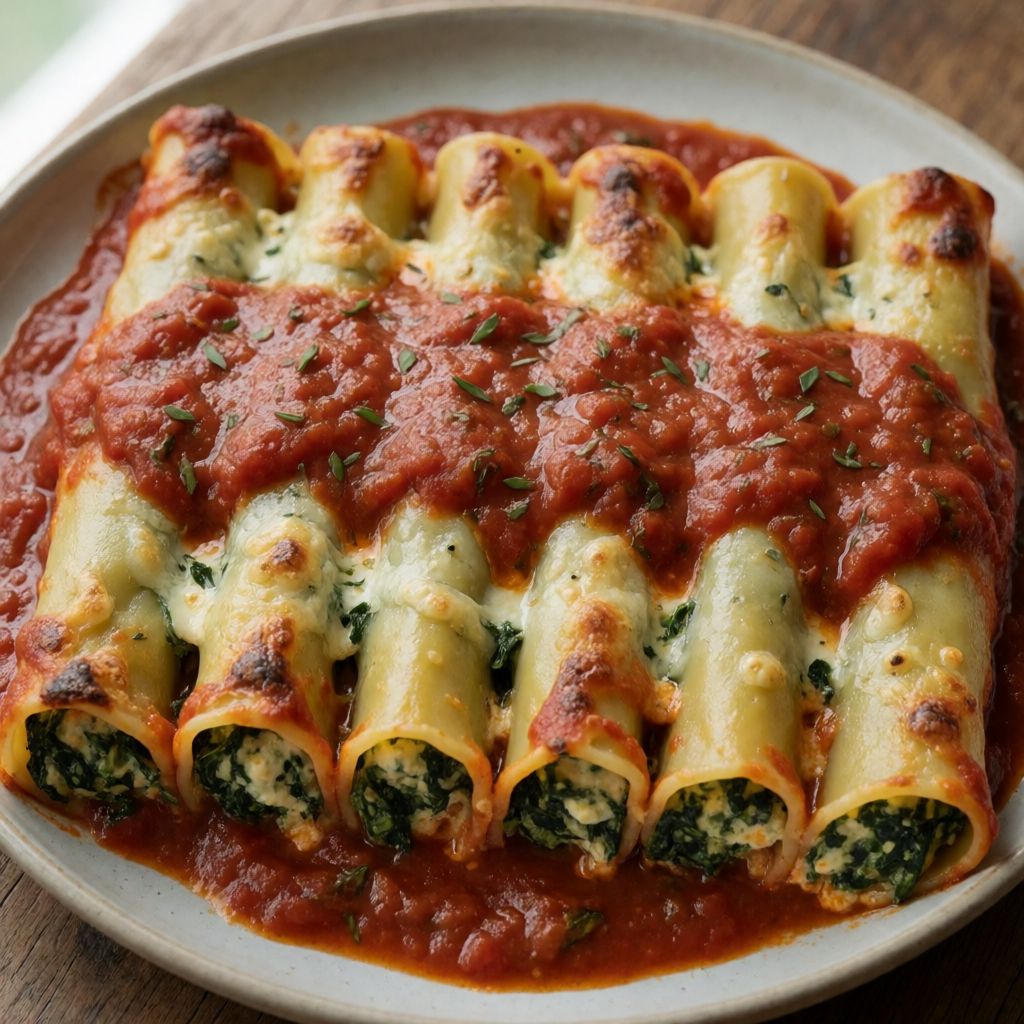
Spinach and Ricotta Cannelloni
A comforting pasta bake of spinach and ricotta cannelloni in a simple tomato sauce.
Labels are worked out automatically from the ingredients and can be wrong. Check the packaging if it matters to you.
Ingredients
- 2 pcs Onion finely chopped
- 2 clove Garlic finely chopped
- 400 g Canned chopped tomatoes chopped
- 3 pcs Thyme fresh sprigs
- 1 tbsp Apple cider vinegar
- 1 tsp Sugar
- 1 tbsp Olive oil for frying
- Salt
- Black pepper freshly ground
- 200 g Spinach fresh or frozen
- 3 tbsp Pine nuts roughly chopped
- 250 g Ricotta
- 2 pcs Eggs
- 1 pinch Nutmeg grated, to taste
- 1 package Lasagne sheets fresh
- 50 g Parmesan freshly grated
- 125 g Mozzarella fresh
- 1 tbsp Butter for the dish
- 1 bunch Basil fresh



















Steps
Fry the onion and garlic in a saucepan with olive oil until the onion is soft.
Add the chopped tomatoes and thyme, and simmer the sauce for 15-30 minutes while you prepare the rest of the dish.
Season the sauce with apple cider vinegar, sugar, salt and pepper to taste.
Heat a frying pan over medium heat with a little olive oil.
Lightly toast the pine nuts and add the spinach, stirring occasionally until the spinach wilts.
Mix the ricotta and eggs well with the spinach, season with salt, pepper and finely grated nutmeg.
Spread half of the tomato sauce in a greased ovenproof dish.
Fill the cannelloni tubes with the spinach and ricotta mixture and arrange them in a row on the tomato sauce.
If using fresh lasagne sheets, cut eight pieces about 10 x 10 cm.
Spread the filling over the pieces, roll them into tubes and place them in the dish on the sauce.
Spread the remaining tomato sauce on top, then scatter over the mozzarella and basil.
Bake in a preheated oven at 175°C for 20 minutes, until the pasta is tender.
Serve with grated Parmesan and finely chopped basil.
This isn't really cannelloni in the Italian sense — it's a flat-pasta trick dressed up as one. Proper cannelloni are tubes, extruded or shaped from thick semolina dough, made to hold their structure dry-stacked in a tray before sauce ever touches them. What you've got here is fresh lasagne sheets rolled around a filling, and that's not a compromise, it's the sane domestic version: fresh sheets are pliable, they won't crack when you roll them, and you don't need a piping bag or a tube mould sitting in a drawer for one dish a year.
What decides whether this works is moisture, in both directions. Too wet a filling and the sheet goes slack, tears, or the whole roll slumps into a puddle under the sauce. Too dry a sauce and the edges of the pasta — the bit not submerged — stay tough and chalky after baking, because pasta this thin isn't pre-cooked; it cooks in the oven, borrowing liquid and heat from what surrounds it. That's the whole mechanism: the tomato sauce isn't a topping, it's the cooking medium. Sauce under the rolls, sauce over the rolls — the pasta steams itself soft from both sides.
On the sauce: tinned tomatoes are correct, not a shortcut — ripe fresh tomatoes concentrated by simmering taste better in August than tinned ones do, but for most of the year tinned, picked and canned at peak ripeness, beat whatever's been shipped underripe and gassed to redness in a UK supermarket in February. Simmer it loose and a bit thin, not thick — it needs to be wet enough to steam the pasta from underneath. The vinegar and sugar aren't decoration either: tinned tomatoes vary in acidity batch to batch, and that small adjustment — a touch of sharp, a touch of sweet — is you correcting for what the can gives you, the way you'd adjust salt in gravy depending on the joint. Taste as you go; there's no fixed amount that works for every tin.
Spinach: frozen is genuinely fine here, arguably better-behaved, because fresh spinach collapses to almost nothing and releases a surprising amount of water as it wilts — squeeze frozen spinach dry after defrosting and you control that water before it ever meets the ricotta, rather than fighting it in the pan. If you use fresh, wilt it properly, tip it into a sieve, and press it with the back of a spoon; skip this and the filling will be loose no matter how much egg you add.
Ricotta is the right texture — mild, slightly grainy, holds its shape when baked rather than melting. If you can't get it, a well-drained cottage cheese blitzed briefly, or curd cheese, does the same structural job: something milky and mild that isn't going to turn to liquid in the oven the way a soft cream cheese would.
Pine nuts bring crunch and a faint resin-sweet note against the wilted spinach — toast them loose in the dry pan first, watching, not timing: they go from pale to brown in the time it takes to look away and check your phone. If pine nuts are expensive or you haven't got any, a roughly chopped toasted almond or walnut gives you the same contrast, just a different flavour, not a lesser one.
Fresh lasagne sheets over dried ones: dried sheets need to absorb a lot more liquid to soften, which means either pre-boiling them (fiddly, they tear, you're wrestling wet pasta with tongs over a dish) or relying on extra sauce liquid that a shallow UK oven dish and 20 minutes at 175°C may not reliably deliver through the full thickness. Fresh sheets are already supple and need far less convincing. If you truly only have dried lasagne, boil them just until pliable, not cooked through — you're softening them enough to roll, the oven finishes the job.
Mozzarella on top rather than mixed through: you want a layer that browns and blisters, which only happens at the surface where heat and air meet it directly — buried mozzarella just stays stretchy and pale. Fresh mozzarella in its watery ball releases a bit of liquid as it melts, which is useful, not wasteful — it thins the sauce surface and stops it catching before the top browns.
This makes a proper middle-of-the-table main for four, not a side — rich enough that a green salad alongside is doing real work cutting through it, the way you'd want something sharp next to a Sunday roast's gravy rather than more richness piled on richness. And give the sauce its own quarter hour unhurried on the hob before you touch the filling — rushed tomato sauce tastes like tinned tomatoes; patient tomato sauce tastes like sauce.