
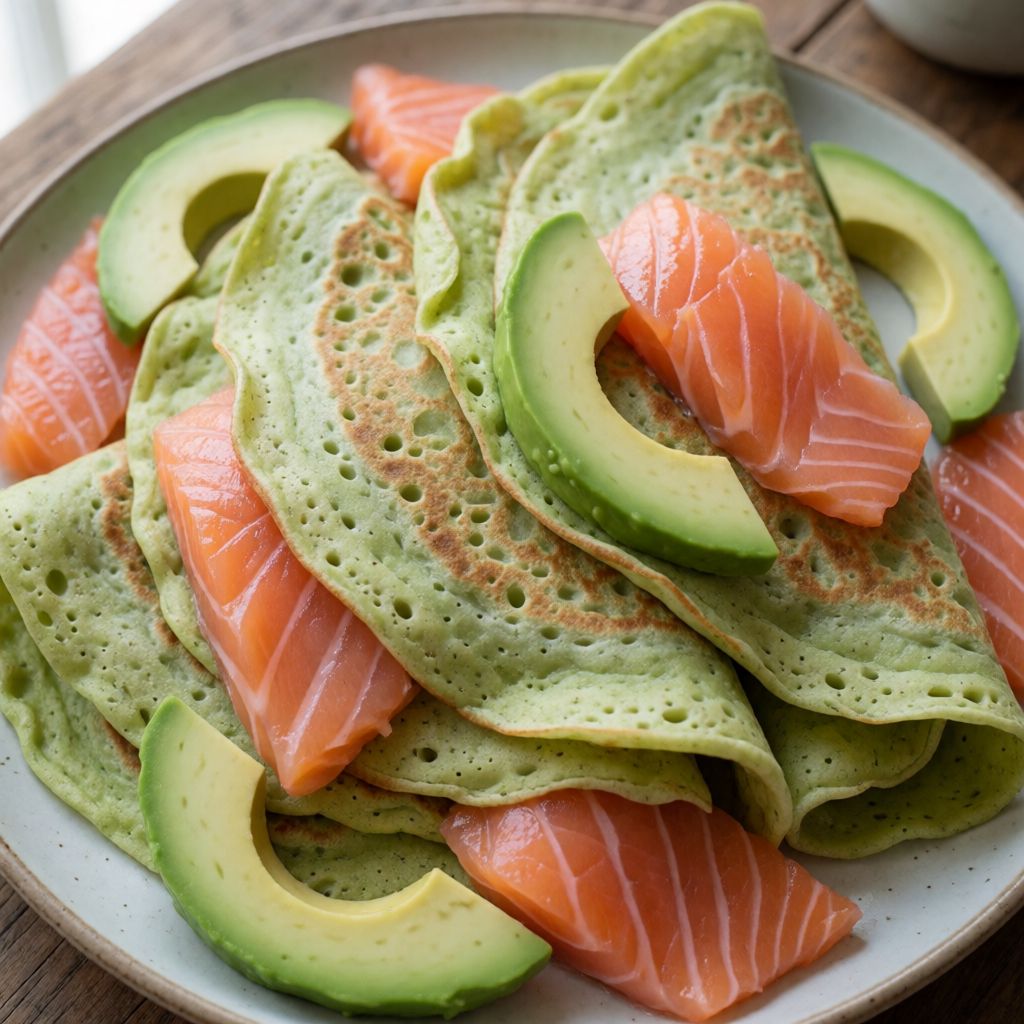
 AI photo
Pancakes with Spinach, Salmon and Avocado
Spinach batter pancakes topped with avocado-cottage cheese dressing, rocket, cucumber, red onion, hot-smoked salmon and hemp seeds.
Labels are worked out automatically from the ingredients and can be wrong. Check the packaging if it matters to you.
Ingredients
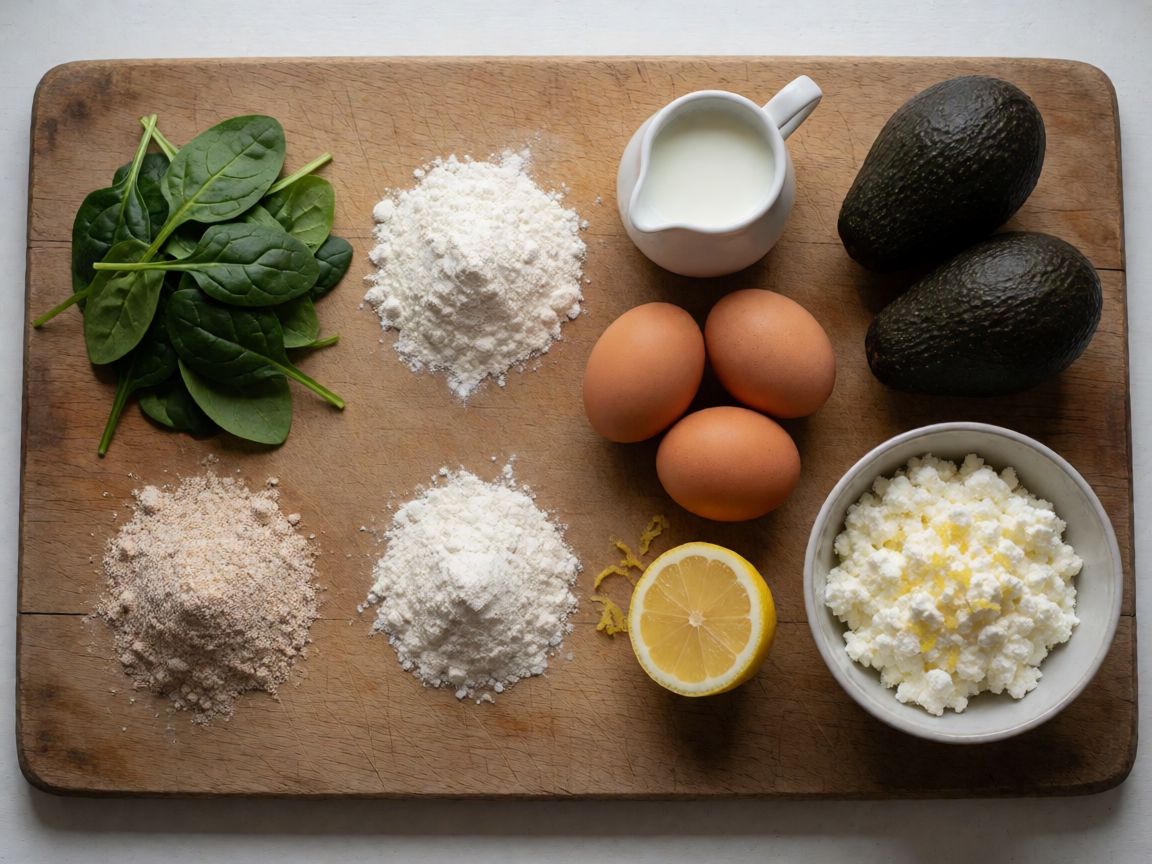
- 125 g Spinach
- 100 g Plain flour
- 50 g Wholemeal flour
- 3 pcs Eggs
- 300 ml Milk
- Black pepper freshly ground
- 1 tbsp Olive oil
- 2 pcs Avocado
- 100 g Cottage cheese
- 1 pcs Lemon finely grated zest and juice, half a lemon
- Salt
- Black pepper freshly ground
- 80 g Rocket
- 100 g Cottage cheese
- 1 pcs Cucumber half, sliced
- 1 pcs Red onion cut into thin wedges
- 200 g Hot-smoked salmon
- 25 g Hemp seeds












Steps
Wash the spinach thoroughly and put it in a blender with the rest of the pancake ingredients.
Blend everything until you have a smooth, runny batter.
Spread a little oil in a frying pan and cook the pancakes for a few minutes on each side.
10 minFor the avocado and cottage cheese dressing: put the avocado, cottage cheese, lemon juice and zest in a small chopper and blend until creamy. Season with salt and pepper and blend again until smooth.
Serve each pancake with rocket, the avocado dressing, cottage cheese, cucumber slices, red onion, hot-smoked salmon and a sprinkle of hemp seeds.
Call it a pancake if you like, but it's closer to a savoury crêpe doing the job a tortilla does in other cuisines — a flexible wrapper that happens to be green. The spinach isn't there for virtue or colour alone; raw leaves blitzed straight into the batter break down into liquid, so you're not adding a solid ingredient, you're adding water with chlorophyll and a faint iron tang. That's why the batter must stay "runny" — the recipe actually tells you what good looks like, not a number: if it's thick enough to sit on a spoon, you've got wilted spinach lumps in your pancake, not a crêpe.
What decides whether this works is heat control on an ordinary hob, where "a frying pan" with no guidance is an invitation to burn the first one and undercook the fourth. You want the pan hot enough that batter poured in sizzles faintly and sets at the edges within seconds — any slower and the thin layer turns rubbery before it browns, because egg-and-milk batters need a quick set, not a slow cook. Flip when the surface loses its wet sheen and the edges lift on their own without a spatula fighting for purchase — that's the pancake telling you it's released from the pan, not a clock.
Flour is doing two jobs, not one, and that's why it's split. Plain flour gives you the fine, pliable structure that lets a pancake fold without cracking — all gluten, all elasticity. Wholemeal adds bran, which is sharp-edged under a microscope and tears the gluten strands slightly as they form, which is exactly why wholemeal-only batters turn crumbly and tear when you flip them. The 2:1 ratio here is a compromise, not a dogma — go all plain and you lose the nutty background flavour and a bit of fibre; go all wholemeal and you'll be patching torn pancakes with a spatula.
Eggs and milk aren't just "liquid" — eggs are the only thing in this batter that sets with heat into a solid structure. Without them you'd have a spinach soup that never firms into a flippable disc. Milk's job is thinning and enriching the fat content so the pancake browns rather than just dries out; water would do the thinning but leave you with a paler, more cardboard texture. If you're dairy-avoidant, any unsweetened plant milk with a similar fat percentage to whole milk will set the batter the same way — oat milk works better than something thin like rice milk, which behaves more like water.
Spinach: use fresh, not frozen-and-thawed. Frozen spinach has already ruptured its cells and dumped a lot of its water out during freezing and thawing, so you'll end up adjusting the liquid anyway and the colour goes duller. If you truly only have frozen, squeeze it hard first and cut back the milk a touch — you're compensating for water that's already left the leaf.
Olive oil here is for the pan, not the batter, and "a little" is the correct amount, not vagueness for its own sake — too much and the batter won't grip the pan surface to spread thin, it'll bead and pool, giving you a thick patch in the middle and a thin lace round the edge. Any neutral oil with a high smoke point works the same way; you don't need extra virgin's flavour here, you're cooking it off anyway.
Cottage cheese does double duty: once blended into the avocado dressing where it adds body and a mild tang, and again on the plate in its curd form, where the point is textural contrast — soft curds against the crisp cucumber and rocket's bitter chew. Don't swap the plated cottage cheese for a smooth cheese like ricotta without noticing you've lost that bite; ricotta will slump into the dressing visually and the plate loses its texture map.
Avocado ripeness is the one variable the recipe doesn't mention but should: you want one that yields to gentle thumb pressure near the stem without feeling mushy. Underripe and the dressing turns grassy and refuses to blend smooth; overripe and it turns the dressing brown-tinged and slightly bitter from oxidised oils.
Hot-smoked salmon, cucumber, red onion, rocket, hemp seeds — these are the cold architecture of the dish, and none of them get cooked for a reason: contrast is the whole point. Red onion cut into thin wedges rather than rings keeps its crunch and lets the sharp sulphurous bite punch through the richness of avocado and salmon without dominating a whole bite. If raw red onion is too much for you, a ten-minute soak in the lemon juice you're already using for the dressing softens that bite — lemon's acid breaks down some of the sulfur compounds, which is the same reason pickled onions exist in every cuisine that's ever paired onion with fatty fish.
This feeds four as a light lunch, not a Sunday roast's worth of appetite — treat it as the kind of thing you make when you want something that looks like effort but took fifteen minutes of actual work. Patience here isn't about long cooking, it's about not rushing the pan between pancakes: a pan that's too hot from the last batch scorches the next one's edges before the middle sets, so give it a breath, lower the heat a touch if it's smoking, and the fourth pancake will look as good as the first.