
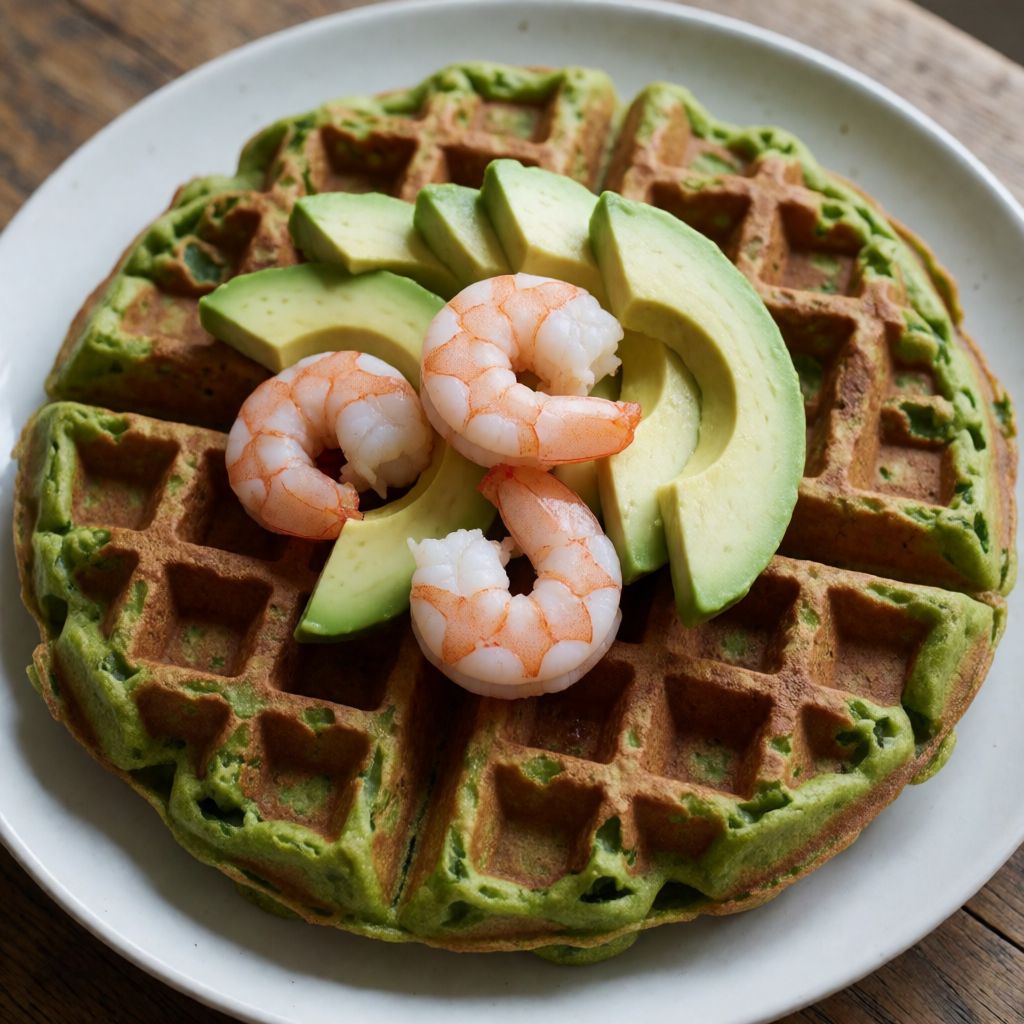
 AI photo
Spinach Waffles with Prawns and Avocado
Savoury spinach waffles topped with a herby dressing, buttered asparagus, avocado and prawns.
Labels are worked out automatically from the ingredients and can be wrong. Check the packaging if it matters to you.
Ingredients
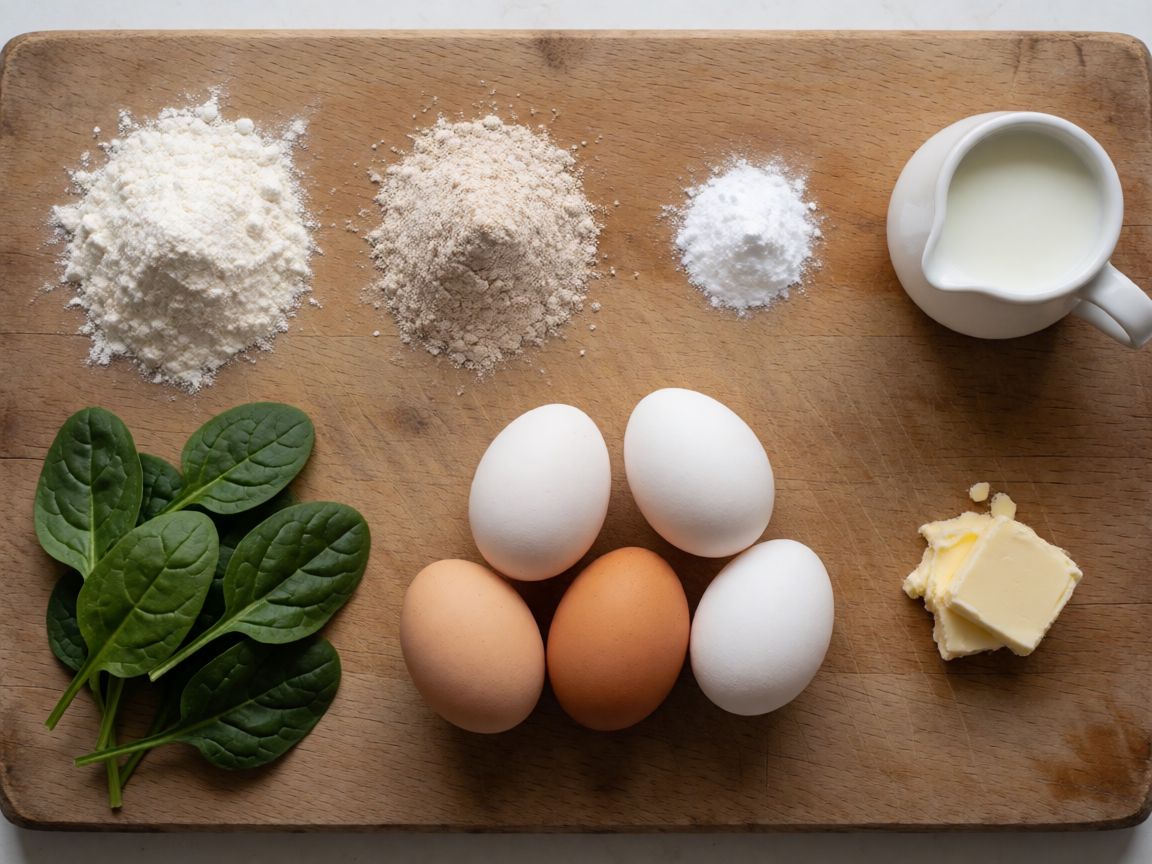
- 150 g Plain flour
- 75 g Wholemeal flour
- ½ tsp Baking powder
- 125 g Spinach fresh or frozen
- 4 pcs Eggs
- 250 ml Milk
- 1 tbsp Butter
- Salt
- Black pepper freshly ground









Herb dressing
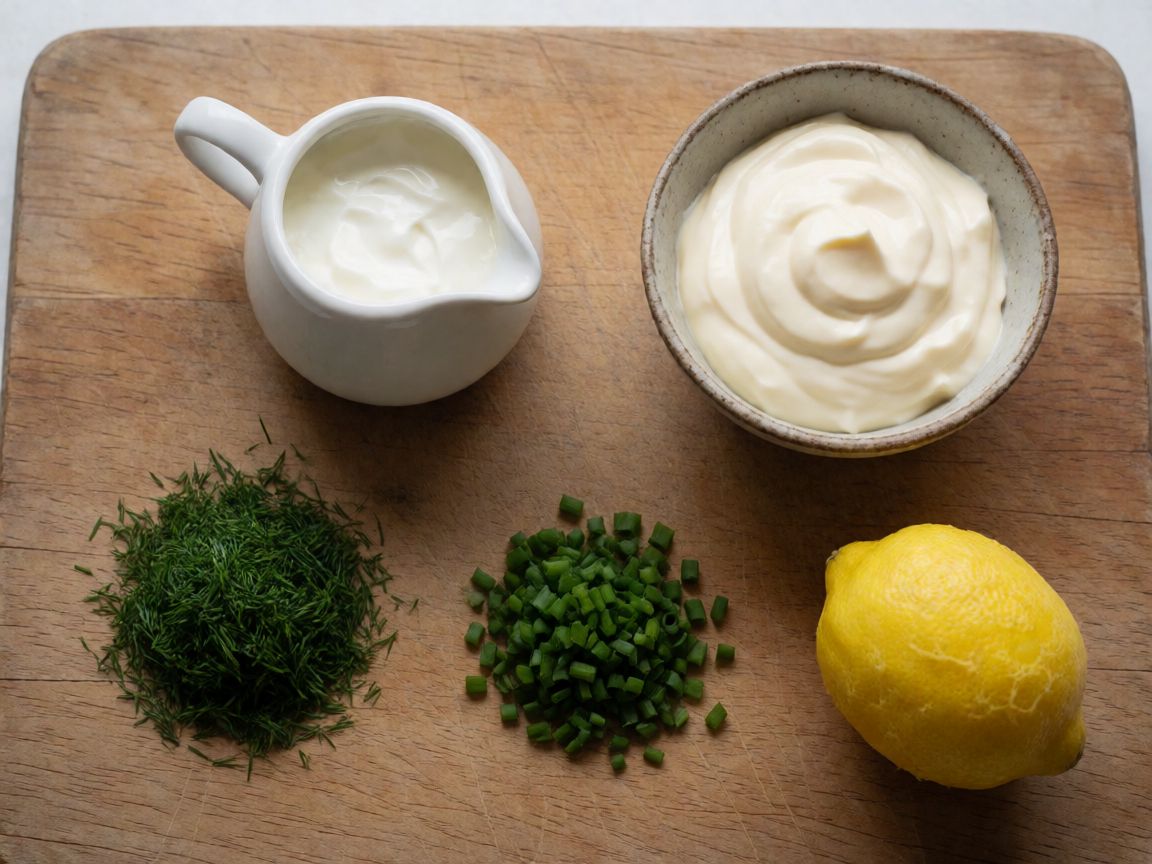
- 150 ml Crème fraîche 38%
- 2 tbsp Mayonnaise
- 100 ml Dill fresh, finely chopped
- 100 ml Chives finely chopped
- 1 pcs Lemon organic, finely grated zest and a little juice
- Salt
- Black pepper freshly ground





To serve
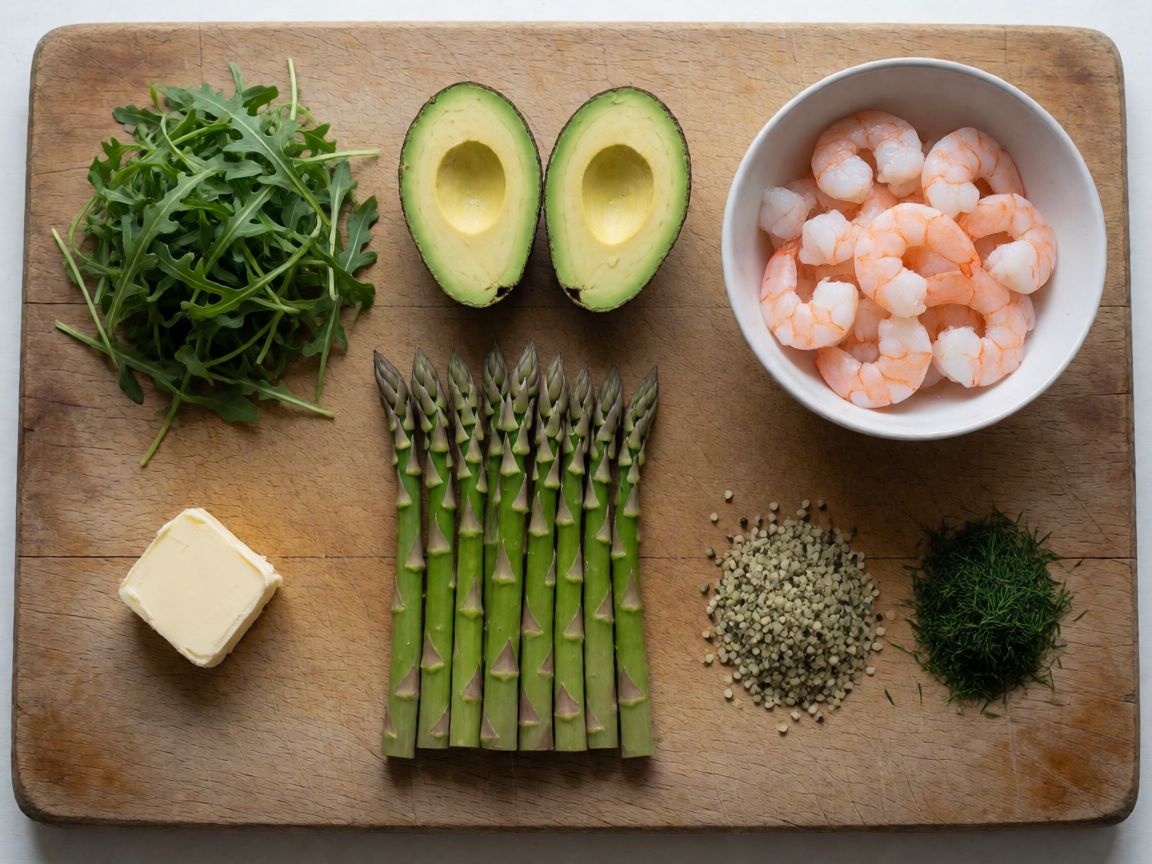
- 80 g Rocket
- 2 pcs Avocado sliced
- 8 pcs Asparagus
- 1 tbsp Butter
- 200 g Prawns drained
- 25 g Hemp seeds
- 1 bunch Dill fresh





Steps
Herb dressing: mix the crème fraîche and mayonnaise with the dill and chives to a smooth, creamy dressing.
Season well with salt, freshly ground black pepper and a little finely grated lemon zest.
Spinach waffles: mix the plain flour, wholemeal flour and baking powder in a bowl.
Rinse the spinach thoroughly, add the spinach and the remaining waffle ingredients to a blender and blitz to a smooth, runny batter.
Let the batter rest for 15 minutes so the flour can absorb some moisture and thicken slightly.
15 minGrease the waffle iron with a little oil or butter and bake the waffles until golden and cooked through.
To serve: snap off the woody end of the asparagus.
Melt the butter in a hot pan, let it foam, then fry the asparagus quickly for 1 minute at most.
1 minTop the waffles with rocket, the butter-fried asparagus, avocado, prawns, hemp seeds and the herb dressing.
This is a savoury waffle doing a job batter usually doesn't: carrying enough iron in a flat bread to hold prawns, avocado and a cold herb dressing without going soggy underneath. It's really a salad on a crisp base — think of it as an open sandwich that's been given a grid so the dressing has somewhere to sit instead of sliding off.
What decides whether it works is the batter's hydration, not the waffle iron's wattage. Spinach, four eggs and 250 ml milk against 225 g of flour is a wet, pourable mix — closer to a thick crêpe batter than to scone dough. That's deliberate: a stiff waffle batter gives you a dry, cakey disc that fights the toppings; a loose one gives you something with a crisp shell and a bit of give inside, which is what holds up under crème fraîche without turning to paste. The 15-minute rest isn't idle time — it's the flour actually drinking in the liquid, so the batter thickens on its own and you don't need to add more flour and dry the whole thing out.
The spinach isn't flavour decoration, it's structure and colour both. Raw spinach blitzed into egg and milk breaks down to a loose green purée that adds moisture rather than taking it away, and because it's going through a blender with everything else, you don't need to wring it out like you would for a quiche filling — the batter wants that extra liquid.
The two flours are a texture decision, not a health one. Plain flour alone gives you a smoother, slightly more elastic waffle; wholemeal brings grain and a faint nuttiness and makes the crumb a bit more open, so it grips the toppings instead of being a slippery base for them to slide off. If you've only got plain flour in the cupboard, use all plain — you'll lose a bit of bite but nothing collapses. Don't go the other way and use all wholemeal; it absorbs more liquid and you'll end up with a batter too thick to pour evenly into the iron, and a waffle that's dense rather than crisp-edged.
Baking powder here is working against a dense, flat waffle — spinach and milk add weight, and without a raising agent the waffle iron would just compress that into something closer to a thick green pancake. Half a teaspoon is a light hand on purpose: this isn't meant to puff up like a Belgian waffle, it's meant to stay flat enough to hold toppings without them rolling off a dome.
Butter in the batter is there for the fat any good waffle needs to crisp at the edges rather than just steam — a neutral oil would do the same job with less flavour, so if you're out of butter, use any oil that doesn't smell of itself: sunflower, a light vegetable oil, something that won't compete with the spinach and dill. Don't reach for strong olive oil here; it'll fight the herb dressing later.
The dressing is crème fraîche cut with mayonnaise, and that combination is an emulsion stability trick as much as a flavour one — crème fraîche alone can split a little under acid from the lemon juice and zest, mayonnaise (already a stable emulsion of egg and oil) buffers that and keeps the whole thing creamy rather than curdled. If 38% crème fraîche isn't on your shelf, soured cream or a thick natural yoghurt gets you close, just expect it slightly sharper and thinner — add the mayonnaise a touch heavier to compensate. Lemon zest rather than just juice is the point: zest gives aroma without the acidity, so season with zest first, and treat juice as a top-up, a few drops to brighten, not a measured ingredient.
The asparagus gets a hot pan and a foaming butter for one specific reason: you want it cooked through the thin end before the thick base turns leathery, and that's a matter of seconds, not minutes, on a domestic hob where a frying pan holds heat less evenly than a professional burner — so watch it, don't time it. Snapping off the woody end before cooking isn't tradition for its own sake; asparagus naturally breaks where the fibrous part starts, which saves you guessing with a knife and leaves you with spears that are tender end to end. If asparagus is out of season or pricey, thin green beans or even strips of courgette flashed in the same hot butter will do the same job of a quick-cooked green vegetable with bite.
Prawns here are "drained," meaning already cooked — so there's no cooking mechanism to explain, just assembly. That's worth saying plainly: this dish has one hot element (the asparagus), one warm element (the waffle, fresh off the iron), and everything else — dressing, avocado, rocket, prawns — is cold or room temperature, piled on quickly before the waffle loses its crispness to the moisture sitting on top of it. That's the real timing skill of the dish: not minutes in a pan, but how fast you can dress a hot waffle before it stops being one.
For four people this is a light lunch rather than a Sunday roast replacement — one waffle and a modest pile of toppings each, not a meal to serve on an empty stomach. Patience earns you the better part here: let the batter sit its fifteen minutes, don't rush the waffle iron by cranking the heat to force colour, and don't dress the waffles until the moment you're putting plates on the table.