
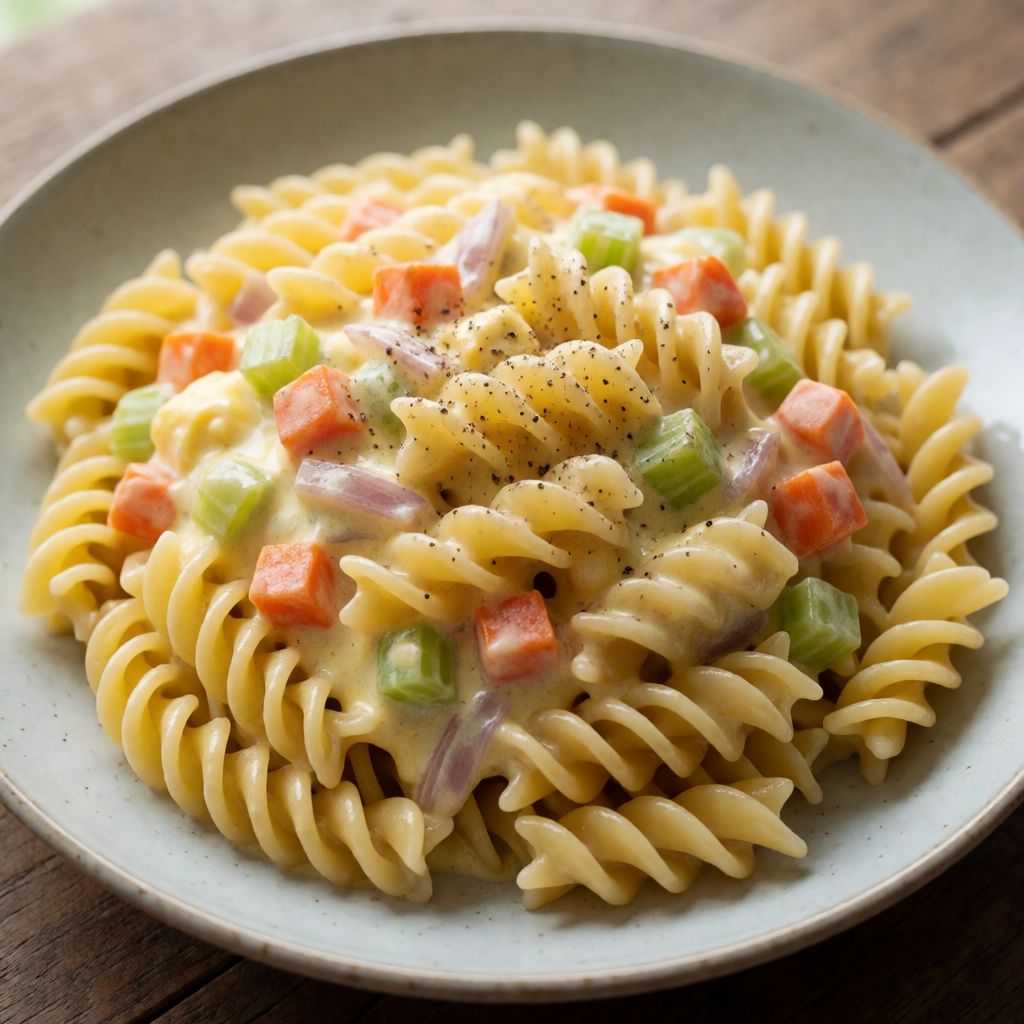
 AI photo
Spring Pasta Carbonara
A light spring take on carbonara, tossed with sautéed vegetables and sweet peas.
Labels are worked out automatically from the ingredients and can be wrong. Check the packaging if it matters to you.
Ingredients
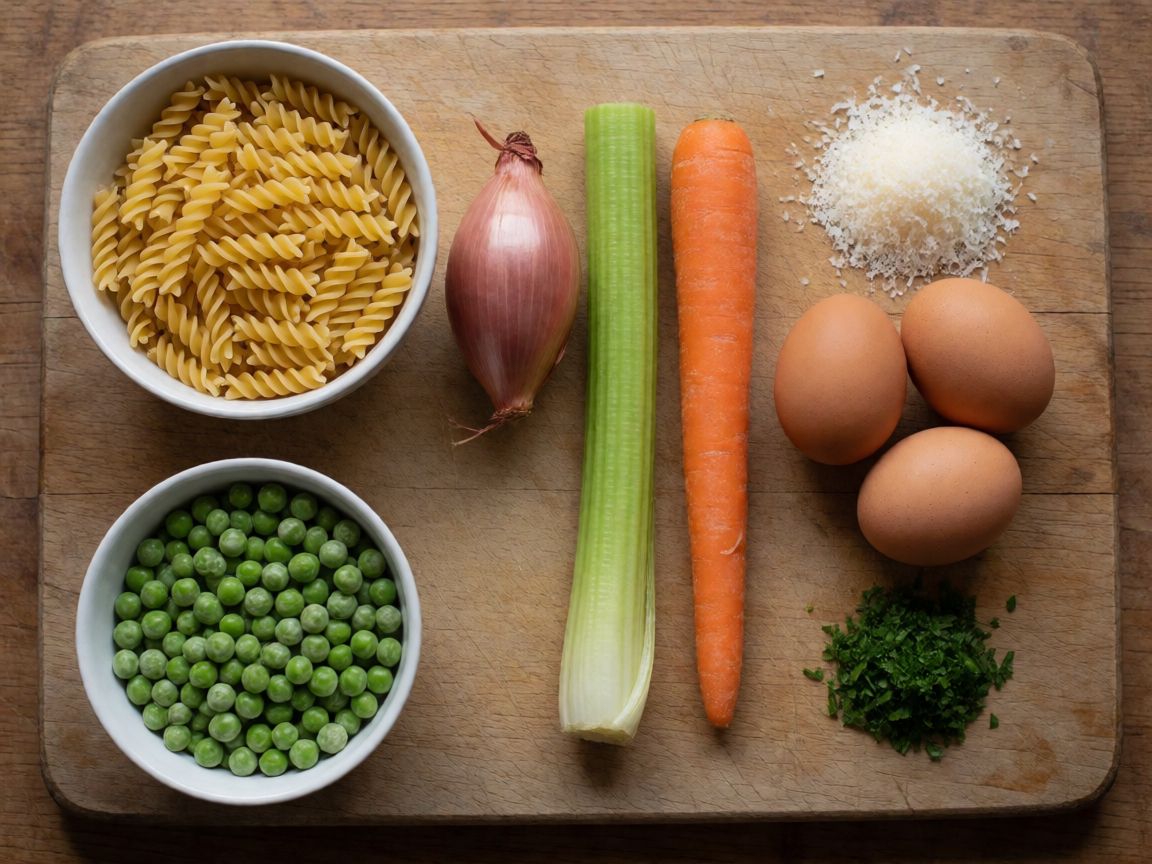
- 400 g Fusilli
- Olive oil to taste
- 1 pcs Shallot
- 1 pcs Celery stick
- 1 pcs Carrot
- 3 pcs Eggs
- 2 tbsp Pecorino Romano
- 150 g Peas
- Salt to taste
- Black pepper to taste
- Parsley to taste



Steps
In a pan, sauté the chopped vegetables in olive oil, add the peas and cook through for a few minutes.
Meanwhile, boil the fusilli until cooked.
In a bowl, beat the eggs with the pecorino, black pepper and parsley.
Drain the pasta and tip it into the pan with the egg mixture, stirring well so the egg warms through and thickens slightly.
Toss with an extra pinch of pecorino and serve immediately.
Let's call this what it is: a carbonara that's let spring vegetables walk into the frame where guanciale used to stand. Fusilli instead of spaghetti, a soffritto of shallot, celery and carrot, peas for sweetness and colour. The egg-and-pecorino sauce is still the whole point. Everything else is décor.
What decides whether this works is heat control at one single moment: when the drained pasta meets the beaten egg. Too hot, and the egg scrambles — you get pasta in a yellow gravel of curds, not a sauce. Too cool, and the egg stays raw and runny, clinging to nothing. The trick is the same one that makes real carbonara work: the pasta itself is the heat source, not the hob. Take the pan off any direct flame before the egg goes in, and let the residual warmth of the pasta — plus a short, steady stir — do the cooking. Gentle, insistent movement, not fire.
Some say you need the pan bone dry and cold for this reason, scraped free of every trace of oil from the vegetables. No — the vegetables and their oil are fine, even good, because fat slows down how fast the egg can seize. What actually causes scrambled carbonara is reheating the pan after draining, or dumping the egg straight into pasta that's still spitting hot off a rolling boil. Pull the pan properly off the heat first. That's the real rule, not pan hygiene.
Start with the fusilli, not because it's prettier than spaghetti, but because its grooves and curls catch a loose egg sauce the way a flat strand can't — spaghetti carbonara relies on being twirled, fusilli just holds. Any short, ridged shape does the same job: penne, rigatoni, even a cheap own-brand pasta from a UK supermarket, since shape matters here more than pedigree. Salt the boiling water properly — it's the only seasoning the pasta itself will ever get, and under-salted water is the quiet, common reason a "bland carbonara" gets blamed on the eggs.
The shallot, celery and carrot are a miniature soffritto, the backbone of half of Italian home cooking, built on an old kitchen economy: whatever root vegetables were cheap and kept well through winter, finely diced and sweated in fat until they stop being separate ingredients and become a base flavour. Chop them small — matchstick-thin or a fine dice — because size here isn't aesthetic, it's about cooking speed: smaller pieces soften before the peas overcook and turn khaki and mealy. If you don't have celery, don't panic and don't skip the crunch-cutting lesson — leek does something similar, bringing sweetness without celery's bitterness.
Olive oil "to taste" means: any oil with no smell of its own strong enough to fight the pecorino and egg. Olive oil works, a neutral vegetable or sunflower oil works too if that's what's in the cupboard — the fat here is a cooking medium for the vegetables, not a flavour statement like it would be finishing a salad. Save any good, peppery extra virgin for drizzling at the table if you want a flourish, not for frying the shallot.
Eggs and pecorino are the engine. Three whole eggs for four people is a ratio worth trusting rather than guessing at — too few and the sauce won't coat four portions of pasta, too many and it turns heavy, more omelette than sauce. Pecorino Romano is sharp and salty by design, made from sheep's milk with an edge that parmesan, made from cow's milk, simply doesn't have — if pecorino isn't to hand, parmesan will do, but taste as you season because it's milder and you'll likely want more of it, or a touch more salt. Beat the eggs and cheese together before they ever meet heat, with the pepper and parsley already in, so the sauce is one unified thing dropping onto hot pasta, not three separate additions fighting for attention in the pan.
Peas carry the "spring" in the name — in Britain, where fresh peas are a brief early-summer event and frozen peas are a year-round staple, frozen is not a compromise here, it's practically the default, and nobody serious minds. Pat them dry if you're worried about extra water loosening the sauce too far, but a small amount of moisture from the peas isn't your enemy; a cold, under-heated pasta right before the egg goes in is.
Patience here isn't about long cooking — this whole dish is finished in well under half an hour — it's about patience at the handoff. Resist the urge to crank the heat back on "just to be sure" once the egg's in. Trust the warmth already stored in the pasta and the pan, stir steadily, and watch the sauce go from watery-loose to coating-the-back-of-a-spoon thick. That visual change, not a clock, tells you it's ready. Get there, and you've made a sauce; miss it by thirty seconds of panic and extra flame, and you've made scrambled eggs with carbs.