
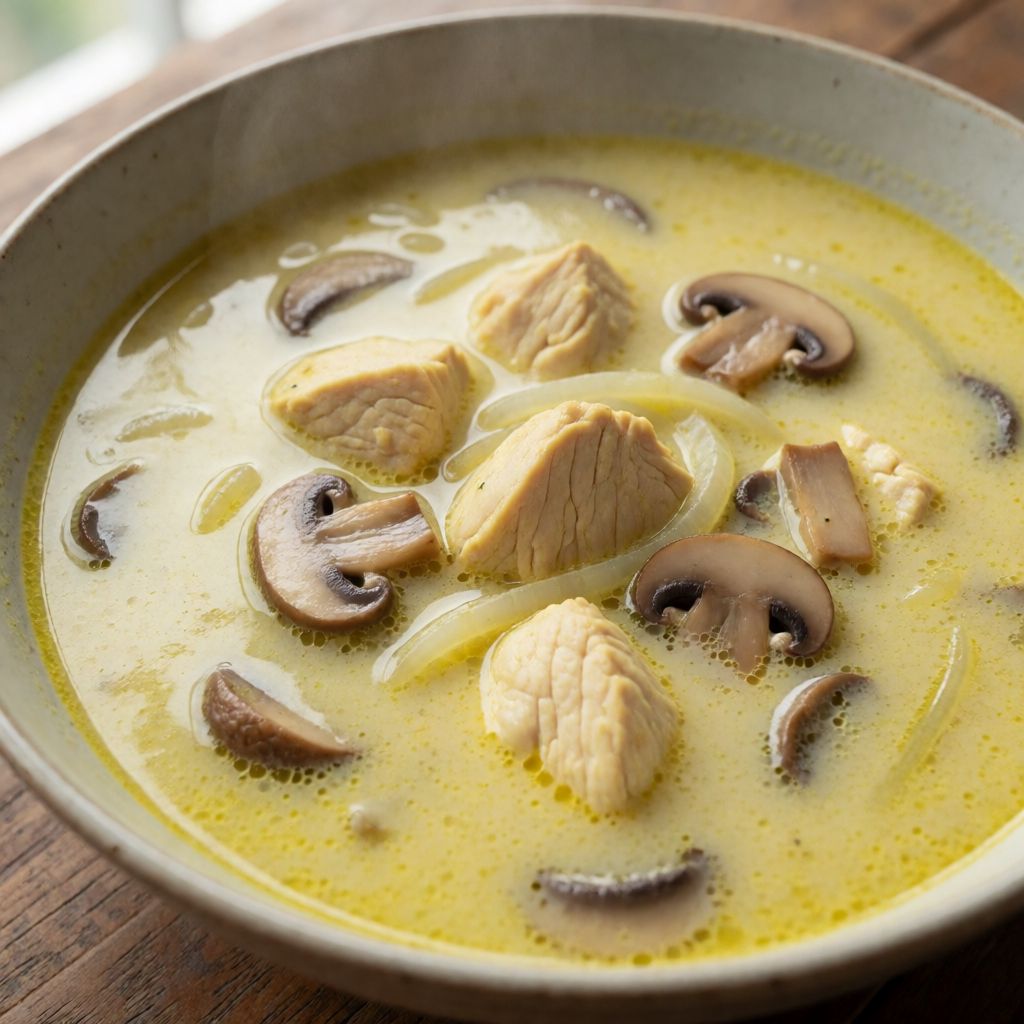
 AI photo
Thai Chicken and Coconut Milk Soup
A fragrant Thai-style soup with chicken, coconut milk and warming spices.
Labels are worked out automatically from the ingredients and can be wrong. Check the packaging if it matters to you.
Ingredients
- 2 pcs Chicken breast
- 5 pcs Mushrooms quartered
- 1 pcs Onion cut into wedges
- 2 clove Garlic finely chopped
- 2 tsp Ginger finely grated
- 1 tsp Turmeric
- 1 pcs Galangal peeled and thinly sliced
- 3 pcs Kaffir lime leaves stem removed, finely shredded
- 1 pcs Red chilli finely chopped, to taste
- 1 l Stock
- 2 pcs Lemongrass bruised and finely sliced
- 400 ml Coconut milk
- 1 tbsp Fish sauce
- 1 tsp Sugar
- 10 pcs Tomato quartered
- ½ pcs Bell pepper cut into strips
- 1 pcs Lime juiced
- 1 bunch Fresh coriander
- ½ pcs Red chilli sliced into rings, for serving
- 125 g Noodles
- 1 tbsp Coconut oil or sesame oil, for frying















Steps
Cut the chicken breast into pieces and quickly fry in a pan with coconut oil.
Set the chicken aside on a plate while you cook the vegetables.
Put the mushrooms in the pan and fry over high heat, then add the onion, garlic, ginger, turmeric, galangal and kaffir lime leaves.
Add the finely chopped red chilli to taste.
Add the stock.
Lower the heat and return the chicken to the pan.
Add the lemongrass together with the coconut milk and fish sauce.
Let it simmer for 10-12 minutes.
5 minutes before serving, add the tomatoes and bell pepper, and season to taste with lime juice, fish sauce and sugar.
Serve the soup in bowls or deep plates, garnished with fresh coriander and rings of fresh chilli.
This is tom kha gai with the serial numbers filed off — a soup built in layers, each one laid on top of the last rather than dumped in together. That's the whole mechanism: aromatics bloomed in fat first, liquid added second, delicate things added last. Get the order wrong and you get a soup that tastes of one thing — usually coconut, because it shouts loudest — instead of a soup that tastes of six things at once.
What decides whether this works is restraint at two points. First: the chicken comes out of the pan after a quick, hard fry and stays out until the broth exists. Some say you can just simmer raw chicken in the soup from the start — no, because chicken given 20 minutes in liquid turns to wet cotton, and chicken given a hot sear first and a gentle second cooking in broth stays as something you can bite into. Second: the tomatoes and pepper go in five minutes before the bowl, not thirty. Boil a tomato for half an hour and you get orange rag floating in soup, not a tomato.
The feed is for four, and it wants a wide pan, not a pot — you want surface area so the mushrooms actually fry instead of steam in their own juice. Patience here isn't about watching a clock; it's about waiting for the onion to turn translucent at the edges before you add the liquid, because that's the point its raw bite has gone and its sweetness hasn't yet. Rush that and the soup carries a faint onion-pencil-shaving taste underneath everything else, which no amount of lime juice at the end will fix.
Galangal and ginger look like the same rhizome to anyone who hasn't cooked with both, and that's where the trouble starts. Ginger is hot and sweet-sharp; galangal is piney, almost medicinal, and barely softens no matter how long it cooks — which is exactly why you slice it thin and fish the pieces out at the table rather than eat them. If your shop doesn't stock it (most UK supermarkets don't, but a Chinese or Thai grocer will), don't swap in more ginger and call it close enough — the soup will just taste like ginger chicken soup, pleasant but not this. A reasonable stand-in, if you're stuck, is a thin sliver of fresh turmeric root plus a strip of lime zest, which gets you nearer the citrus-pine note than ginger ever will.
Kaffir lime leaves are doing a job nothing else really does — they carry a top note of citrus that lime juice alone can't give you, because juice is sour and leaf is perfume, and a soup needs both. Dried leaves work if fresh aren't to hand, just use more of them and expect less shredding, more whole-leaf-fished-out-at-the-end. No leaves at all, no shame in it: extra lime zest stirred in at the finish gets you partway there.
Lemongrass bruised and sliced thin is there to leak oil, not fibre — you're not meant to chew it, which is why it's sliced fine enough to half-dissolve into the broth rather than left in batons. Bruise it with the flat of a knife or a rolling pin before slicing; this cracks the stalk open along its grain so the aromatic oil actually gets into the stock instead of staying locked inside a tube of grass you throw away later.
Coconut milk is the body of the soup, not a seasoning — use the tinned, full-fat kind, and don't shake the tin before opening if you want the option of skimming the thick cream off the top to fry the aromatics in, which is the traditional starting fat in the dish this is based on. Here you're using coconut or sesame oil for that first fry instead, which is honest about kitchen reality: most people don't keep a tin of coconut milk around for cooking fat, they keep it for the soup. Either oil works because neither smells of itself over heat the way, say, olive oil does — that's the actual criterion for "frying oil" in this dish: neutral, high smoke point, gets out of the way of the aromatics instead of arguing with them.
Fish sauce and sugar aren't two separate seasonings, they're one lever with two ends — salt and sweet balancing each other the way soy and sugar do in a stir-fry, or vinegar and sugar in a dressing. Taste before you add either at the end; the stock, the fish sauce already in, and the coconut milk have all been contributing salt and sweetness all along, so "season to taste" here means taste, not guess. Tomatoes going in at the five-minute mark aren't for flavour so much as for acid and juice — they're doing what the lime at the very end does, cutting the richness of the coconut milk, just with less sharpness and more body.
Noodles aren't listed in the steps, which tells you they're meant to go into the bowl, not the pot — cook them separately (rice noodles need nothing more than a soak in freshly boiled water, off the heat, until pliable) and ladle hot soup over them just before serving. Cook noodles in the soup itself and they'll shed starch into your clear broth and turn it cloudy and gluey, which is the one textural sin this dish can't survive — the broth is supposed to be bright and loose, not a chowder.