
 AI photo
Tomato Rolls
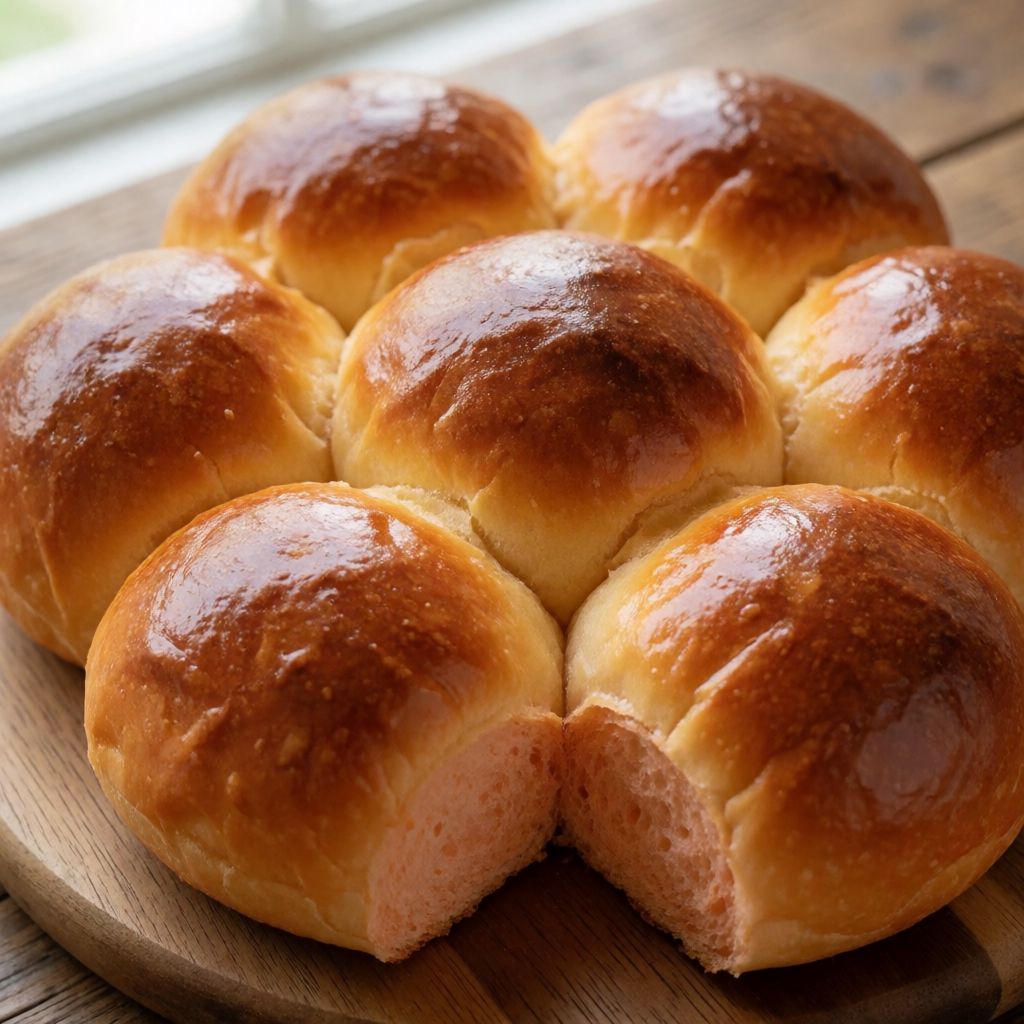
Soft, slightly sweet yeasted rolls rolled up with a tangy tomato and thyme filling, glazed with egg and sesame seeds.
Labels are worked out automatically from the ingredients and can be wrong. Check the packaging if it matters to you.
Ingredients
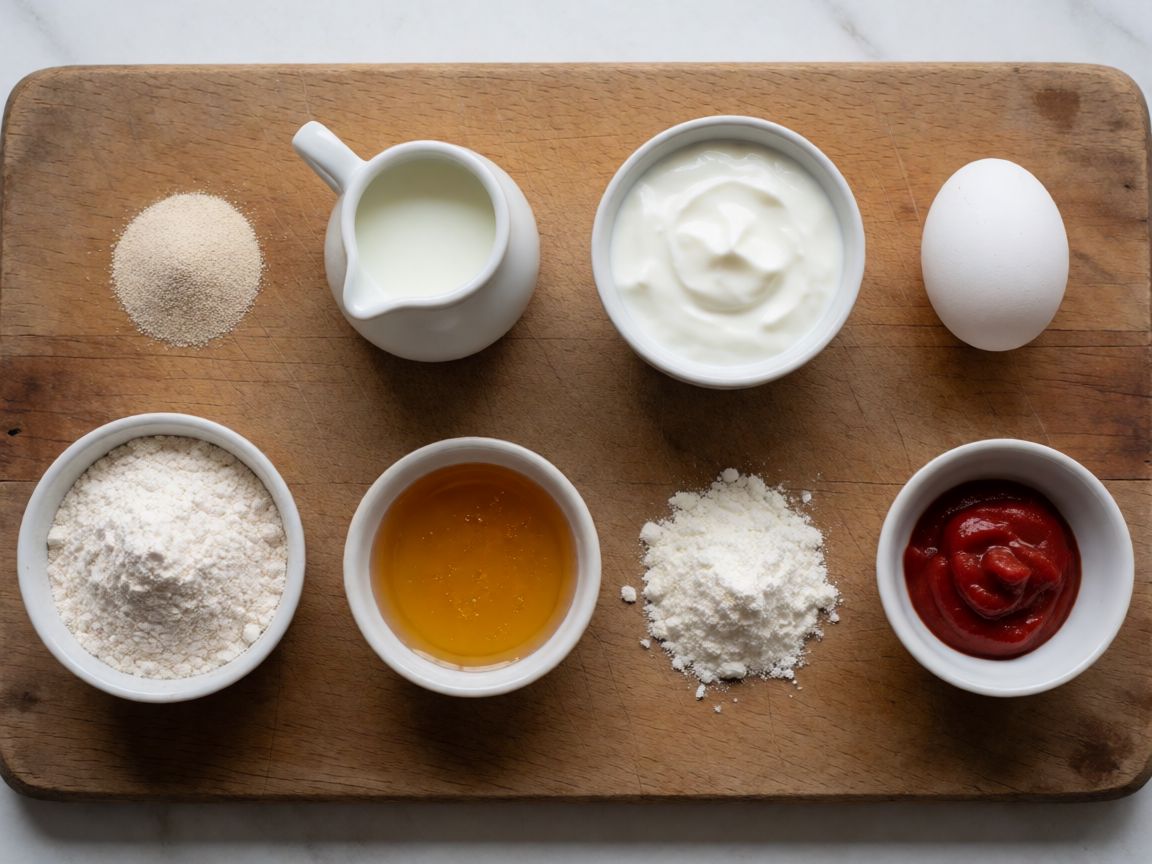
- 25 g Yeast
- 150 ml Milk at room temperature
- 100 ml Yogurt
- 50 ml Olive oil
- 1 pcs Egg
- 1 tbsp Honey
- 1 tsp Salt
- 100 g Wholemeal flour
- 300 g Plain flour
- 2 tbsp Tomato paste
- 4 tbsp Ketchup
- 1 tbsp Dried thyme
- 1 pcs Egg beaten
- 1 tsp Sesame seeds













Steps
Dissolve the yeast in room-temperature milk, add the yogurt, olive oil, honey, salt and egg, and mix together.
Add the flour and knead the dough until smooth, soft and elastic (you can use a mixer on medium speed for 5-10 minutes).
8 minShape the dough into a ball, place in a bowl, cover with a clean towel and leave to rise at room temperature for 90 minutes.
90 minRoll out the dough on a floured surface into a rectangle 4-5 mm thick.
Mix the tomato paste, ketchup and dried thyme and spread over the dough.
Fold the dough in half over the middle and cut into long strips about 1-1.5 cm wide.
Twist the strips into rolls and place on a baking tray lined with parchment paper.
Cover with a clean towel and leave to rise at room temperature for 45 minutes.
45 minGently brush with beaten egg, sprinkle with sesame seeds and bake in a preheated fan oven at 175°C for about 17-20 minutes.
18 minLeave to cool slightly on a wire rack.
These are savoury yeast rolls with a tomato filling twisted through them like a rope — more Georgian or Balkan in spirit than Italian, built on the same logic as a cinnamon roll but swapping sugar and spice for ketchup and thyme. Sliced open, you get spiral stripes of orange through soft bread. They're a brunch item, or something to put next to a roast when you want bread that isn't just bread.
What decides whether it works is the same thing that decides any yeasted dough: whether you treat rising as an ingredient rather than an inconvenience. Ninety minutes at room temperature is a floor, not a target — in a cold British kitchen in winter that floor might take closer to two hours, because yeast doesn't read recipes, it reads temperature. You're watching for the dough to double and hold a dimple when you poke it, not watching the clock.
The twist-and-cut step is where most people panic and overthink it. You're not trying to make it pretty, you're trying to expose layers of filling along the length of the strip so that when it bakes, you see stripes rather than a solid tube with a hidden tomato core. A slightly uneven twist is cosmetic, not fatal.
The tomato-paste-and-ketchup combination looks odd until you think about what each is doing: paste gives concentrated tomato flavour without excess liquid that would turn your rolled-out dough soggy and hard to cut; ketchup brings sweetness, vinegar tang and a looser texture that spreads without tearing the dough. Neither alone does the job as well.
Start with the yeast and milk. Room temperature milk, not warm — some say you need to warm the milk to "wake up" the yeast, but no, 37-40°C kills more yeast cells than it activates if you overshoot, and on a normal hob thermometer-free guessing is how you overshoot. Yeast wakes up fine at room temperature, it just takes a few more minutes, and you have 125 minutes of prep time built into this recipe anyway — patience is the actual ingredient here, not heat.
The 25 g of fresh yeast is a specific commitment: if you're using dried active yeast instead, you want roughly a third of that weight, about 8-9 g, because dried yeast is more concentrated per gram. Don't substitute instant yeast gram-for-gram with fresh and expect the same timing — it ferments faster and your 90-minute rise might be more like 60.
The mix of wholemeal and plain flour (100 g to 300 g) is there for structure, not health virtue. Wholemeal brings a little bran and a little more resistance to the gluten network, so the dough has backbone and doesn't collapse flat once it's filled and twisted. All plain flour works fine too — you'll get a softer, paler roll, slightly less chew. Don't go the other way and use all wholemeal; the bran cuts gluten strands and you'll end up with a dough that won't hold a spiral shape, it'll just slump.
The yogurt and olive oil both do the same underlying job from different angles: they're tenderising the dough and holding moisture so your rolls aren't dry and bready after baking. Olive oil is good here, but "any oil with no smell of its own" is the real criterion — sunflower or a neutral vegetable oil works just as well if your olive oil is the expensive peppery kind you don't want wasted in bread. The egg in the dough adds richness and a touch of structure; not essential if you're out, but you'll notice the crumb is slightly less tender without it.
Honey does two things: feeds the yeast a touch, and rounds off the sharpness of the tomato filling later. A teaspoon of sugar does the same job if that's what's in your cupboard — this isn't a recipe where honey's floral notes matter, it's functional sweetness.
The egg wash and sesame on top aren't decoration for its own sake — egg wash is what gives you that golden-brown sheen rather than a pale, flour-dusty top, because the proteins in beaten egg brown and set under oven heat the same way they would in a frying pan. Skip it and the rolls still taste the same, they just look like they came out of a home oven rather than a bakery, which, let's be honest, they did.
On baking: 175°C in a fan oven for 17-20 minutes is about getting the surface brown and the inside cooked through without drying out a roll this small — rolls this size have very little mass, so they go from underdone to overdone in a narrow window. The real test isn't the clock, it's colour and sound: tap the base of one roll and it should sound hollow, and the twisted tomato stripe should look set rather than glossy-wet. If your oven runs hot or you don't have a fan function, start checking at 15 minutes rather than waiting obediently for 17.